

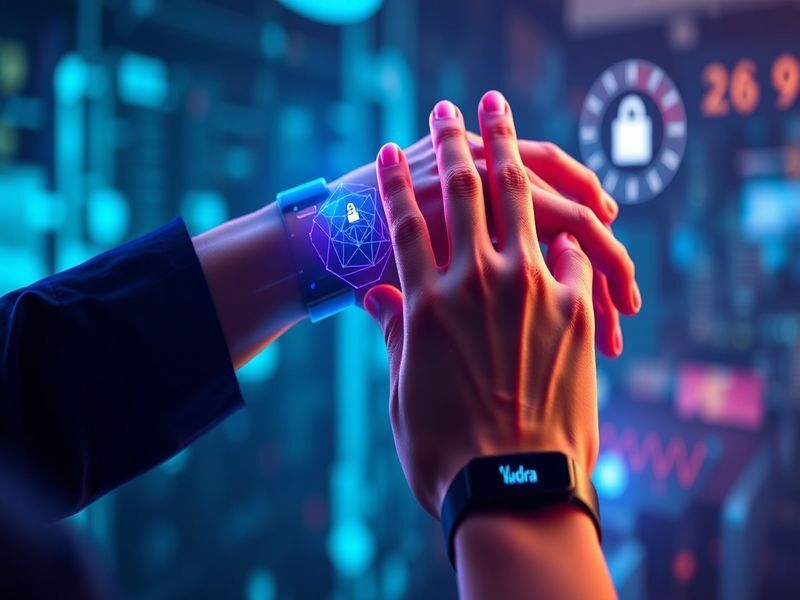
Turning Gestures into Commands with Mudra Link
In the rapidly evolving landscape of technology, the ability to control devices through gestures is a concept that has fascinated innovators for decades. With the advent of the Mudra Link, a neural wristband that interprets finger movements into device commands, this vision is becoming a reality. This groundbreaking device not only leverages advanced artificial intelligence but also opens up a new realm of possibilities for human-computer interaction.
What is Mudra Link?
Mudra Link is an innovative wristband designed to read the neural signals generated by hand movements. By utilizing advanced sensors and machine learning algorithms, it translates these signals into actionable commands for various devices. Here’s how it works:
- Neural Signal Detection: The wristband detects electrical signals produced by muscles as users move their fingers.
- Data Processing: These signals are processed through a machine learning model that interprets the movement as specific commands.
- Device Integration: Mudra Link can be easily integrated with smart devices, allowing for seamless control through gestures.
Practical Insights
The Mudra Link wristband is not just a novelty; it has practical applications in various fields, enhancing user experience and productivity. Here are some notable implementations:
- Smart Home Control: With Mudra Link, users can control lights, thermostats, and other smart home devices through simple hand gestures, making it a convenient tool for managing home environments.
- Gaming: Gamers can enjoy an immersive experience by executing commands with gestures, allowing for a more engaging and interactive gameplay.
- Accessibility: The device offers significant benefits for individuals with mobility challenges, enabling them to control devices without physical touch.
Industry Implications
The introduction of Mudra Link has far-reaching implications across different sectors. Here are a few ways it can impact various industries:
- Healthcare: In medical settings, the ability to control devices hands-free can minimize the risk of contamination and streamline processes in sterile environments.
- Retail: Retail environments may adopt gesture-controlled interfaces to create a more interactive shopping experience, allowing customers to navigate products without physical interaction.
- Education: In classrooms, educators can use gesture-based controls to engage students, making learning more dynamic and interactive.
Challenges and Considerations
Despite its potential, the implementation of gesture-controlled technology like Mudra Link is not without challenges. Some key considerations include:
- Accuracy: Ensuring that the wristband accurately interprets gestures is crucial for user satisfaction.
- Privacy: As with any device that collects data, concerns about privacy and data security must be addressed.
- Usability: The learning curve for users may affect adoption rates; therefore, intuitive design is essential.
The Future of Gesture-Controlled Technology
As we look to the future, the potential of gesture-controlled technology is vast. Here are some possibilities that could shape the next decade:
- Integration with AI: Advanced AI algorithms may allow for more nuanced interpretations of gestures, leading to more sophisticated user interactions.
- Wearable Technology: The development of additional wearable technologies that complement Mudra Link could create an ecosystem of gesture-controlled devices.
- Smart Cities: Imagine a future where public interfaces, such as information kiosks and transportation systems, are entirely gesture-controlled, enhancing accessibility for all.
In conclusion, Mudra Link represents a significant leap forward in the way we interact with technology. By translating gestures into commands, it not only enhances user experience but also paves the way for a future where devices respond intuitively to our movements. As this technology evolves, it will undoubtedly transform various industries and redefine our relationship with the digital world.