

Uber’s Founder Enters the Robotics Arena: A New Venture Focused on Modular Robotics
In a groundbreaking move that could redefine several industries, Uber’s founder, Travis Kalanick, has entered the robotics arena with a new venture emphasizing modular robotics. This innovative approach promises to revolutionize sectors ranging from food delivery to transportation and beyond. As AI and robotics converge, the implications for businesses, consumers, and the workforce are profound.
The Vision Behind Modular Robotics
Kalanick’s new venture aims to create modular robotic systems that can be easily configured and adapted to various tasks. This flexibility allows for a diverse range of applications, enhancing operational efficiency and reducing costs. The modular nature of these robots means that components can be swapped out or upgraded as technology advances, ensuring longevity and adaptability in a fast-changing technological landscape.
Practical Insights into Modular Robotics
Modular robotics offers several practical advantages:
- Scalability: Companies can start with a small deployment and expand as their needs grow.
- Flexibility: Robots can be reconfigured for different tasks, making them suitable for various industries.
- Cost-Effectiveness: By using interchangeable parts, businesses can reduce maintenance and upgrade costs.
- Rapid Deployment: Modular systems can be quickly assembled and put into operation, reducing downtime.
Industry Implications
The potential impact of Kalanick’s venture on multiple sectors is staggering:
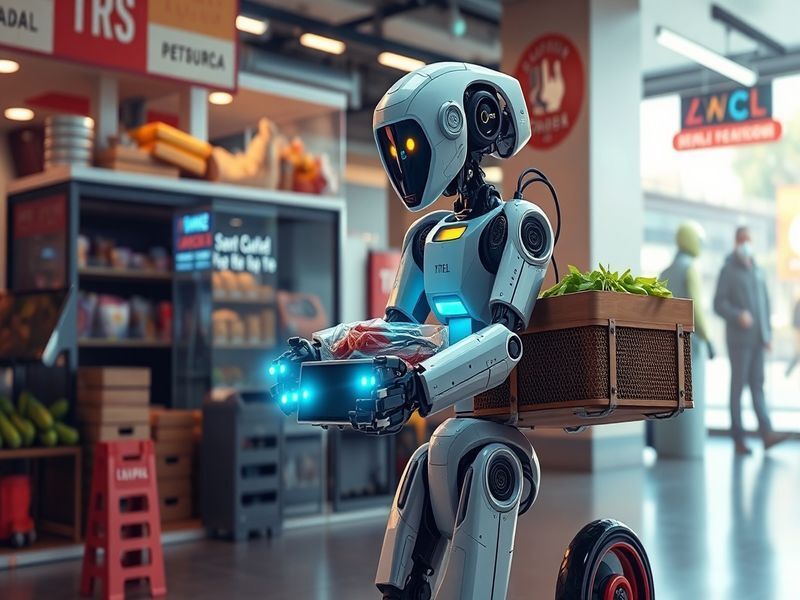
- Food Delivery: Modular robots could automate food preparation and delivery, enhancing efficiency and reducing labor costs. Imagine a fleet of robots that can cook, package, and deliver meals to customers with minimal human intervention.
- Transportation: In the logistics sector, modular robotics could streamline operations in warehouses, allowing for automated sorting and packing, and even autonomous vehicles for last-mile delivery.
- Healthcare: Modular systems could assist in hospitals by automating routine tasks, thus allowing healthcare professionals to focus on patient care, improving overall efficiency and service delivery.
- Manufacturing: The manufacturing industry could see a shift towards more automated assembly lines, where robots can adapt to produce different products without the need for extensive retooling.
Future Possibilities
As Kalanick’s venture unfolds, the future of modular robotics looks promising. Here are some possibilities that may emerge:
- Integration with AI: By integrating sophisticated AI algorithms, modular robots could learn and adapt to new tasks autonomously, further increasing efficiency and reducing the need for human oversight.
- Collaboration with Humans: The future could see collaborative robots (cobots) working alongside humans, enhancing productivity while ensuring safety and ergonomic support.
- Global Supply Chains: Modular robotics could facilitate the development of more resilient supply chains by automating key logistics functions and reducing dependencies on human labor.
- Environmental Sustainability: With the ability to quickly adapt to different tasks, modular robots can help businesses implement more sustainable practices, such as reducing waste in food production or optimizing energy consumption in manufacturing.
Challenges and Considerations
Despite the exciting possibilities, there are challenges to consider:
- Regulatory Hurdles: As with any emerging technology, there will be regulatory challenges to navigate, particularly in sectors like transportation and healthcare.
- Job Displacement: The rise of modular robotics raises concerns about job displacement, necessitating discussions on workforce retraining and adaptation.
- Technological Limitations: Current limitations in AI and robotics technology may hinder the full realization of modular systems until advancements are made.
Conclusion
Travis Kalanick’s foray into modular robotics could mark a significant turning point in how industries operate. By leveraging the advantages of modular systems, businesses can enhance efficiency, reduce costs, and stay competitive in an increasingly automated world. However, as we embrace these innovations, it is crucial to address the associated challenges and ensure that the future remains inclusive and beneficial for all.