Why AI Music Converges on the Average: Investigating Limitations and the Value of Human Experience in Artistic Expression
As artificial intelligence (AI) continues to permeate various creative fields, one of the most fascinating areas of exploration is music. AI-generated music often trends toward the average, raising questions about the limitations of machine creativity and the intrinsic value of human experience in artistic expression. This article will delve into the reasons behind AI’s inclination towards mediocrity in music, the implications for the industry, and the future possibilities that arise from this intersection of technology and art.
The Mechanisms of AI Music Generation
At the core of AI music generation are algorithms and deep learning models trained on vast datasets of existing music. These models can analyze patterns, structures, and styles to create new compositions. However, this process inherently leads to a convergence on the average due to several factors:
- Data Bias: AI systems learn from existing data, which often reflects popular trends and mainstream preferences. As a result, the music generated tends to align with these averages, producing sounds that are formulaic rather than innovative.
- Lack of Emotional Depth: AI lacks the human ability to feel emotions, which are critical in creating evocative music. This emotional disconnect can lead to compositions that, while technically proficient, lack the depth and resonance of human-created music.
- Optimization for Popularity: Many AI systems are designed to optimize for certain metrics, such as streaming numbers or chart performance. This focus on popularity can further push AI-generated music towards the average, as it tends to replicate what is already successful rather than taking creative risks.
The Value of Human Experience in Music
Human musicians bring a wealth of experience, emotion, and context to their art, which AI cannot replicate. The following aspects highlight the unique contributions of human musicians:
- Personal Narrative: Artists often draw from personal experiences, cultural backgrounds, and emotional journeys. This authenticity resonates with listeners on a deeper level, creating a connection that AI-generated music struggles to achieve.
- Creative Risk-Taking: Humans are inherently capable of taking risks and experimenting with unconventional ideas. This willingness to step outside perceived boundaries often leads to groundbreaking music that challenges norms.
- Collaborative Dynamics: Music is often a collaborative effort, involving interaction and synergy among musicians. This dynamic can lead to unexpected innovations that a solitary AI cannot replicate.
Industry Implications
The rise of AI in music production presents both opportunities and challenges for the industry. Here are some key implications:
- Democratization of Music Creation: AI tools enable aspiring musicians to create high-quality music without extensive training or resources, leveling the playing field and fostering creativity.
- Shifts in Employment: As AI takes on more roles in music production, traditional roles for musicians, producers, and composers may evolve. This shift could necessitate new skill sets focused on collaboration with AI rather than competition against it.
- New Genres and Styles: AI can help generate novel music styles by blending genres in ways that human musicians might not consider, leading to exciting new musical landscapes.
Future Possibilities
Looking ahead, the interaction between AI and music is likely to evolve in several ways:
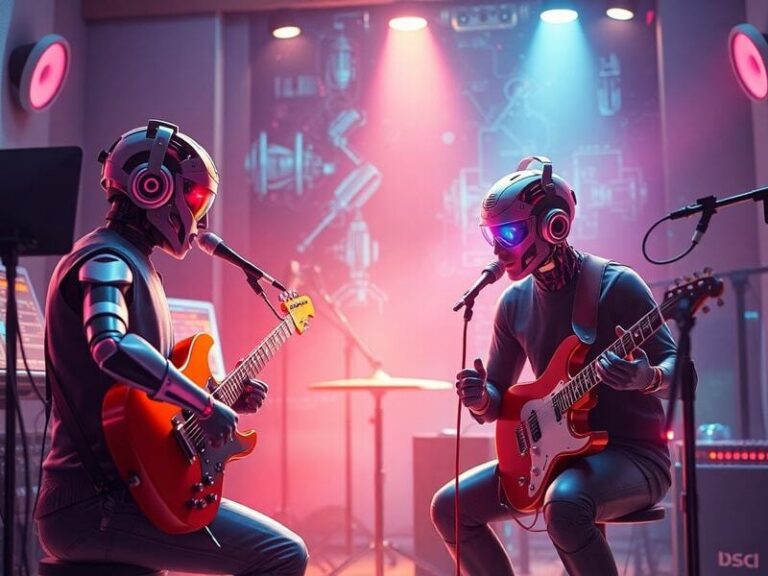
- Hybrid Collaboration: Future music production may see humans and AI working more collaboratively, combining human emotional depth with AI’s data-driven efficiency to create innovative works that push the boundaries of creativity.
- Customizable AI Tools: As AI technology advances, we may see more personalized AI music tools that adapt to individual artists’ styles, enhancing their creative process rather than replacing it.
- Ethical Considerations: As AI-generated music becomes more prevalent, ethical questions around authorship, copyright, and the value of human creativity will need to be addressed, shaping the legal landscape of the music industry.
Conclusion
While AI music generation offers intriguing possibilities for innovation, its tendency to converge on the average highlights the irreplaceable value of human experience in artistic expression. The future of music may lie not in AI replacing human musicians but in a harmonious collaboration that elevates both technology and the art of music. As we navigate this exciting frontier, it’s crucial to recognize the nuances that make music a profoundly human experience.