# The Impact of AI on Job Market Dynamics: How AI is Reshaping the Future of Work
Artificial Intelligence (AI) is not just a buzzword; it’s a transformative force that’s reshaping industries, economies, and most importantly, the job market. As AI technologies advance, they bring about significant changes in how we work, the skills we need, and the roles we perform. This article delves into the impact of AI on job market dynamics, exploring practical insights, industry implications, and future possibilities.
## The Current State of AI in the Job Market
AI is already making waves in the job market, and its influence is only set to grow. Here are some key trends:
### Automation of Routine Tasks
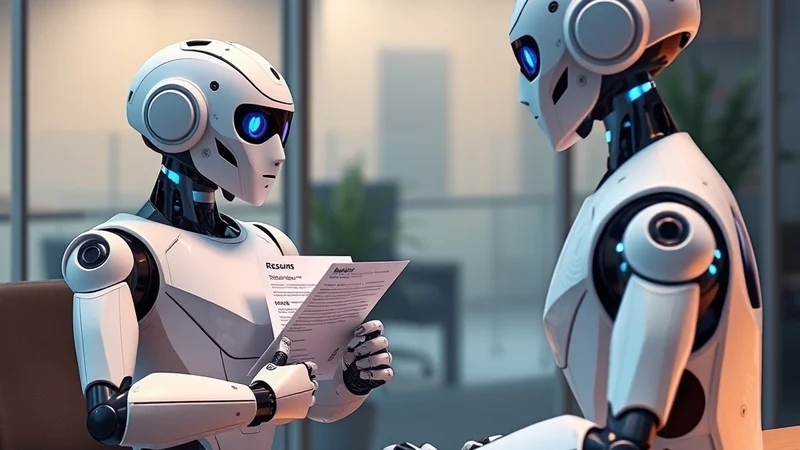
AI excels at automating routine, repetitive tasks. This includes data entry, basic customer service, and even some aspects of manufacturing. While this can lead to job displacement in certain areas, it also frees up human workers to focus on more complex, creative, and strategic tasks.
### The Rise of AI-Driven Roles
AI is not just a job displacer; it’s also a job creator. New roles are emerging that focus on developing, implementing, and maintaining AI systems. These include AI specialists, machine learning engineers, and data scientists.
## Industry Implications
Different industries are experiencing the impact of AI in varied ways. Here are a few examples:
### Healthcare
- AI-powered diagnostics: AI algorithms can analyze medical images and data to assist in diagnosing diseases. This can lead to earlier detection and better patient outcomes.
- Personalized medicine: AI can help tailor treatments to individual patients based on their genetic makeup and health history.
- Administrative tasks: AI can automate administrative tasks, reducing the burden on healthcare staff and allowing them to focus more on patient care.
### Finance
- Fraud detection: AI can analyze transaction patterns to detect and prevent fraudulent activities.
- Algorithmic trading: AI can make rapid, data-driven decisions in financial markets.
- Customer service: AI-powered chatbots can handle customer inquiries, providing quick and efficient service.
### Manufacturing
- Predictive maintenance: AI can predict when machinery is likely to fail, allowing for preventive maintenance and reducing downtime.
- Quality control: AI-powered visual inspection systems can identify defects in products with high accuracy.
- Autonomous robots: AI can enable robots to perform tasks autonomously, increasing efficiency and productivity.
## The Future of Work in an AI-Driven World
The future of work is likely to be significantly shaped by AI. Here are some possibilities:
### Upskilling and Reskilling
As AI takes over routine tasks, the demand for higher-level skills will increase. This includes complex problem-solving, creativity, emotional intelligence, and the ability to work with AI systems. Workers will need to upskill and reskill to adapt to these changes.
### Human-AI Collaboration
Rather than replacing humans, AI is likely to augment human capabilities. This could lead to new forms of human-AI collaboration, where humans and AI systems work together to achieve better outcomes.
### The Gig Economy
AI could also fuel the growth of the gig economy. AI platforms can match freelancers with tasks, making it easier for people to find work and for businesses to find talent.
## Preparing for an AI-Driven Job Market
To thrive in an AI-driven job market, individuals and organizations need to take proactive steps:
### For Individuals
- Lifelong learning: Commit to continuous learning to keep your skills up-to-date.
- Develop AI-related skills: This includes data analysis, programming, and understanding of AI technologies.
- Focus on uniquely human skills: These include creativity, emotional intelligence, and complex problem-solving.
### For Organizations
- Invest in AI technologies: This can help improve efficiency, productivity, and competitiveness.
- Upskill and reskill employees: Provide training programs to help employees adapt to AI-driven changes.
- Foster a culture of innovation: Encourage experimentation and creativity to drive AI innovation.
## Conclusion
AI is reshaping the job market in profound ways. While it presents challenges, it also offers significant opportunities. By understanding these dynamics and taking proactive steps, individuals and organizations can not only adapt to the changes but also thrive in an AI-driven world.