AI Uncovers 1,500-Year-Old Archaeological Mystery: Satellite Analysis Redefines History
In a groundbreaking fusion of ancient history and cutting-edge technology, artificial intelligence has unveiled secrets hidden beneath the surface for over a millennium. A recent study published in the journal Nature revealed that AI-driven satellite analysis has uncovered a 1,500-year-old archaeological mystery, reshaping our understanding of ancient civilizations and demonstrating the transformative power of AI in archaeology.
The Discovery: A Hidden Network of Ancient Structures
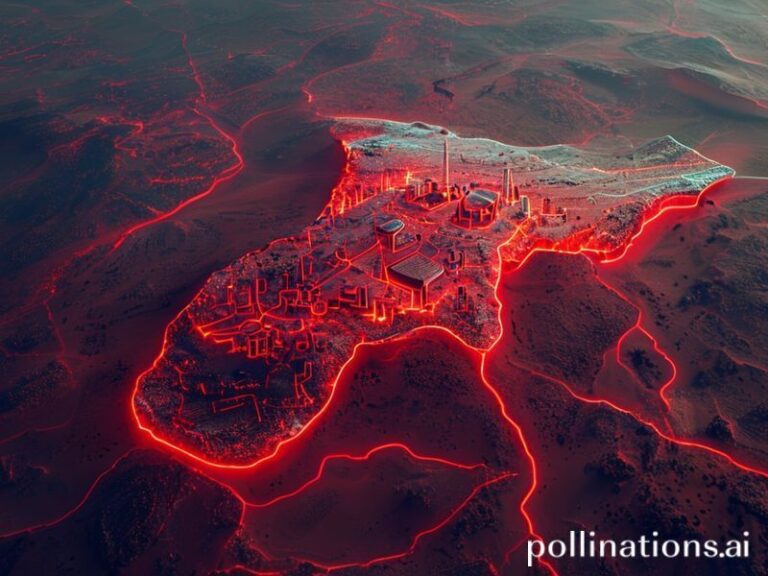
Researchers from the University of Cambridge and the University of Leicester employed machine learning algorithms to analyze high-resolution satellite imagery of the Arabian Peninsula. The AI identified subtle patterns in the landscape that were invisible to the human eye, revealing a vast network of ancient structures dating back to the 6th century AD.
- AI algorithms detected variations in soil composition and vegetation growth, indicating the presence of buried structures.
- The discovered network spans over 100 kilometers, connecting ancient settlements and trade routes.
- These findings suggest a previously unknown level of sophistication in ancient urban planning and connectivity.
How AI is Revolutionizing Archaeology
The integration of AI and satellite technology is revolutionizing the field of archaeology, offering unprecedented insights into ancient civilizations. Here’s how AI is transforming the industry:
1. Enhanced Data Analysis
AI algorithms can process vast amounts of satellite imagery and other data sources at speeds and accuracies unattainable by human researchers. By identifying subtle patterns and anomalies, AI is uncovering hidden archaeological sites and features that would otherwise go unnoticed.
2. Non-Invasive Exploration
AI-driven satellite analysis allows archaeologists to explore ancient sites without physical excavation. This non-invasive approach preserves delicate artifacts and structures while providing valuable insights into ancient civilizations.
3. Predictive Modeling
Machine learning algorithms can predict the likelihood of archaeological sites based on environmental and historical data. This predictive capability enables researchers to focus their efforts on the most promising locations, optimizing the use of limited resources.
Practical Insights and Industry Implications
The application of AI in archaeology offers practical insights and industry implications that extend beyond the academic realm. Here are some key takeaways:
1. Interdisciplinary Collaboration
The successful integration of AI in archaeology highlights the importance of interdisciplinary collaboration. By combining expertise from computer science, remote sensing, and archaeology, researchers can achieve breakthroughs that would not be possible in isolation.
2. Preservation of Cultural Heritage
AI-driven archaeological discoveries contribute to the preservation of cultural heritage by identifying and documenting ancient sites before they are lost to development, looting, or natural erosion. This proactive approach ensures that valuable historical information is preserved for future generations.
3. Economic and Tourism Opportunities
The discovery of new archaeological sites can stimulate local economies by attracting tourists and researchers. AI-driven findings can also inform the development of cultural heritage sites, creating educational and recreational opportunities for the public.
Future Possibilities: Expanding the Horizons of AI in Archaeology
The successful application of AI in uncovering a 1,500-year-old mystery is just the beginning. As AI technology continues to evolve, so too will its potential to revolutionize the field of archaeology. Here are some exciting future possibilities:
1. Integration with Drones and LiDAR
Combining AI with drone technology and LiDAR (Light Detection and Ranging) can enhance the resolution and accuracy of archaeological surveys. Drones equipped with LiDAR sensors can create detailed 3D maps of ancient sites, while AI algorithms can analyze these maps to identify hidden structures and features.
2. AI-Powered Virtual Reality
AI can be used to create immersive virtual reality experiences that allow researchers and the public to explore ancient sites in unprecedented detail. By reconstructing ancient environments and structures, AI-powered virtual reality can provide valuable insights into the lives of our ancestors.
3. Predictive Modeling for Climate Change
AI can be employed to predict the impact of climate change on ancient sites, enabling researchers to prioritize conservation efforts. By analyzing environmental data and historical trends, AI algorithms can identify sites that are most at risk and recommend appropriate mitigation strategies.
Conclusion
The discovery of a 1,500-year-old archaeological mystery through AI-driven satellite analysis is a testament to the transformative power of technology in the field of archaeology. By harnessing the capabilities of AI, researchers are uncovering hidden secrets of ancient civilizations, preserving cultural heritage, and opening new avenues for exploration and education. As AI technology continues to advance, the possibilities for archaeological discovery are limitless, promising to reshape our understanding of the past and our connection to it.
In the words of the researchers, “This study demonstrates the immense potential of AI in archaeology and highlights the importance of interdisciplinary collaboration in driving innovation and discovery.” As we look to the future, the fusion of ancient history and cutting-edge technology will undoubtedly continue to yield groundbreaking insights, enriching our understanding of the human experience.