# AI Mirrors for the Blind: A New Perspective on Self-Image
## The Impact and Ethical Considerations of AI-Generated Descriptions for Visually Impaired Individuals
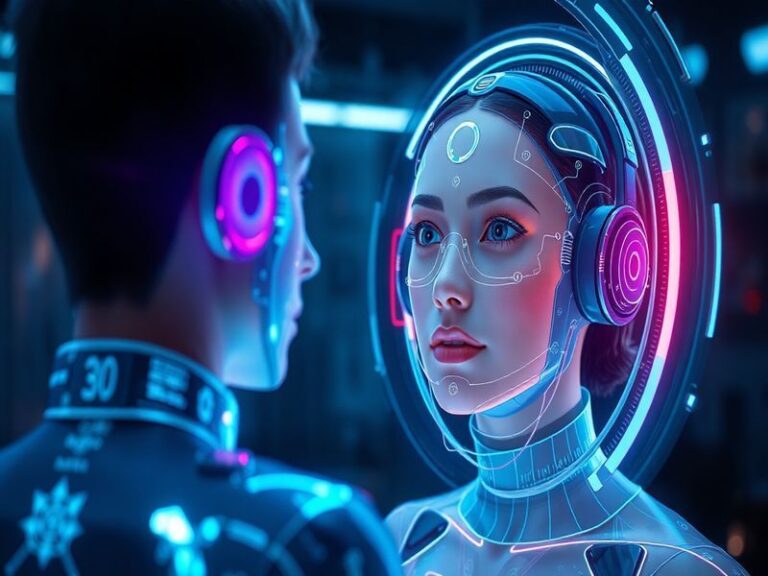
In the rapidly evolving landscape of artificial intelligence, one of the most groundbreaking innovations is the development of AI mirrors designed for visually impaired individuals. These mirrors use advanced AI algorithms to provide detailed, real-time descriptions of a person’s appearance, offering a new way for the blind and visually impaired to understand their self-image. This technology not only enhances personal autonomy but also raises important ethical considerations that must be addressed as it becomes more widespread.
### Understanding AI Mirrors
AI mirrors leverage computer vision and natural language processing (NLP) to analyze a person’s appearance and generate descriptive feedback. These systems can identify and describe clothing, facial expressions, hairstyles, and even subtle details like makeup or accessories. The descriptions are delivered through audio feedback, enabling users to gain a comprehensive understanding of their appearance without relying on visual cues.
#### How AI Mirrors Work
### Practical Insights and Industry Implications
The introduction of AI mirrors has significant implications for various industries, including healthcare, fashion, and personal technology. Here are some key insights:
#### Enhancing Personal Autonomy
For visually impaired individuals, maintaining personal autonomy is crucial. AI mirrors empower users to make informed decisions about their appearance, enhancing their confidence and independence. This technology can be particularly beneficial in daily activities such as dressing, grooming, and social interactions.
#### Fashion and Retail
The fashion industry stands to benefit greatly from AI mirrors. Retailers can integrate this technology into fitting rooms, providing personalized styling advice and recommendations. This not only enhances the shopping experience for visually impaired customers but also opens up new opportunities for inclusive design and marketing.
#### Healthcare and Rehabilitation
In the healthcare sector, AI mirrors can be used as a tool for rehabilitation and therapy. For example, they can help individuals with visual impairments adjust to their condition by providing detailed descriptions of their appearance, which can be crucial for social integration and mental well-being.
### Ethical Considerations
While the benefits of AI mirrors are undeniable, there are several ethical considerations that must be addressed:
#### Privacy and Data Security
The use of AI mirrors involves the collection and analysis of personal images, raising concerns about privacy and data security. It is essential to implement robust security measures to protect user data and ensure that it is not misused or accessed by unauthorized parties.
#### Bias and Accuracy
AI algorithms can be prone to bias, which can affect the accuracy and fairness of the descriptions provided. Developers must ensure that the algorithms are trained on diverse datasets to minimize bias and provide accurate descriptions for all users.
#### Emotional Impact
The descriptions generated by AI mirrors can have a significant emotional impact on users. It is important to consider the potential psychological effects and ensure that the feedback is delivered in a sensitive and constructive manner.
### Future Possibilities
The potential applications of AI mirrors extend beyond personal use. Here are some future possibilities:
#### Smart Home Integration
AI mirrors can be integrated into smart home systems, providing personalized feedback and assistance in various aspects of daily life. For example, they can help users choose appropriate clothing based on weather conditions or provide reminders for important events.
#### Virtual Reality and Augmented Reality
In the realm of virtual reality (VR) and augmented reality (AR), AI mirrors can enhance the user experience by providing detailed descriptions of virtual environments and objects. This can be particularly beneficial for individuals with visual impairments, enabling them to navigate and interact with virtual spaces more effectively.
#### Education and Training
AI mirrors can be used as educational tools, helping individuals with visual impairments learn about different aspects of their appearance and how to present themselves in various social and professional settings. This can be particularly valuable in educational and vocational training programs.
### Conclusion
AI mirrors represent a significant advancement in technology, offering new opportunities for visually impaired individuals to understand and manage their self-image. While the benefits are substantial, it is crucial to address the ethical considerations and ensure that the technology is developed and deployed responsibly. As AI continues to evolve, the potential applications of AI mirrors will expand, paving the way for a more inclusive and accessible future.