Google’s Developer Knowledge API: Enhancing AI Workflows
In the rapidly evolving landscape of artificial intelligence (AI) and machine learning, Google has unveiled a groundbreaking tool: the Developer Knowledge API. This innovative API is designed to transform how documentation serves AI agents, making it a powerful resource that can streamline workflows and enhance productivity for developers and organizations alike. In this article, we will explore the functionalities of the Developer Knowledge API, its implications for the industry, and the future possibilities it presents for AI integration.
Understanding the Developer Knowledge API
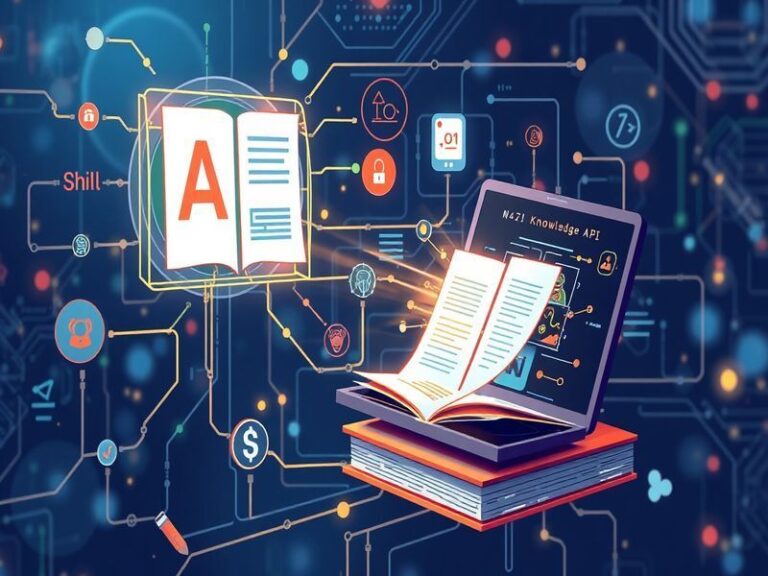
The Developer Knowledge API is a sophisticated interface that allows AI systems to access and interpret documentation in a more effective manner. By leveraging advanced natural language processing (NLP) techniques, it enables AI agents to fetch relevant information from vast repositories of documentation. This capability not only enhances the efficiency of AI workflows but also improves the accuracy of the information retrieved.
- Natural Language Understanding: The API is equipped with robust NLP capabilities, allowing it to comprehend and extract meaning from complex technical documents.
- Contextual Awareness: By understanding the context of queries, the API can deliver more precise answers, reducing the time developers spend searching for information.
- Scalability: The API can handle a large volume of requests, making it suitable for organizations of any size.
Practical Insights for Developers
For developers, the Developer Knowledge API offers a plethora of practical benefits:
- Enhanced Documentation Access: Developers can quickly access relevant sections of documentation without sifting through entire manuals. This is especially beneficial in large-scale projects where time is of the essence.
- Improved Collaboration: Teams can leverage the API to ensure that everyone is on the same page regarding the documentation, leading to fewer misunderstandings and errors.
- Integration with Existing Tools: The API can be integrated into existing development environments, further streamlining workflows and enhancing productivity.
Moreover, the API’s ability to learn from user interactions means that it can continually improve its responses over time, adapting to the specific needs of its users.
Industry Implications
The introduction of the Developer Knowledge API has significant implications for various industries:
- Software Development: Companies can accelerate their development cycles, allowing for faster deployment of applications and features.
- Education and Training: The tool can be utilized in educational settings, helping students and new developers find information quickly and effectively.
- Technical Support: Support teams can utilize the API to provide quicker resolutions to customer inquiries by accessing documentation on-the-fly.
Future Possibilities
As we look to the future, the Developer Knowledge API opens doors to numerous possibilities:
- Integration with AI Assistants: Future iterations of the API could be integrated into AI assistants, allowing them to provide real-time support and information to developers during coding sessions.
- Machine Learning Enhancements: The API could evolve to include machine learning capabilities that predict the documentation needs of developers based on their previous queries and interactions.
- Broader Language Support: Expanding the API’s capabilities to include multiple programming languages could further enhance its utility across diverse coding environments.
Furthermore, as AI technologies continue to advance, we can expect the Developer Knowledge API to evolve, potentially incorporating features like voice recognition and even deeper contextual understanding, making it an indispensable tool for developers worldwide.
Conclusion
The Developer Knowledge API represents a significant leap forward in how AI can interact with documentation. By streamlining access to information and enhancing the overall workflow for developers, Google is setting a new standard for AI integration in software development. As industries adapt to this new tool, the potential for increased efficiency and innovation will undoubtedly shape the future of technology.