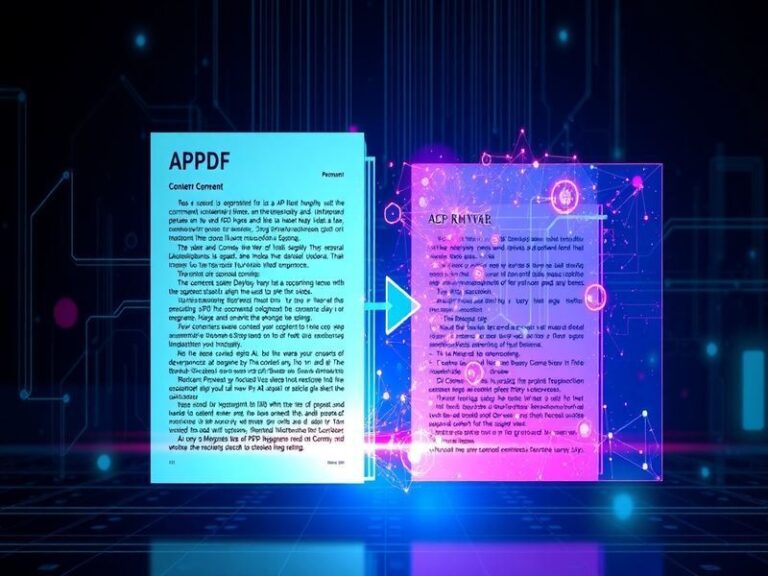
Transforming PDFs into Engaging Videos with AI
In the digital age, where attention spans are dwindling and information overload is ubiquitous, finding innovative ways to engage audiences has become paramount. One of the most promising developments in this regard is the ability of artificial intelligence (AI) tools to transform static documents, like PDFs, into dynamic visual content such as videos. This article delves into how AI is revolutionizing the way we present information, the implications for various industries, and what the future holds for this technology.
The Rise of AI in Content Creation
The convergence of AI and content creation has paved the way for tools that can take a traditional document and repurpose it into an engaging video format. This transformation is facilitated by several AI technologies, including Natural Language Processing (NLP), computer vision, and machine learning algorithms. Here are some of the key components involved:
- NLP: Enables AI to understand and process the text within PDFs, extracting key points and summarizing information.
- Computer Vision: Allows AI to analyze images and graphics within the documents, ensuring that visual elements are effectively incorporated into the video.
- Machine Learning: Trains AI systems to create video content that resonates with audiences, learning from past engagements to enhance future outputs.
How AI Tools Transform PDFs into Videos
Transforming a PDF into a video involves several steps, which can be accomplished through various AI tools available today. Here’s a typical workflow:
- Document Analysis: The AI scans the PDF, identifying text, images, and layout.
- Content Summarization: Using NLP, the AI extracts key insights and condenses the information into bite-sized pieces suitable for video.
- Visual Storyboarding: AI generates a storyboard that outlines how the information will be presented visually.
- Video Production: The AI compiles the visuals, animations, and voiceovers to create a finalized video.
Practical Insights and Industry Implications
The implications of this technology are vast, impacting various sectors, including:
- Education: Teachers can convert lecture notes and research papers into engaging video lessons, making learning more interactive.
- Marketing: Businesses can turn product brochures into promotional videos, increasing customer engagement and conversion rates.
- Corporate Training: Companies can transform training manuals into captivating training videos, enhancing employee retention of information.
Moreover, this technology can significantly reduce the time and costs associated with content creation. Instead of hiring a team of videographers, editors, and scriptwriters, a single AI tool can streamline the entire process.
Future Possibilities
As AI continues to evolve, the potential for transforming PDFs into videos will only grow. Here are some exciting possibilities on the horizon:
- Real-time Translations: AI could enable quick translations of content, allowing businesses to create video content in multiple languages simultaneously.
- User Personalization: Future AI tools may offer personalized video content tailored to individual viewer preferences, enhancing engagement further.
- Augmented Reality (AR) Integration: Combining video with AR elements could lead to immersive experiences, enabling users to interact with content in novel ways.
Additionally, as more organizations adopt this technology, we can expect a shift in how information is consumed, with video becoming a preferred medium over traditional text-based formats.
Conclusion
The transformation of PDFs into engaging videos through AI is not just a trend but a significant innovation in content creation. By harnessing the power of AI, industries can enhance their communication strategies, making information more accessible and engaging for their audiences. As technology continues to advance, we can anticipate even more capabilities that will redefine how we share and consume knowledge in the digital landscape.