AI-Powered Clinical Co-Pilot: Revolutionizing Medical Training
In the ever-evolving landscape of healthcare, the integration of artificial intelligence (AI) is transforming how medical professionals are trained and how they diagnose conditions. One groundbreaking innovation in this domain is the AI-powered clinical co-pilot, MedOS, which enhances diagnostic precision and restores performance for medical professionals. This article delves into the capabilities of MedOS, its implications for the industry, and the future possibilities it presents for medical training.
The Need for AI in Medical Training
The medical field is characterized by its complexity and the need for continual learning. Traditional methods of medical training, while effective, often fall short in providing real-time, personalized feedback and support. Challenges such as:
- High levels of stress and burnout among medical professionals
- Variability in training quality and access
- Rapidly evolving medical knowledge and technologies
have led to an urgent need for innovative solutions. This is where AI comes into play, acting as a powerful ally in medical education and practice.
What is MedOS?
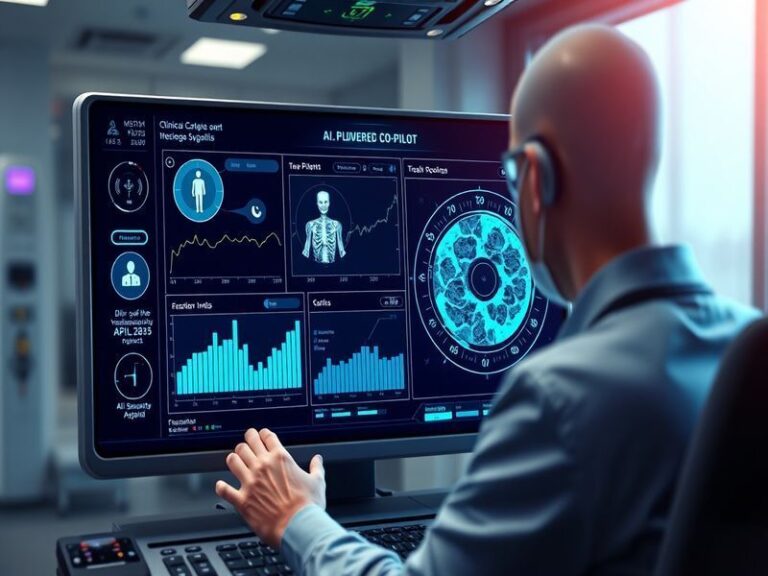
MedOS, short for Medical Operating System, is an advanced AI platform designed to assist healthcare professionals by providing real-time guidance based on vast datasets. The system utilizes machine learning algorithms to analyze patient data, medical literature, and clinical guidelines, offering actionable insights to clinicians during diagnosis and treatment planning.
Enhancing Diagnostic Precision
One of the most significant advantages of MedOS is its ability to enhance diagnostic precision. By processing large volumes of patient data and correlating it with existing medical knowledge, MedOS can:
- Identify patterns and anomalies that may not be immediately apparent to human practitioners.
- Suggest potential diagnoses based on historical data and current symptoms.
- Provide evidence-based treatment options tailored to individual patient needs.
This capability not only aids in making accurate diagnoses but also helps in reducing the incidence of misdiagnosis, which can have serious repercussions for patient health.
Restoring Performance for Medical Professionals
Medical professionals often face overwhelming workloads, which can lead to cognitive overload and decreased performance. MedOS addresses this issue by functioning as a co-pilot that:
- Offers decision support during patient consultations, allowing doctors to focus more on patient interaction.
- Provides continuous learning opportunities by analyzing outcomes and suggesting areas for improvement.
- Enables doctors to keep abreast of the latest medical research and guidelines, ensuring they remain informed.
By alleviating some of the cognitive burdens associated with clinical practice, MedOS empowers healthcare professionals to deliver higher-quality care.
Practical Insights for Implementation
For healthcare institutions considering the adoption of MedOS, several practical insights can guide effective implementation:
- Training and Onboarding: Ensure that medical personnel are adequately trained to use the system. This includes understanding its functionalities and limitations.
- Integration with Existing Systems: MedOS should be seamlessly integrated into existing electronic health record (EHR) systems to streamline workflows.
- Feedback Mechanisms: Establish channels for users to provide feedback on the system’s performance, allowing for iterative improvements.
- Emphasize Ethical Use: Address ethical considerations related to data privacy and the potential for bias in AI algorithms.
Industry Implications
The implications of AI-powered clinical co-pilots like MedOS extend beyond individual hospitals. They signal a shift in how medical professionals approach training and patient care across the industry:
- Improved Patient Outcomes: Enhanced diagnostic accuracy can lead to better treatment plans and improved patient outcomes.
- Cost Efficiency: Reducing misdiagnoses and streamlining workflows can lead to significant cost savings in healthcare.
- Scalability: AI systems can be scaled across various healthcare settings, making quality medical training and support accessible to a wider audience.
The Future of Medical Training with AI
Looking forward, the potential for AI in medical training is vast. As AI technology continues to evolve, we can anticipate:
- Personalized Learning Experiences: Tailored training programs that adapt to the learning pace and style of individual medical professionals.
- Virtual Reality (VR) Integration: Enhanced simulations that allow trainees to practice in realistic scenarios with real-time feedback from AI systems.
- Continuous Professional Development: Systems that not only assist in diagnostics but also offer ongoing education and skills assessment throughout a medical professional’s career.
In conclusion, the advent of AI-powered clinical co-pilots like MedOS represents a revolutionary shift in medical training and practice. By enhancing diagnostic precision and restoring performance, these technologies hold the promise of transforming healthcare for the better. As we embrace these innovations, the future of medicine looks increasingly bright, with AI at the forefront of this evolution.