Interactive Learning with ChatGPT: A Game Changer for Education
The landscape of education is rapidly evolving, thanks to advancements in artificial intelligence and technology. One of the most significant innovations is the introduction of interactive learning tools that leverage AI capabilities, particularly in subjects like math and science. ChatGPT, a product of OpenAI, is at the forefront of this transformation, offering interactive math and science visuals that aim to revolutionize how students engage with complex subjects.
The Need for Interactive Learning
Traditional learning methods often struggle to keep students engaged, especially in challenging subjects such as math and science. Students may find it hard to grasp abstract concepts without a visual or interactive component. This is where AI can step in to fill the gap:
- Enhancing Engagement: Interactive tools can make learning more engaging by allowing students to visualize concepts in real time.
- Personalized Learning: AI systems can adapt to individual learning paces, offering customized experiences that cater to each student’s needs.
- Immediate Feedback: Interactive platforms provide instant feedback, helping students identify and rectify their mistakes on the spot.
How ChatGPT is Revolutionizing Education
ChatGPT’s interactive learning capabilities are groundbreaking. With the integration of AI-generated visuals and simulations, the platform offers a rich educational experience. Here’s how:
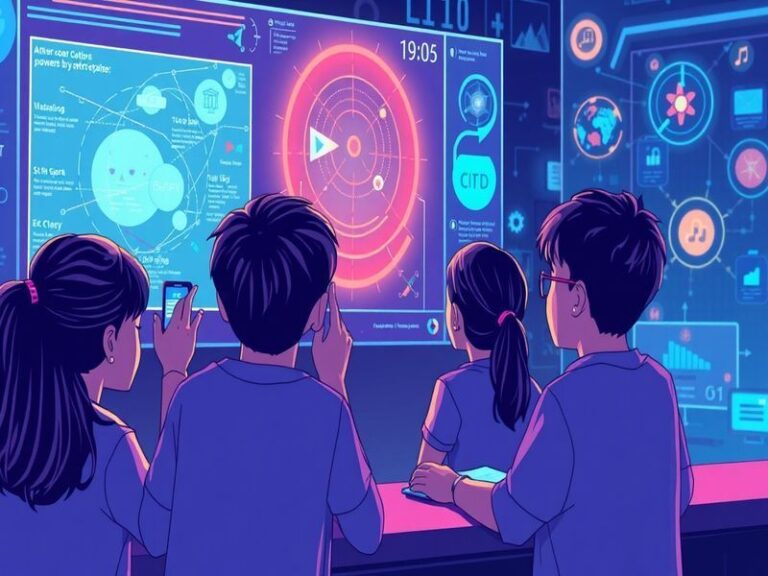
- Interactive Visuals: Students can engage with dynamic graphs, diagrams, and simulations that illustrate complex mathematical and scientific principles. For example, a student learning about forces can manipulate variables in a simulation to see real-time effects on motion.
- Conversational Learning: ChatGPT’s conversational interface allows students to ask questions and receive explanations in a natural language format, making it easier to understand difficult topics.
- Collaboration and Sharing: Students can collaborate on projects within the platform, sharing insights and visuals, thus enhancing their learning experience through peer-to-peer interactions.
Practical Insights for Educators
Educators can leverage ChatGPT’s features to enhance their teaching methodologies. Here are some practical insights:
- Integrating AI into Curriculum: Teachers can incorporate ChatGPT as a supplementary tool in classrooms, allowing students to explore subjects at their own pace.
- Creating Custom Learning Modules: Educators can design specific modules using ChatGPT to focus on weak areas within their curriculum, providing targeted assistance to their students.
- Enhancing Remote Learning: In an increasingly digital world, ChatGPT offers robust solutions for remote learning, making high-quality education accessible to all students, regardless of their location.
Industry Implications
The implications of integrating AI into education extend far beyond individual learning. Consider the following industry impacts:
- Educational Equity: By providing access to interactive learning tools, educational institutions can level the playing field, ensuring that all students have the resources they need to succeed.
- Teacher Professional Development: As AI tools become more prevalent, ongoing training for educators will be essential to effectively integrate these technologies into their teaching.
- New Business Models: The rise of AI in education has birthed new companies and startups focused on creating innovative educational tools, fostering a competitive market that drives further innovation.
Future Possibilities
The future of interactive learning with AI tools like ChatGPT is promising. Some potential advancements could include:
- Advanced Personalization: Future iterations of ChatGPT could utilize more sophisticated algorithms to tailor the learning experience even further, adapting not just to the pace but also to the learning style of each student.
- Integration with Virtual Reality: Imagine a classroom where students can step into a virtual lab, conducting experiments alongside AI-generated assistants—this could soon become a reality.
- Global Learning Communities: ChatGPT could enable collaboration across borders, allowing students from different countries to work together on global issues, promoting cultural exchange and understanding.
Conclusion
The introduction of interactive math and science visuals in ChatGPT is not just a technological advancement; it is a fundamental shift in how students interact with education. By harnessing the power of AI, educators can create engaging, personalized, and effective learning environments that cater to the diverse needs of students. As we look to the future, the possibilities for innovation in education are boundless, making it an exciting time for both educators and students alike.