Open Source Desktop AI Agents: A New Era of Automation
The rise of artificial intelligence has catalyzed an era of unprecedented automation, redefining how we interact with technology. Among the most exciting developments in this field are open-source AI agents, such as Accomplish, which promise to streamline repetitive tasks on personal computers. This article delves into how these AI agents work, their practical implications, and the future possibilities they hold for both individuals and industries.
Understanding Open Source AI Agents
Open-source AI agents are software programs designed to assist users by automating mundane tasks. Unlike proprietary software, open-source solutions offer transparency and flexibility, enabling developers and users to modify and enhance the software according to their specific needs.
Accomplish, a notable example of an open-source desktop AI agent, utilizes machine learning algorithms to execute tasks ranging from email management to data entry. Its capabilities are not just limited to simple automation; it can learn from user behavior, adapting its functions to optimize performance.
Features of Accomplish and Similar AI Agents
Some of the key features of Accomplish and similar open-source AI agents include:
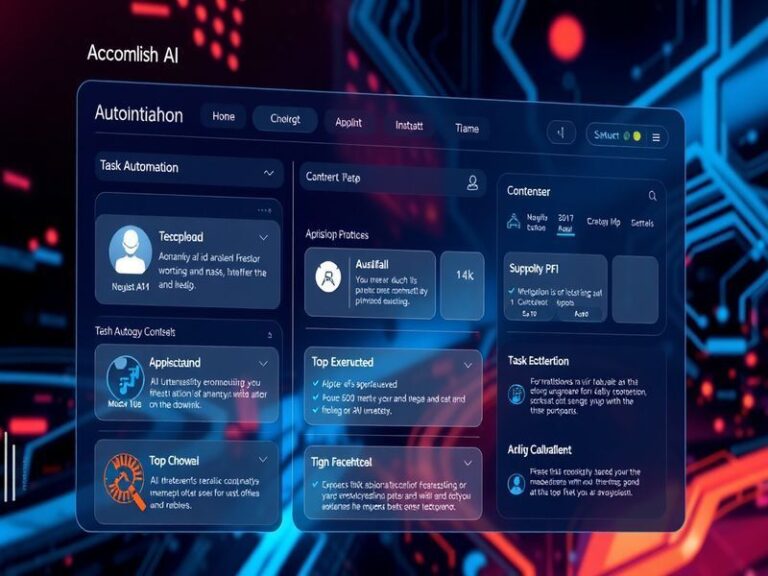
- Task Automation: Automates repetitive tasks like scheduling, emailing, and file organization.
- Natural Language Processing (NLP): Understands and processes human language, allowing users to interact with the agent using conversational commands.
- Customizability: Users can modify the source code to add new features or improve existing ones, tailoring the agent to their specific needs.
- Community Support: Being open-source, these agents benefit from a community of developers who contribute improvements and troubleshoot issues.
Practical Insights into Workflow Automation
The integration of open-source AI agents like Accomplish into daily workflows can yield significant productivity gains. Here are some practical insights:
- Increased Efficiency: By automating repetitive tasks, users can focus on more strategic activities, ultimately leading to enhanced productivity.
- Cost-Effectiveness: Open-source solutions eliminate licensing fees associated with proprietary software, making them accessible to a broader audience.
- Enhanced Collaboration: Teams can customize AI agents to share workflows, ensuring that everyone is on the same page and reducing errors.
- Continuous Improvement: With community contributions, open-source AI agents are continually updated, incorporating the latest advancements in AI technology.
Industry Implications
The implications of adopting open-source AI agents extend beyond individual productivity. They are particularly significant for various industries:
- Small to Medium Enterprises (SMEs): These businesses often struggle with resource constraints. Open-source AI agents can level the playing field by providing them with tools to automate processes that larger firms have automated for years.
- Education: In educational environments, teachers can use AI agents to handle administrative tasks, allowing them to focus more on teaching and engaging with students.
- Healthcare: AI agents can assist in managing patient records, scheduling appointments, and even providing preliminary diagnostic assistance, streamlining operations in medical facilities.
Future Possibilities
As technology evolves, the potential applications for open-source AI agents are boundless. Here are some future possibilities:
- Integration with IoT: We can expect open-source AI agents to integrate seamlessly with Internet of Things (IoT) devices, enabling users to control their environment through voice commands or automated routines.
- Advanced Machine Learning: Future iterations of AI agents may employ advanced machine learning techniques to predict user needs and further refine task automation.
- Collaboration with Human Workers: Rather than replacing jobs, these AI agents will likely augment human capabilities, allowing professionals to focus on high-value tasks while the AI handles routine work.
- Broader Adoption in Developing Regions: As more open-source solutions become available, they may help bridge the technological gap in developing regions, empowering local businesses and communities.
Conclusion
The emergence of open-source desktop AI agents like Accomplish marks a significant shift in the landscape of automation. By streamlining repetitive tasks, these agents not only enhance individual productivity but also hold transformative potential for various industries. As we move toward a future increasingly characterized by AI, embracing open-source solutions can lead to a more efficient, collaborative, and innovative technological ecosystem.