Gmail’s New AI Inbox: A Game Changer for Email Management
In an age where communication is paramount, managing our email effectively can often feel like a daunting task. With the introduction of Gmail’s new AI-powered inbox, leveraging the capabilities of the Gemini algorithm, users now have a revolutionary tool at their disposal. This article explores how these innovative suggestions are set to streamline productivity by prioritizing important emails and fundamentally changing the way we interact with our inboxes.
Understanding the Power of Gemini
At the heart of Gmail’s new functionality is the Gemini AI, a sophisticated model designed to analyze email content and user behavior. Gemini leverages machine learning to provide tailored suggestions that can save time and increase efficiency. Here’s how it works:
- Contextual Understanding: Gemini can interpret the context of emails, distinguishing between urgent matters and less critical correspondence.
- User Customization: The AI learns from individual user interactions, allowing it to adapt its suggestions based on personal preferences and historical data.
- Smart Filtering: By categorizing emails into various segments, the Gemini algorithm helps users focus on what truly matters at any given moment.
Practical Insights on Enhanced Productivity
With the integration of Gemini into Gmail, users can expect several enhancements in productivity:
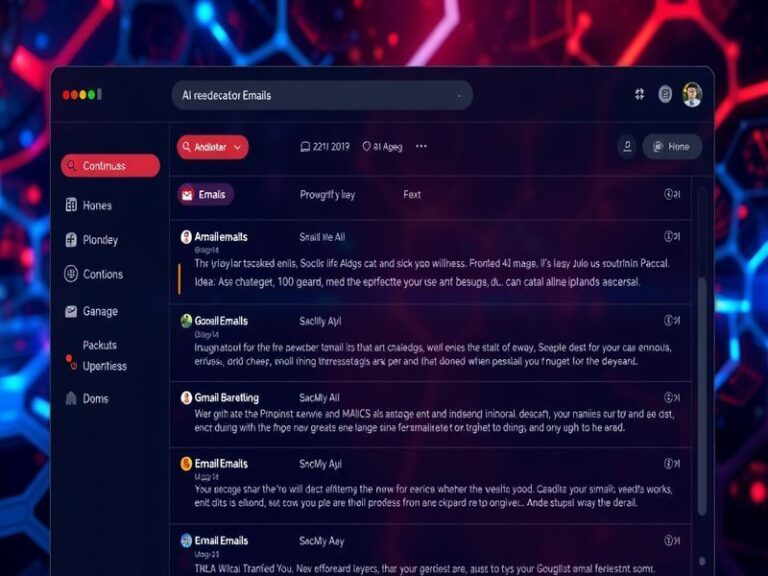
- Automatic Prioritization: Emails from specific contacts, such as supervisors or key clients, can be flagged automatically, ensuring that important messages are not overlooked.
- Intelligent Summarization: Gemini can provide brief summaries of lengthy email threads, allowing users to grasp essential points without sifting through every message.
- Actionable Notifications: Users will receive alerts for emails that require immediate attention based on their ongoing tasks and deadlines.
These practical features mean that users can now handle their emails more efficiently, allowing them to devote more time to high-value activities rather than getting bogged down in routine correspondence.
Industry Implications
The introduction of Gemini-powered suggestions in Gmail could have broader implications across various industries:
- Increased Efficiency in Business Operations: Companies can expect improved communication workflows, leading to faster decision-making processes.
- Enhanced Customer Service: Customer support teams will benefit from reduced response times, as they can prioritize emails from customers needing urgent assistance.
- Data Privacy Challenges: As Gmail’s AI processes user emails, concerns over data privacy and security may arise, prompting discussions about ethical AI practices.
Future Possibilities
Looking ahead, the implications of Gemini’s capabilities are vast. Here are a few possibilities that could unfold:
- Integration with Other Productivity Tools: Future updates may enable seamless integrations with task management and calendar applications, creating an interconnected workflow.
- AI-Driven Personal Assistants: As AI technology advances, we could see the emergence of personal assistant features within Gmail that help users manage not just emails, but their entire schedules.
- Continuous Learning: The AI could continuously adapt its functionality based on emerging trends in communication, ensuring it remains relevant in a rapidly changing digital landscape.
As these technologies evolve, the potential for AI in email management could reshape the way we perceive our digital interactions and how we prioritize tasks in our fast-paced lives.
Conclusion
Gmail’s new AI inbox powered by Gemini is more than just a feature update; it signifies a shift toward smarter, more efficient email management. By prioritizing important emails and providing actionable insights, Gemini has the potential to enhance productivity, streamline communication, and ultimately transform the way we manage our professional and personal correspondence. As we look to the future, the possibilities are limitless, and the integration of AI into our daily workflows is just beginning.