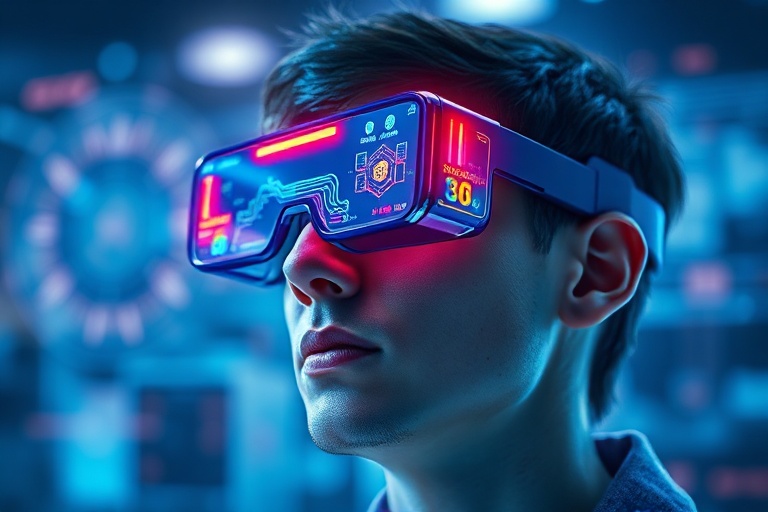
AI Glasses: The Future of Real-Time Assistance
With the rapid advancements in artificial intelligence and wearable technology, AI-powered smart glasses are emerging as a revolutionary tool that enhances conversations and tasks by providing real-time information. These innovative devices are not just a trend; they are paving the way for a future where information is seamlessly integrated into our daily lives.
The Evolution of Smart Glasses
Smart glasses have come a long way since their inception. Initially, they were limited in functionality, often focusing on basic notifications and augmented reality (AR) experiences. However, with the integration of advanced AI technologies, today’s smart glasses offer much more, including:
- Real-time translation: Instant language translation during conversations.
- Facial recognition: Identifying people and providing background information.
- Contextual information: Displaying relevant data about surroundings and objects.
- Voice commands: Hands-free operation for convenient use.
Enhancing Conversations with AI Glasses
One of the most exciting applications of AI glasses is their ability to enhance conversations. Imagine wearing a pair of glasses that can provide real-time data about the person you are speaking to, including their name, occupation, and shared connections, all without interrupting the flow of dialogue. This capability can significantly improve networking, social interactions, and professional engagements.
Moreover, features like real-time translation can break down language barriers in multicultural environments. For instance, during business meetings or international conferences, AI glasses can translate dialogues on the fly, enabling smoother communication. This technology not only fosters inclusivity but also broadens business opportunities across borders.
Practical Insights into AI Glasses
As we delve into the practical implications of AI glasses, it’s essential to consider their potential impact across various industries:
- Healthcare: Surgeons can access patient data and surgical instructions hands-free during operations.
- Education: Students can receive contextual information about their environment, enhancing learning experiences.
- Retail: Sales associates can provide personalized customer service by accessing product information and inventory in real-time.
- Manufacturing: Workers can receive step-by-step instructions for complex tasks, reducing errors and improving efficiency.
Industry Implications of AI-Powered Glasses
The integration of AI glasses into various sectors raises important considerations and implications for businesses and consumers alike:
- Data Privacy: With features like facial recognition and real-time data retrieval, concerns about privacy and data security will need to be addressed. Companies must ensure robust data protection measures are in place.
- User Experience: The success of AI glasses will largely depend on the user experience. Intuitive interfaces and seamless integration with existing workflows are crucial for user adoption.
- Economic Impact: As AI glasses streamline operations and enhance productivity, businesses may see significant cost reductions and increased profitability.
Future Possibilities
Looking ahead, the future of AI glasses is filled with exciting possibilities. As technology continues to evolve, we can anticipate enhancements such as:
- Improved AI Algorithms: More sophisticated algorithms will enable smarter contextual awareness and personalization.
- Extended Battery Life: Advancements in battery technology will allow for longer usage without the need for frequent recharging.
- Integration with IoT: AI glasses could connect with various Internet of Things (IoT) devices, creating a cohesive digital ecosystem.
- Augmented Reality Experiences: Enhanced AR capabilities will allow users to visualize data in their physical environment, making interactions even more immersive.
Conclusion
AI-powered smart glasses represent a significant leap forward in the integration of technology into our daily lives. By enhancing conversations and providing real-time information, these devices are not just tools; they are transforming the way we interact with the world around us. As we continue to explore the potential of AI glasses, it is clear that they hold the promise of a more connected and informed future.