AI-Driven Speech Recognition Across 55+ Languages: How Speechmatics is Setting the Standard for Voice Agents in a Multilingual World
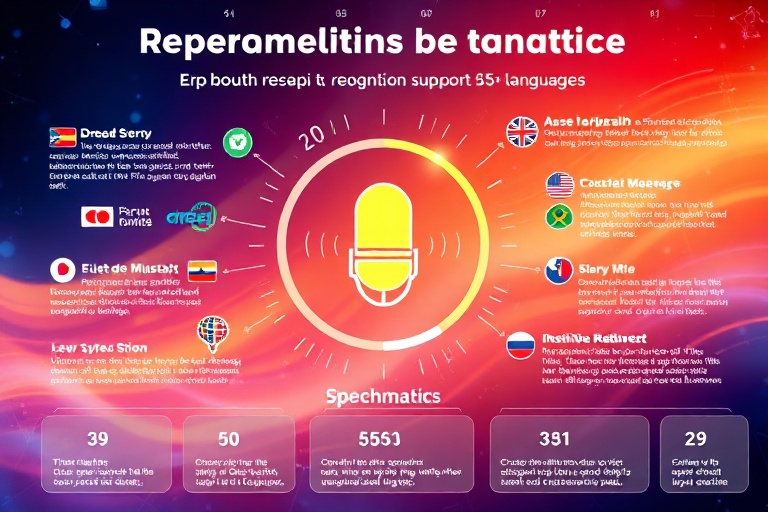
In an increasingly globalized world, communication across different languages has become a pivotal requirement. With artificial intelligence (AI) at the forefront of technological innovation, companies like Speechmatics are revolutionizing the way we interact with machines through voice. Their AI-driven speech recognition technology supports over 55 languages, setting new benchmarks for voice agents and applications. This article delves into the implications of this technology, its industry impact, and future possibilities.
The Evolution of Speech Recognition Technology
Speech recognition has evolved from simple command-and-control systems to sophisticated AI models capable of understanding nuanced speech patterns and accents. The introduction of deep learning has significantly improved accuracy and efficiency, enabling systems to learn from vast datasets and adapt over time.
Speechmatics: Pioneering Multilingual Speech Recognition
Founded in 2006, Speechmatics has quickly positioned itself as a leader in the speech recognition arena. Their technology leverages advanced machine learning algorithms to deliver high-quality transcription and voice recognition services in numerous languages. This capability allows businesses to effectively communicate with a diverse audience.
Key features of Speechmatics’ technology include:
- Robust Language Support: With support for over 55 languages, Speechmatics caters to a global market, allowing companies to reach a wider audience.
- Accent Recognition: The system can recognize various accents and dialects, improving accuracy in transcription and voice commands.
- Real-Time Processing: The ability to process speech in real-time enhances user experience, especially in applications like customer service and virtual assistants.
Practical Insights: How Businesses Can Leverage AI-Driven Speech Recognition
Businesses across various sectors can harness the power of Speechmatics’ technology in multiple ways:
- Enhancing Customer Support: Implementing voice agents powered by Speechmatics can streamline customer interactions, allowing for quicker and more accurate responses.
- Transcription Services: Organizations can utilize Speechmatics for transcribing meetings, interviews, and conference calls, improving documentation and accessibility.
- Global Expansion: Companies looking to expand into international markets can utilize multilingual support to engage with local customers effectively.
Industry Implications of AI-Driven Speech Recognition
The rise of AI-driven speech recognition technology is reshaping various industries:
- Healthcare: Speech recognition tools are streamlining patient documentation, reducing the administrative burden on healthcare professionals.
- Education: Language learning platforms are leveraging speech recognition to provide instant feedback, aiding in pronunciation and comprehension.
- Media and Entertainment: Automated captioning and transcription services are enhancing accessibility for diverse audiences.
Moreover, the ability to accurately capture and transcribe speech in multiple languages is a game-changer for businesses operating in multilingual environments. This technology fosters inclusivity, allowing organizations to connect with clients and customers globally.
Future Possibilities: What Lies Ahead for Speech Recognition Technology?
The future of speech recognition is brimming with potential. As AI continues to evolve, we can expect several advancements:
- Increased Accuracy: Ongoing improvements in algorithms and training data will lead to even higher levels of accuracy in speech recognition.
- Contextual Understanding: Future systems may incorporate contextual awareness to better understand the nuances of conversation, leading to more natural interactions.
- Integration with Other Technologies: The convergence of speech recognition with other AI technologies, such as natural language processing (NLP) and machine learning, will enhance its capabilities.
Additionally, as more businesses recognize the value of AI-driven solutions, the demand for such technologies will likely increase, pushing companies like Speechmatics to innovate further. The integration of speech recognition with IoT devices and smart home systems is another exciting frontier that promises to redefine how we interact with technology.
Conclusion
Speechmatics is leading the charge in creating cutting-edge AI-driven speech recognition technology that accommodates a multilingual world. As businesses increasingly adopt these solutions, the implications for customer engagement, operational efficiency, and global reach are profound.
With continued innovation, the future of speech recognition holds the promise of more intuitive and natural interactions between humans and machines, breaking down language barriers and fostering global communication like never before.