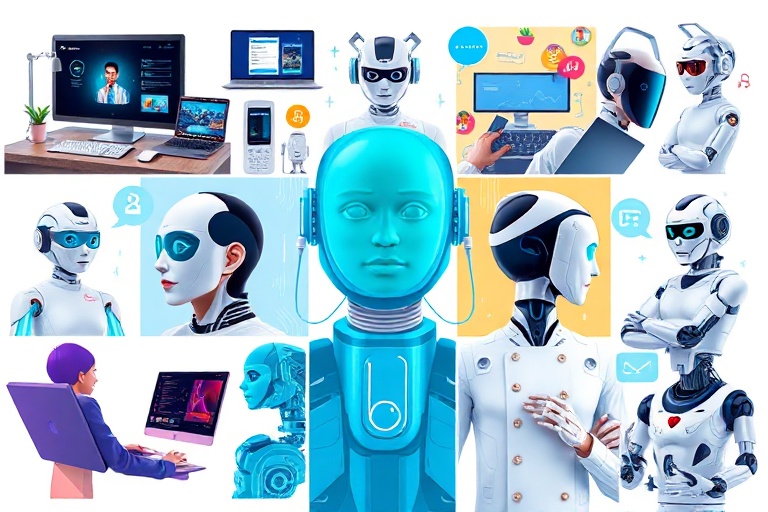
The Rise of AI Agents in Everyday Applications
As we move further into the digital age, the adoption of artificial intelligence (AI) agents is transforming the way we interact with technology. These intelligent systems are designed to enhance user experience across various applications, making tasks easier, faster, and more intuitive. From virtual assistants to smart home devices, AI agents are becoming an integral part of our daily lives, reshaping industries and setting new standards for innovation.
Understanding AI Agents
AI agents are software programs that can autonomously perform tasks or assist users by mimicking human-like reasoning and decision-making capabilities. They utilize various technologies, including machine learning, natural language processing (NLP), and computer vision, to interpret user inputs and respond appropriately. The versatility of AI agents allows them to be integrated into numerous applications, enhancing their functionality.
The Impact of AI Agents on User Experience
The introduction of AI agents into everyday applications has led to significant improvements in user experience. Here are some key areas where AI agents are making a notable impact:
- Personalization: AI agents analyze user behavior and preferences to offer personalized recommendations. For instance, streaming services like Netflix and Spotify use AI algorithms to suggest content tailored to individual tastes.
- Efficiency: AI agents streamline workflows by automating repetitive tasks. Tools like Zapier and IFTTT allow users to create workflows that connect different applications, saving time and effort.
- Accessibility: AI agents enhance accessibility for users with disabilities. Voice-activated assistants like Amazon’s Alexa and Apple’s Siri provide hands-free control, making technology more accessible for everyone.
- Customer Support: Companies are increasingly employing AI chatbots to handle customer inquiries. These intelligent systems can provide instant responses, improving customer satisfaction and reducing wait times.
Practical Insights into AI Agent Implementation
Implementing AI agents in applications involves several practical considerations:
- Data Quality: The effectiveness of AI agents relies heavily on the quality of data they are trained on. Ensuring access to accurate and relevant data is critical for delivering reliable outputs.
- User-Centric Design: Developers should prioritize user experience when designing AI agents. This includes creating intuitive interfaces and ensuring seamless interactions.
- Continuous Learning: AI agents must be designed to learn and adapt over time. This requires ongoing training and updates to improve their performance based on user feedback and changing patterns.
- Ethical Considerations: Organizations must address ethical concerns related to AI, including bias in algorithms and user privacy. Transparency in data usage and decision-making processes is essential.
Industry Implications of AI Agents
The rise of AI agents is not only revolutionizing user experience but also reshaping various industries:
- Healthcare: AI agents are assisting healthcare professionals by analyzing patient data and providing insights for diagnosis and treatment plans.
- Finance: In the financial sector, AI agents are used for fraud detection, risk assessment, and personalized financial advice.
- Retail: Retailers leverage AI agents to enhance customer engagement through personalized marketing strategies and inventory management.
- Education: AI agents are transforming education by providing personalized learning experiences and administrative support for educators.
Future Possibilities for AI Agents
The future of AI agents is bright, with numerous possibilities on the horizon:
- Increased Integration: As AI technology continues to evolve, we can expect deeper integration of AI agents into everyday applications, leading to more cohesive ecosystems.
- Enhanced Emotional Intelligence: Future AI agents may develop better emotional understanding, allowing them to respond more empathetically to users, thus improving user engagement.
- Autonomous Agents: The concept of fully autonomous AI agents could become a reality, enabling them to operate independently in various domains, such as transportation and logistics.
- AI Ethics and Governance: As AI agents become more prevalent, the need for ethical frameworks and governance will become increasingly important to ensure they are used responsibly.
In conclusion, the rise of AI agents in everyday applications is a testament to the power of artificial intelligence in enhancing user experience. As these intelligent systems continue to evolve, they will undoubtedly play a pivotal role in shaping the future of technology across various industries. Understanding their implications and ethical considerations will be essential as we embrace this technological revolution.