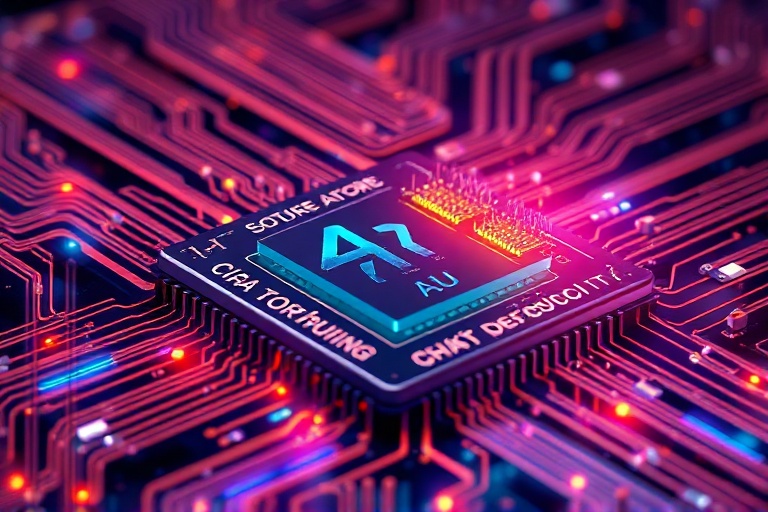
Advancements in AI Memory Technology: Enhancing Efficiency and Performance
As artificial intelligence (AI) continues to evolve, one of the fundamental challenges faced by researchers and engineers is the need for more efficient memory technology. The increasing complexity of AI algorithms and models necessitates advancements in memory chips that can handle larger data sets and process information at unprecedented speeds. This article explores the recent developments in AI memory technology, focusing on how new memory architectures can enhance AI efficiency and performance, their implications for various industries, and future possibilities.
The Need for Advanced Memory Solutions
AI models, particularly deep learning architectures, require vast amounts of data and computational power. Traditional memory technologies, such as Dynamic Random Access Memory (DRAM) and NAND flash, often struggle to keep up with the demands of modern AI applications. The limitations of these conventional memory systems can lead to bottlenecks that slow down processing speeds and hinder model performance.
Key challenges include:
- Latency Issues: Traditional memory technologies can introduce significant latency, affecting the speed at which AI models can access and process data.
- Energy Consumption: High energy usage in conventional memory chips can be a limiting factor for scaling AI operations, especially in data centers and mobile devices.
- Data Bandwidth: Insufficient bandwidth can restrict the amount of data that can be processed simultaneously, impacting overall AI efficiency.
Recent Innovations in Memory Technology
Recent breakthroughs in memory technology are poised to address these challenges. Some of the most promising advancements include:
- Resistive RAM (ReRAM): This non-volatile memory technology offers faster read and write speeds compared to traditional memory. It operates by changing the resistance of a material, which can significantly enhance data access times for AI applications.
- Magnetoresistive RAM (MRAM): MRAM combines the speed of SRAM with the non-volatility of flash memory. It is capable of retaining information without power, making it ideal for energy-efficient AI processing.
- 3D NAND Technology: By stacking memory cells vertically, 3D NAND technology increases storage density and improves data transfer rates, allowing for faster access to the vast datasets required for training AI models.
- Processing-in-Memory (PIM): This innovative approach integrates processing capabilities within memory chips, reducing the need for data to travel between separate memory and processing units, thereby significantly speeding up computations.
Industry Implications
The advancements in AI memory technology have far-reaching implications across various industries:
- Healthcare: Enhanced memory technologies can accelerate medical imaging processes and enable real-time data analysis, leading to quicker diagnoses and improved patient outcomes.
- Finance: AI-driven financial models can process market data more efficiently, allowing for rapid decision-making and improved trading strategies.
- Automotive: In the development of autonomous vehicles, faster memory technologies can enable real-time processing of sensor data, improving navigation and safety systems.
- Telecommunications: With the advent of 5G, enhanced memory can support the increased data traffic and low-latency requirements necessary for advanced AI applications in communication networks.
Future Possibilities
The trajectory of AI memory technology is promising, with several exciting possibilities on the horizon:
- Integration with Quantum Computing: As quantum computing advances, the integration of quantum memory with AI systems could lead to breakthroughs in speed and efficiency, enabling AI to solve complex problems previously thought unsolvable.
- AI-Optimized Memory Chips: Future memory chips may be specifically designed to optimize AI workloads, incorporating machine learning algorithms that adaptively manage data flow and processing tasks.
- Increased Accessibility: As memory technology evolves, it is likely to become more cost-effective and accessible, democratizing AI capabilities and allowing smaller organizations to leverage advanced AI systems.
- Enhanced Security Features: With the rise of AI in sensitive applications, future memory technologies may incorporate advanced security protocols to protect data integrity and privacy.
Conclusion
The advancements in AI memory technology are set to revolutionize the way artificial intelligence functions across various applications. By addressing the current limitations of traditional memory systems, new memory architectures can enhance AI efficiency and performance, leading to faster and more reliable AI solutions. As the technology continues to develop, its implications will be felt across industries, paving the way for innovative applications that can transform our world.