Creating Custom ML Models Without Code: How No-Code Platforms are Democratizing Machine Learning for Users
In an era where data-driven decision-making is essential for businesses, machine learning (ML) has emerged as a vital tool for extracting valuable insights from vast datasets. However, the traditional approach to developing ML models often requires extensive coding knowledge and expertise in data science. Fortunately, the rise of no-code platforms is transforming this landscape, allowing users without technical skills to create custom ML models easily.
The Rise of No-Code Platforms
No-code platforms are software development environments that enable users to build applications and automate processes without writing code. These platforms have gained traction due to their user-friendly interfaces and visual design tools, which empower non-technical users to engage in activities that were previously the domain of skilled programmers.
Some notable no-code platforms for machine learning include:
- Google AutoML
- Microsoft Azure ML Studio
- H2O.ai
- DataRobot
- Teachable Machine by Google
How No-Code Platforms Work
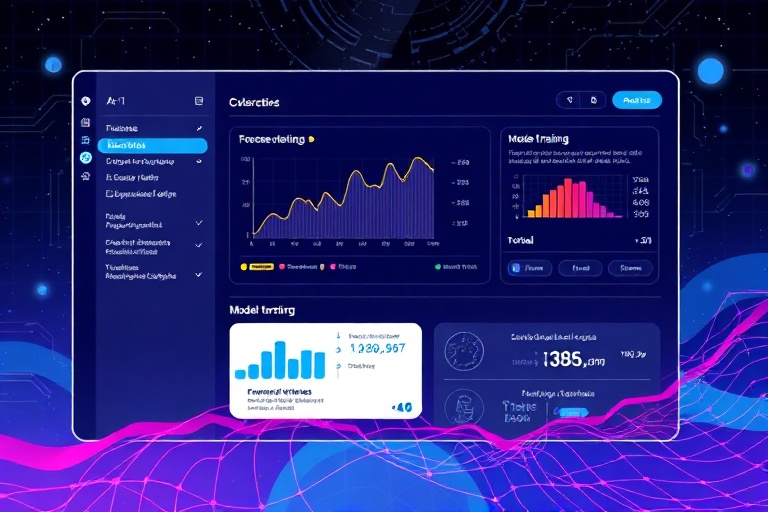
No-code ML platforms typically provide a graphical user interface (GUI) that allows users to:
- Upload Data: Users can easily upload datasets in various formats, such as CSV or Excel.
- Data Preparation: Tools for cleaning and preprocessing data are included, enabling users to handle missing values and outliers.
- Select Algorithms: Users can choose from a variety of pre-built algorithms or models suited to their specific problem.
- Train Models: With just a few clicks, users can train their models on the provided data.
- Evaluate Performance: The platform evaluates the model’s performance, providing metrics like accuracy, precision, and recall.
- Deploy Models: Once satisfied with the performance, users can deploy their models into production environments without additional coding.
Practical Insights for Users
The democratization of ML through no-code platforms offers several practical advantages:
- Accessibility: Non-technical users, such as marketers, product managers, and business analysts, can now leverage ML to enhance their strategies without needing to hire data scientists.
- Cost-Effective: Reducing reliance on technical teams can lead to significant cost savings for organizations, allowing them to allocate resources more efficiently.
- Rapid Prototyping: Users can quickly create and test their models, allowing for rapid iteration and improvement based on feedback.
- Customization: Users can tailor models to their specific business needs, enabling a more personalized approach to data analysis.
Industry Implications
The implications of no-code ML platforms extend beyond individual users and businesses. Several industries stand to benefit significantly:
- Healthcare: Medical professionals can develop predictive models for patient outcomes or disease diagnosis without needing programming expertise.
- Retail: Marketers can analyze customer data to create personalized shopping experiences or optimize inventory management.
- Finance: Financial analysts can build models for risk assessment or fraud detection, allowing for enhanced decision-making.
- Education: Educators can leverage ML to analyze student performance data and personalize learning experiences.
Future Possibilities
As no-code platforms continue to evolve, several future possibilities emerge:
- Integration with AI: Future no-code platforms may incorporate advanced AI features, allowing users to not only create models but also receive suggestions for improvements based on previous outcomes.
- Collaboration Features: Enhanced collaboration tools may be developed, allowing teams to work together seamlessly on ML projects.
- Broader Adoption: As awareness grows, more businesses across different sectors will adopt no-code ML platforms, leading to a surge in data-driven decision-making.
- Continuous Learning: Platforms may evolve to include features for continuous learning, automatically updating models with new data to maintain accuracy over time.
Conclusion
No-code platforms are revolutionizing the way businesses approach machine learning. By democratizing access to ML tools, these platforms empower users from various backgrounds to harness the power of data without the need for extensive coding knowledge. As technology continues to advance, the potential for innovation and efficiency in industries worldwide will only grow, paving the way for a future where data-driven insights are accessible to all.