Perplexity’s Self-Improving Memory Revolutionizes Agent Learning
The field of artificial intelligence (AI) is witnessing a transformative shift with the advent of advanced memory systems, notably exemplified by Perplexity’s self-improving memory. This innovation has significant implications for agent learning, enabling AI systems to enhance their efficiency and capabilities overnight. In this article, we explore how these overnight learning capabilities are revolutionizing AI agent efficiency, practical insights for implementation, industry implications, and future possibilities.
The Essence of Self-Improving Memory
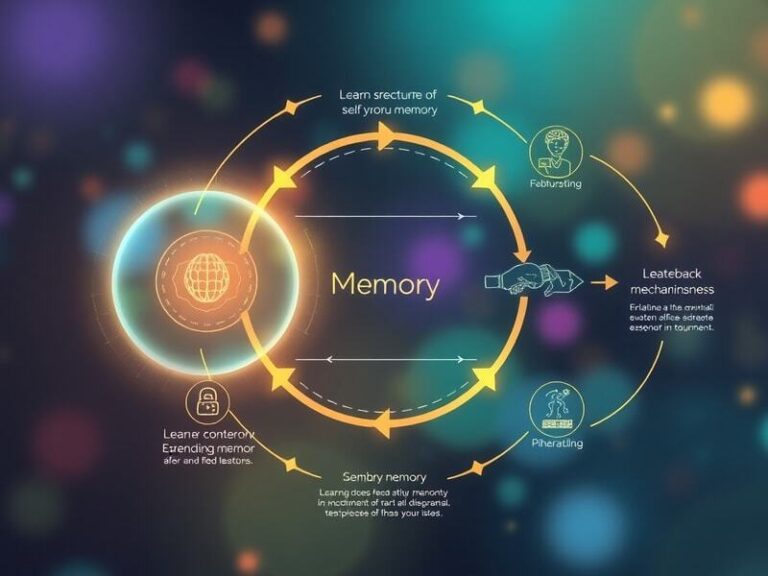
At its core, self-improving memory allows AI agents to retain and utilize knowledge gained from previous experiences and interactions. Unlike traditional memory systems that require manual updates or retraining, self-improving memory dynamically adjusts and evolves based on new information and interactions. This approach provides several advantages:
- Continuous Learning: AI agents can learn from each interaction, refining their understanding and performance without the need for extensive retraining.
- Enhanced Adaptability: The ability to adjust based on real-time feedback enables agents to respond to changes in their environment or user behavior more effectively.
- Resource Efficiency: By minimizing the need for repetitive training sessions, organizations can save on computational resources and time.
Practical Insights on Implementation
Integrating self-improving memory into AI systems requires a strategic approach. Here are some practical insights for businesses looking to leverage this technology:
- Assess Needs: Identify specific areas where self-improving memory can enhance existing AI applications, such as customer service, predictive analytics, or recommendation systems.
- Select Appropriate Tools: Choose platforms or frameworks that support self-improving memory functionalities, ensuring compatibility with current systems.
- Monitor Performance: Continuously evaluate the performance of AI agents after implementing self-improving memory to refine processes and optimize outcomes.
- Encourage Feedback Loops: Implement mechanisms for user feedback that allow AI agents to learn and adapt based on real-world interactions.
Industry Implications
The implications of self-improving memory extend across various sectors, including:
- Customer Service: AI agents equipped with self-improving memory can provide personalized support by recalling past interactions, leading to improved customer satisfaction.
- Healthcare: In medical applications, AI can learn from patient interactions and historical data to offer more accurate diagnoses and treatment plans.
- Finance: Financial institutions can utilize self-improving memory to enhance fraud detection processes by learning from patterns in transaction data.
Furthermore, as industries increasingly adopt AI technologies, the demand for self-improving memory solutions will likely grow, fostering innovation and competition among tech companies.
Future Possibilities
The future of AI with self-improving memory is bright and full of potential. Here are some possibilities we may see in the coming years:
- Greater Autonomy: As self-improving memory systems evolve, we may witness the rise of more autonomous AI agents capable of making decisions based on learned experiences without human intervention.
- Improved Collaboration: AI agents with advanced memory may collaborate more effectively with one another, sharing learned experiences to enhance collective intelligence.
- Ethical Considerations: The deployment of self-improving memory will necessitate discussions around data privacy, consent, and ethical AI use, leading to the establishment of industry standards.
With these advancements, the AI landscape will likely transform, creating opportunities for new applications and services that leverage the power of self-improving memory.
In conclusion, Perplexity’s self-improving memory is not just a technological breakthrough; it is a paradigm shift in how AI agents learn and operate. By embracing these capabilities, businesses can enhance their operational efficiency, drive innovation, and stay ahead in an increasingly competitive market.