Revolutionizing Medical Imaging: Midjourney’s 60-Second Body Scanner
In the ever-evolving landscape of healthcare technology, the introduction of Midjourney’s 60-second body scanner marks a significant breakthrough in medical imaging. This innovative device promises to transform the way we approach diagnostics, offering rapid and comprehensive scans that could redefine patient care. But what exactly is this technology, and how might it impact the future of medicine?
Understanding the Technology Behind the Scanner
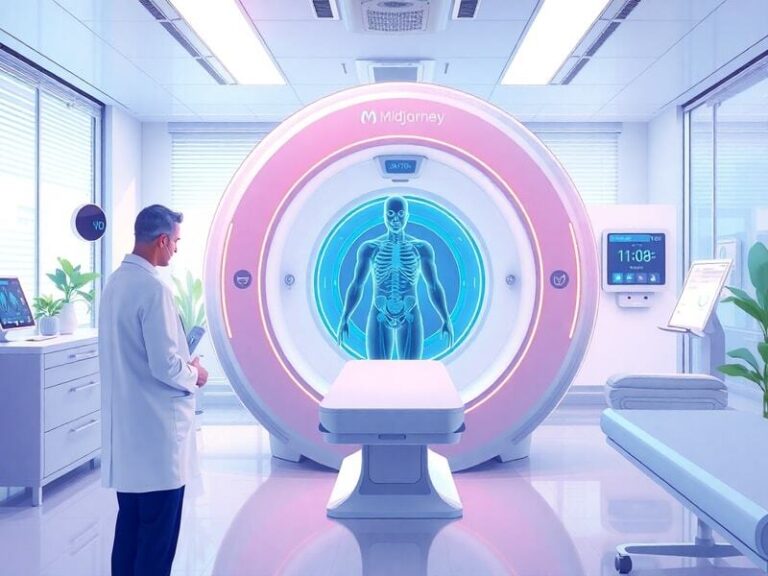
At its core, Midjourney’s body scanner leverages advanced artificial intelligence and machine learning algorithms to create detailed maps of the human body in less than a minute. The integration of AI allows for the rapid processing of vast amounts of imaging data, delivering results that previously took hours or even days.
The technology utilizes a combination of 3D imaging and AI-enhanced analysis, which means it can detect anomalies, assess organ health, and even predict potential health risks with unprecedented speed and accuracy. This is particularly valuable in emergency settings where time is of the essence.
Practical Insights into the Scanner’s Functionality
The operation of the 60-second body scanner is straightforward yet sophisticated:
- Patient Preparation: Minimal preparation is needed—patients simply step into the scanning chamber, and the system takes over.
- Rapid Scanning: The body is scanned using a series of advanced imaging techniques, including MRI and CT, all performed in under a minute.
- Data Processing: The AI algorithms analyze the data in real-time, identifying any areas of concern.
- Immediate Results: Physicians receive a detailed report almost instantaneously, allowing for prompt decision-making.
This streamlined process not only enhances efficiency but also significantly reduces patient anxiety, as the waiting time for results is virtually eliminated.
Industry Implications
The implications of Midjourney’s 60-second body scanner extend far beyond individual patient experiences. Here are some key industry impacts:
- Reduced Healthcare Costs: With faster diagnosis and treatment, hospitals can reduce operational costs and improve resource allocation.
- Increased Access to Care: This technology can be deployed in remote or underserved areas, providing critical imaging services where they were previously unavailable.
- Enhanced Research Opportunities: The ability to gather large datasets quickly opens new avenues for medical research, particularly in areas such as disease prevention and epidemiology.
As healthcare systems worldwide strive for efficiency and improved patient outcomes, the adoption of such technologies could lead to a paradigm shift in how medical imaging is utilized.
Future Possibilities and Innovations
Looking ahead, the future of medical imaging with the integration of AI technologies like Midjourney’s scanner seems promising:
- Personalized Medicine: The scanner’s ability to quickly analyze individual anatomy may lead to more tailored treatment plans, enhancing patient outcomes.
- Integration with Wearables: Future advancements might see the scanner working in tandem with wearable health devices to track changes in health over time.
- Telemedicine Applications: Remote diagnostics could become more accurate and accessible, especially in telemedicine, allowing specialists to analyze scans from anywhere in the world.
The continuous advancement of AI in medical imaging not only accelerates diagnostics but also opens new frontiers in preventative care, potentially reducing the incidence of severe health conditions through early detection.
Conclusion
Midjourney’s 60-second body scanner is a testament to how far technology has come in the field of medical imaging. With its potential to revolutionize patient care through faster diagnostics, improved accessibility, and enhanced research opportunities, the implications of this technology are vast. As we continue to embrace AI and machine learning in healthcare, the future promises a more efficient and effective approach to medical imaging, ultimately leading to better health outcomes for individuals worldwide.