A Font That Fools AI Models: Exploring Innovative Designs That Challenge AI’s Text Recognition Capabilities
The rapid advancement of artificial intelligence (AI) and machine learning has led to significant improvements in text recognition technologies. However, as AI systems become more adept at understanding and processing human language, innovative designers and researchers are exploring ways to challenge these capabilities. One particularly fascinating area of exploration is the development of fonts that can confuse AI models, ultimately leading to discussions about security, creativity, and the future of human-computer interaction.
Understanding AI Text Recognition
AI text recognition, often referred to as Optical Character Recognition (OCR), involves a range of technologies that enable machines to interpret and understand text from images or printed materials. This process generally includes several steps:
- Image Acquisition: Capturing the image of the text.
- Preprocessing: Enhancing the image for better recognition, such as adjusting brightness or contrast.
- Text Detection: Identifying areas within the image that contain text.
- Character Recognition: Converting detected text into machine-readable code.
As these technologies evolve, they become increasingly sophisticated, with deep learning models improving accuracy rates significantly. However, this progress also brings challenges, particularly as designers aim to develop fonts that can fool these AI systems.
Innovative Font Designs
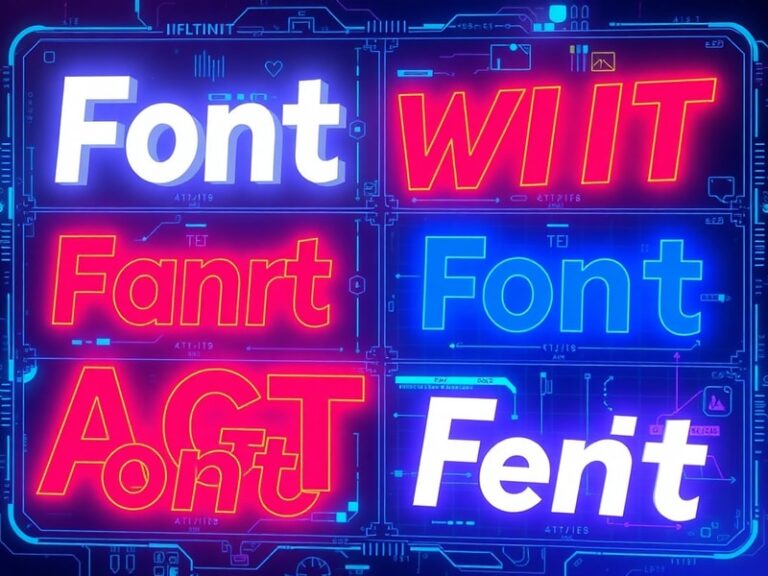
Innovative font designs play a crucial role in exploring the boundaries of AI text recognition. Designers are experimenting with various styles that can confuse or mislead AI models. Here are a few notable approaches:
- Distorted Characters: Fonts that intentionally distort letters can create confusion for AI systems, as the alterations may lead to misinterpretation.
- Ambiguous Shapes: Fonts that incorporate shapes resembling multiple characters can further challenge recognition algorithms.
- Variable Spacing and Sizing: Fonts that change the size and spacing of characters can disrupt the uniformity that AI models often rely on for accurate reading.
- Layered Text: Using overlapping letters or characters can obscure the individual components, making it difficult for AI to parse the text correctly.
Practical Insights and Industry Implications
The implications of designing fonts that can confuse AI text recognition extend beyond mere artistic expression. Here are some practical insights and industry implications:
- Security Applications: In industries where sensitive information is processed, such as banking or healthcare, custom fonts could be employed to protect against automated text extraction tools.
- Creative Marketing: Brands looking to stand out may leverage unique fonts to create a distinctive identity that challenges AI’s ability to generate automated responses.
- Enhanced Accessibility: While some fonts might confuse AI, others can be designed to improve readability for individuals with disabilities, demonstrating that innovation can serve multiple purposes.
- Research and Development: Ongoing research into AI’s limitations can lead to the development of more robust and versatile text recognition systems, ultimately benefiting the field.
Future Possibilities
As AI technology continues to evolve, the future of font design and text recognition is filled with possibilities. Here are some potential developments to consider:
- Adaptive Fonts: Future fonts may adapt in real-time based on the recognition system attempting to process them, creating a dynamic feedback loop that challenges AI continuously.
- Integration with Augmented Reality (AR): Fonts that can be recognized differently in AR environments may open up new avenues for advertising and user engagement.
- AI-Driven Design Tools: Designers may utilize AI to create fonts that are specifically engineered to deceive AI recognition models, blending creativity with technology.
- Ethical Considerations: As we explore these innovations, ethical implications must be considered, especially concerning the potential for misuse in deceptive practices.
Conclusion
In a world where artificial intelligence is becoming a pivotal part of our daily lives, exploring innovative font designs that can fool AI models is both a creative challenge and an important research avenue. By understanding the implications of these designs, industries can better prepare for a future where human creativity continually tests the limits of technology. As researchers and designers collaborate, the dialogue surrounding text recognition will likely yield exciting developments that enhance both security and creativity in the digital age.