Researchers leveraging advanced deep learning techniques have reportedly designed novel protein structures acting as highly specific “molecular scissors” to target proteins implicated in Alzheimer’s disease, marking a significant step in AI-driven therapeutic development.
The Unmet Need in Alzheimer’s Treatment
Alzheimer’s disease, a progressive neurodegenerative disorder, remains a formidable challenge for medical science. Despite decades of intensive research, effective treatments capable of halting or reversing its progression are still elusive. Current therapeutic strategies primarily focus on managing symptoms rather than addressing the underlying pathology. A central hypothesis in Alzheimer’s research revolves around the accumulation of misfolded proteins in the brain, notably amyloid-beta plaques and tau tangles, which are believed to contribute to neuronal dysfunction and death.
Developing drugs that can selectively target these problematic proteins without causing significant off-target effects has proven incredibly difficult. Traditional drug discovery methods, often relying on high-throughput screening of vast chemical libraries, face limitations in designing molecules with the precise specificity and desired functional activity needed to interact with complex biological targets like misfolded proteins.
Deep Learning as a Protein Architect
The advent of deep learning has revolutionized various fields, and its application in protein science is rapidly accelerating. AI models are now capable of not only predicting the 3D structures of proteins from their amino acid sequences with remarkable accuracy, as demonstrated by systems like DeepMind’s AlphaFold and the University of Washington’s RoseTTAFold, but also of designing entirely novel protein sequences with specific functions. This capability moves beyond merely understanding existing proteins to actively engineering new ones.
In the context of designing therapeutic agents, deep learning offers several powerful advantages:
- Structure Prediction: Accurately predicting the 3D structure of target proteins (like amyloid-beta or tau aggregates) is crucial for designing complementary binding or catalytic sites.
- Generative Design: AI models can generate novel protein sequences that are predicted to fold into desired shapes or exhibit specific binding properties, potentially creating entirely new classes of therapeutic molecules.
- Optimization: Machine learning algorithms can iteratively refine protein designs, optimizing factors such as binding affinity, stability, and specificity, significantly accelerating the design cycle compared to traditional empirical methods.
- Virtual Screening: AI can rapidly screen vast virtual libraries of potential protein designs, identifying candidates with the highest likelihood of success before experimental synthesis and testing.
These capabilities allow researchers to explore a much larger design space than previously possible, identifying unique molecular architectures tailored for specific biological interactions.
The “Molecular Scissors”: Precision Targeting
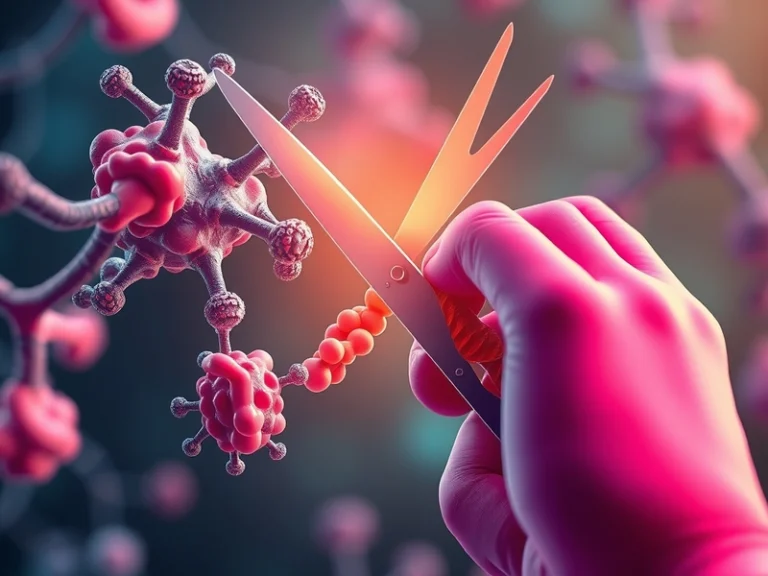
The concept of “molecular scissors” in this context refers to engineered proteins or peptides designed to precisely interact with and potentially neutralize specific pathological proteins. For Alzheimer’s, this could mean designing a protein that:
- Cleaves Misfolded Proteins: Directly breaks down amyloid-beta plaques or tau tangles into harmless fragments, similar to how proteases cleave other proteins.
- Inhibits Aggregation: Binds to monomeric or oligomeric forms of amyloid-beta or tau, preventing their aggregation into toxic structures.
- Modulates Activity: Alters the pathological function of target proteins through highly specific binding interactions.
The critical aspect enabled by deep learning is the unprecedented level of specificity. By training models on vast datasets of protein structures and interactions, AI can learn the intricate rules governing molecular recognition. This allows for the design of therapeutic proteins that can differentiate between healthy and pathological forms of a protein, or between a target protein and other similar proteins in the body, thereby minimizing off-target effects that often plague traditional small-molecule drugs.
The ability to design such precise tools represents a paradigm shift. Instead of searching for existing molecules that might fit a target, AI allows researchers to create bespoke molecular entities engineered from the ground up to perform a specific therapeutic task with high fidelity.
Challenges and the Path Ahead
While the AI-driven design of these “molecular scissors” is a significant scientific achievement, it is important to contextualize its current stage. This breakthrough represents a crucial step in fundamental research and drug discovery, but it is not yet a clinical treatment.
The path from an AI-designed protein to a viable therapeutic involves numerous rigorous stages:
- In Vitro Validation: Confirming the designed protein’s activity and specificity in laboratory experiments using purified proteins and cell cultures.
- In Vivo Testing: Evaluating the therapeutic efficacy, safety, and pharmacokinetic properties (how the body absorbs, distributes, metabolizes, and excretes the drug) in animal models of Alzheimer’s disease.
- Clinical Trials: If successful in preclinical studies, the therapeutic candidate would then proceed through multiple phases of human clinical trials to assess safety, dosage, and efficacy in patients.
- Manufacturing and Delivery: Developing scalable and cost-effective methods for producing the protein therapeutic, and devising effective delivery mechanisms to ensure it reaches the brain in sufficient concentrations.
Each of these stages is complex, time-consuming, and resource-intensive, often taking a decade or more. However, the ability of deep learning to rapidly generate and optimize highly specific protein designs could significantly accelerate the initial stages of drug discovery, potentially shortening the overall development timeline for future Alzheimer’s therapies.
This advance underscores the transformative potential of artificial intelligence in addressing some of humanity’s most challenging diseases, offering a glimmer of hope for new approaches to conditions like Alzheimer’s that have long defied conventional therapeutic strategies.