Meta’s Entry into AI Code Generation
In an era where technology continues to evolve at an unprecedented pace, Meta has unveiled its latest innovation: Muse Code. This new AI code generation tool aims to challenge the established players in the market, such as OpenAI’s Codex and GitHub’s Copilot. As companies increasingly seek to streamline their software development processes, Muse Code presents a compelling solution that combines machine learning with user-friendly features. In this article, we will explore how Muse Code is set to rival existing AI coding tools, its practical insights, industry implications, and future possibilities.
A New Contender in AI Coding Tools
Muse Code emerges from Meta’s commitment to enhancing productivity through advanced technology. Leveraging large language models (LLMs), Muse Code is designed not only to generate code but also to understand context and provide tailored solutions. This positions it as a formidable competitor in the AI code generation landscape.
Key features of Muse Code include:
- Contextual Understanding: Muse Code can analyze user intent and project requirements, enabling it to generate relevant code snippets efficiently.
- Multi-language Support: Unlike some of its competitors, Muse Code aims to support a wider range of programming languages, catering to diverse developer needs.
- Integration Capabilities: The tool is designed to seamlessly integrate with popular development environments, ensuring a smooth workflow for developers.
Practical Insights into Muse Code
For developers, adopting a new AI tool can be daunting. However, Muse Code seeks to provide practical insights that enhance the coding experience:
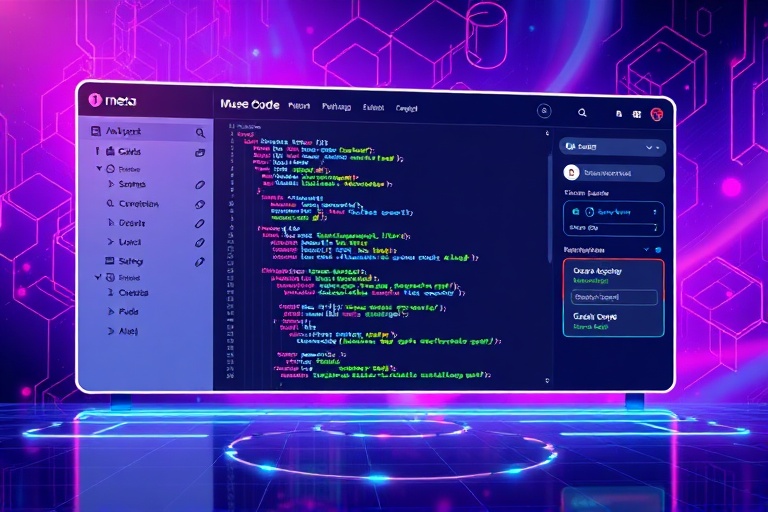
- Intuitive Interface: Muse Code boasts an easy-to-navigate interface that minimizes the learning curve for new users. This is vital for teams looking to adopt the tool quickly.
- Real-time Collaboration: The tool facilitates collaboration among team members, allowing multiple users to work on code simultaneously while receiving suggestions from the AI.
- Feedback Loop: Users can provide feedback on code suggestions, enabling Muse Code to learn and improve its recommendations over time.
Industry Implications
The introduction of Muse Code could have several implications for the software development industry:
- Increased Efficiency: By automating code generation, Muse Code can significantly reduce the time developers spend on routine coding tasks, allowing them to focus on more complex problems.
- Democratization of Coding: With AI tools like Muse Code, individuals with limited programming experience can more easily contribute to coding projects, potentially leading to a more diverse pool of talent in the tech industry.
- Enhanced Code Quality: AI-generated code can help identify and mitigate common errors, leading to overall improvements in software quality.
Future Possibilities
As Muse Code continues to develop, the possibilities for its use in the tech industry are vast. Here are a few areas where Muse Code may have a significant impact:
- Education: Educational institutions could leverage Muse Code to teach programming, providing students with real-time feedback and code suggestions as they learn.
- Open Source Contribution: Muse Code may facilitate contributions to open-source projects by simplifying the coding process, encouraging more developers to participate.
- AI-Powered DevOps: Integrating Muse Code into DevOps pipelines could streamline deployment processes, enhancing continuous integration and delivery.
Conclusion
Meta’s Muse Code represents a significant advancement in AI code generation technology. By combining contextual understanding, user-friendly features, and robust support for multiple programming languages, it is poised to challenge existing tools and reshape the software development landscape. As developers increasingly turn to AI solutions to enhance their productivity, Muse Code stands as a testament to the potential of innovation in the field. The future of coding may very well be defined by how effectively tools like Muse Code can integrate into our workflows, making the coding process more accessible, efficient, and enjoyable for all.