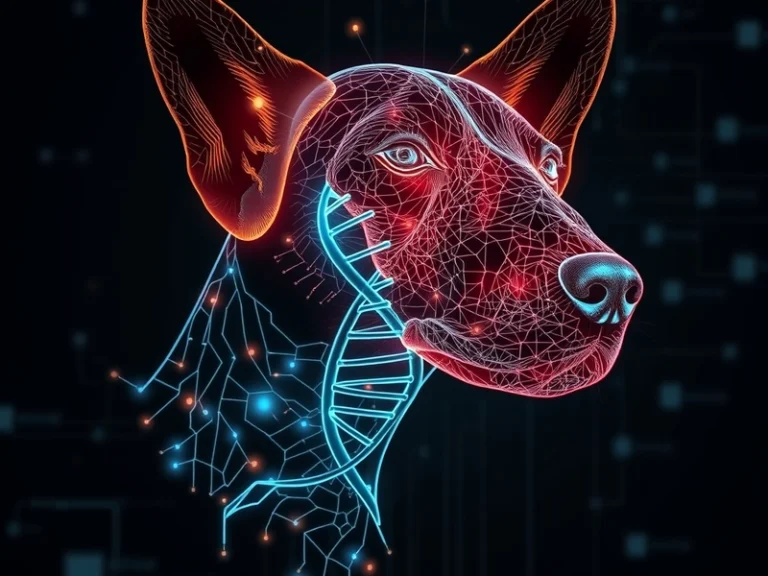
The application of artificial intelligence is increasingly central to efforts aimed at creating personalized mRNA cancer treatments for dogs, marking a significant advancement in veterinary oncology.
Canine cancer represents a leading cause of death in companion animals, with millions of dogs diagnosed annually in regions like North America alone. While traditional treatments such as chemotherapy, radiation, and surgery offer paths to remission or management, they often come with significant side effects and may not be effective for all tumor types or advanced stages of the disease. The quest for more targeted and less invasive therapies has long been a priority for veterinary researchers and clinicians.
The Promise of Personalized mRNA Vaccines
Inspired by breakthroughs in human medicine, particularly in infectious disease vaccines and emerging cancer therapies, personalized mRNA vaccines are now being explored for canine patients. This approach leverages messenger RNA (mRNA) to instruct the dog’s own cells to produce specific proteins, known as antigens, that are unique to their tumor. The immune system then recognizes these antigens as foreign and mounts a targeted attack against the cancer cells.
The “personalized” aspect is critical: unlike off-the-shelf treatments, these vaccines are designed specifically for an individual dog’s unique tumor profile. This involves a multi-step process:
- Tumor Biopsy and Sequencing: A sample of the dog’s tumor is analyzed, often alongside a healthy tissue sample, to identify genetic mutations present only in the cancer cells.
- Neoantigen Identification: These tumor-specific mutations can lead to the production of novel proteins, or neoantigens, which are ideal targets for the immune system because they are not found on healthy cells.
- Vaccine Design: Synthetic mRNA sequences encoding these identified neoantigens are then designed.
AI’s Indispensable Role in Vaccine Design
The complexity and sheer volume of data involved in identifying neoantigens and designing effective mRNA vaccines make artificial intelligence not just helpful, but increasingly indispensable. AI algorithms excel at pattern recognition and predictive modeling, capabilities that are perfectly suited for this intricate biological challenge.
Key areas where AI is transforming the development of these canine cancer vaccines include:
- Genomic Data Analysis: Machine learning models can quickly process vast amounts of genomic sequencing data from tumor and healthy tissue samples. They identify somatic mutations—changes unique to the tumor—that might give rise to neoantigens.
- Neoantigen Prediction: Once mutations are identified, AI algorithms are employed to predict which of these mutated proteins are most likely to be presented on the surface of cancer cells by the major histocompatibility complex (MHC) molecules, and critically, which ones will elicit a strong immune response. This involves predicting factors like MHC binding affinity and T-cell receptor recognition.
- mRNA Sequence Optimization: Beyond identifying targets, AI can optimize the mRNA sequence itself for stability, translation efficiency, and immunogenicity. This includes designing modifications to the mRNA molecule and its delivery system, such as lipid nanoparticles, to ensure effective uptake by cells and robust antigen presentation.
- Accelerated Discovery: The traditional drug discovery pipeline is notoriously long and expensive. AI dramatically accelerates the identification of potential vaccine candidates by sifting through possibilities far faster than human researchers could, reducing the time from biopsy to vaccine production.
Benefits and Broader Implications
The development of AI-driven personalized mRNA cancer vaccines for dogs holds several profound benefits:
- Precision Treatment: By targeting antigens unique to an individual dog’s tumor, these vaccines offer a highly precise form of therapy, potentially minimizing damage to healthy cells and reducing side effects often associated with conventional treatments.
- Immunological Memory: Unlike chemotherapy, which can have temporary effects, an effective vaccine aims to train the immune system to recognize and remember cancer cells, potentially leading to long-term protection against recurrence.
- Translational Impact: Advances in canine oncology often have a bidirectional relationship with human medicine. Successful strategies developed for dogs can provide valuable insights and accelerate the development of similar therapies for human cancer patients, and vice-versa. Dogs share many genetic and physiological similarities with humans, and naturally occurring cancers in dogs often mirror human malignancies.
While still an evolving field, the integration of AI into the design of personalized mRNA cancer vaccines for dogs represents a pivotal moment. It underscores a broader trend in both human and veterinary medicine: moving towards highly individualized, data-driven therapeutic approaches. As AI models become more sophisticated and genomic sequencing becomes more accessible, the potential to transform cancer care for our canine companions, and perhaps ultimately for ourselves, grows significantly.