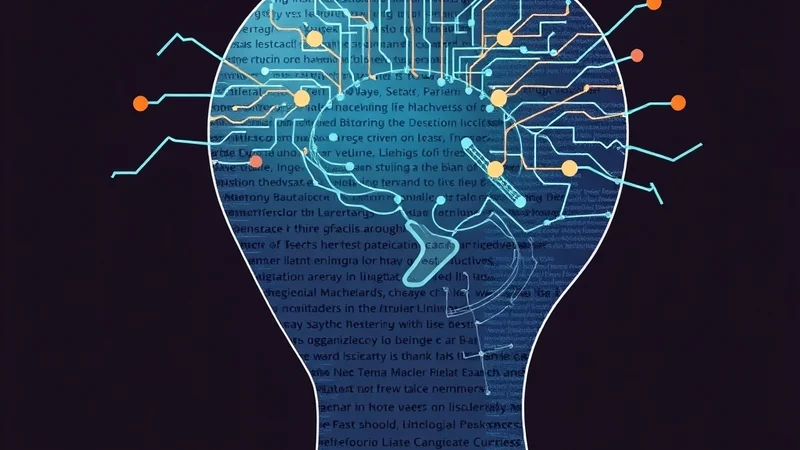
The proliferation of generative AI tools, particularly since the public launch of OpenAI’s ChatGPT in November 2022, has profoundly reshaped the landscape of online content creation. While precise, universally agreed-upon statistics remain elusive and subject to ongoing debate, the widespread adoption of these technologies has undeniably led to a significant surge in AI-generated text across the internet, prompting extensive discussion about its true prevalence and impact.
Before the advent of highly accessible and performant large language models (LLMs) like ChatGPT, AI-driven content generation was largely the domain of specialized tools and niche applications. However, the ease of use, broad capabilities, and free-tier access offered by platforms such as ChatGPT, Google’s Gemini (formerly Bard), and Anthropic’s Claude quickly democratized the ability to produce text at scale. This accessibility has fueled an explosion of content creation, from blog posts and marketing copy to social media updates and product descriptions.
The Mechanics of Mass Production
Generative AI tools excel at rapidly producing coherent, contextually relevant text based on prompts. This capability has been leveraged across various sectors:
- Marketing and SEO: Companies utilize AI to draft ad copy, email newsletters, landing page content, and extensive search engine optimized articles, aiming for higher visibility and reduced content creation costs.
- Journalism and Publishing: While less common for original investigative reporting, AI assists in summarizing articles, generating preliminary drafts, or creating templated news updates, such as financial reports or sports scores.
- E-commerce: Product descriptions, customer service FAQs, and review responses are frequently augmented or entirely generated by AI.
- Social Media: Influencers and brands employ AI to brainstorm post ideas, write captions, and even generate entire thread sequences.
- Educational Content: AI-generated summaries, study guides, and explanatory texts are becoming more common, both for legitimate learning and for academic dishonesty.
The primary appeal lies in efficiency and scalability. What might take a human writer hours or days to produce can often be drafted by an AI in minutes, enabling content creators to publish at unprecedented volumes.
Challenges in Quantification and Detection
Accurately measuring the exact proportion of AI-generated content on the web is a complex task. Methodologies vary, and even sophisticated detection tools face significant hurdles. Early AI detectors, such as GPTZero or OpenAI’s own Text Classifier (which was ultimately retired due to low accuracy), often struggled with false positives and false negatives, especially as LLMs became more adept at producing human-like text. The continuous evolution of generative models means that detection techniques must constantly adapt, leading to an ongoing “arms race” between generation and detection.
Furthermore, human editing of AI-generated drafts blurs the lines, making it difficult to categorize content definitively as “AI-generated” or “human-written.” Many creators use AI as a co-pilot, refining and fact-checking AI outputs rather than publishing them verbatim.
Implications for Search Engines and Information Quality
The surge in AI-generated content has significant implications for search engines, particularly Google, which has long prioritized high-quality, helpful content. Initially, there was concern that Google might penalize AI-generated content. However, Google’s stance has evolved, emphasizing the *quality* and *helpfulness* of content rather than its origin. In its guidance, Google has stated that “using automation — including AI — to generate content with the primary purpose of manipulating ranking in search results is a violation of our spam policies.” Conversely, content created with AI that is “helpful, high-quality, and original” is not inherently problematic.
This nuanced position puts the onus on publishers to ensure their AI-assisted content adheres to high standards of expertise, experience, authoritativeness, and trustworthiness (E-E-A-T). The potential for a deluge of low-quality, repetitive, or even misleading AI-generated content to “pollute” search results remains a significant concern for users seeking reliable information.
Beyond search engines, the broader impact on the information ecosystem is profound:
- Dilution of Originality: The sheer volume of AI-generated text risks burying truly original human insights and creative works under a mountain of algorithmically produced content.
- Misinformation and Hallucinations: While LLMs have improved, they are still prone to “hallucinating” facts or presenting biased information. Mass-producing such content can amplify misinformation at an unprecedented scale.
- Economic Pressure on Human Creators: The ability of AI to produce content cheaply and quickly puts economic pressure on human writers, journalists, and content creators, potentially leading to reduced opportunities or lower pay rates for human-produced work.
As generative AI continues to advance, the distinction between human and machine-generated content will likely become even more challenging to discern. The ongoing discussion surrounding the prevalence of AI-generated content underscores a fundamental shift in how information is created, consumed, and verified online, pushing stakeholders to reconsider standards of authenticity, quality, and trust in the digital age.