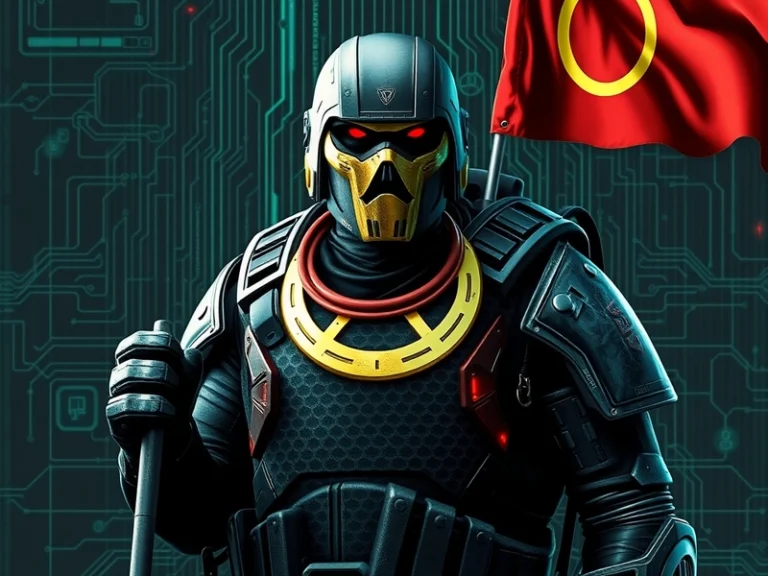
DeepMind has continued to advance artificial intelligence capabilities by training its agents in classic video game environments, notably demonstrating superhuman performance in the 1999 first-person shooter, Quake III Arena’s Capture the Flag mode.
The decision to leverage decades-old games for cutting-edge AI research is not arbitrary. These environments offer a unique blend of complexity, reproducibility, and human-interpretable metrics, making them ideal testbeds for developing sophisticated AI systems. While not as computationally demanding as modern AAA titles, games like Quake III Arena present significant challenges that mirror real-world problems, such as multi-agent cooperation, strategic planning under partial observability, and dynamic adaptation.
Why Classic Games Remain Relevant for AI Research
For AI researchers, classic gaming environments provide several distinct advantages:
- Defined Rulesets: The clear, consistent rules of a game provide a stable environment for reinforcement learning algorithms to explore and optimize strategies without the inherent unpredictability of the physical world.
- High Fidelity Simulations: Games offer rich, interactive simulations that are far more complex than simple grid worlds, requiring agents to process visual information, navigate 3D spaces, and react in real-time.
- Multi-Agent Interaction: Many classic games, particularly team-based ones like Capture the Flag, necessitate agents to cooperate, compete, and understand the intentions of both teammates and opponents. This is crucial for developing AI capable of operating in complex social or collaborative settings.
- Benchmarking and Comparability: The long history of these games means there’s a wealth of human performance data, allowing researchers to directly compare AI agent performance against human experts and track progress over time.
DeepMind’s AI in Quake III Arena: A Case Study in Multi-Agent Learning
DeepMind’s work in Quake III Arena’s Capture the Flag (CTF) mode, detailed in a 2018 publication, showcased an AI system capable of learning to play cooperatively with human players and other AI agents. The game, released over two decades ago, provides a demanding environment for multi-agent reinforcement learning due to its real-time nature, imperfect information (players only see what’s in their line of sight), and the need for both short-term tactical decisions and long-term strategic planning.
The AI agents, which DeepMind referred to as “Forced Agents” or “FTW” (For The Win), were trained using a novel reinforcement learning architecture. Instead of being programmed with explicit strategies, the agents learned by playing millions of games against each other. This self-play mechanism allowed them to discover complex behaviors and coordination strategies autonomously.
Key Challenges and AI Solutions
The CTF environment in Quake III Arena presented several critical hurdles for AI:
- Partial Observability: Agents cannot see the entire map, requiring them to infer opponent positions and team strategy from limited information. DeepMind’s agents learned to use map knowledge and sound cues effectively.
- Long-Term Credit Assignment: Actions taken early in a game might only yield rewards much later (e.g., defending a flag base might not immediately score points but prevents opponents from scoring). The AI learned to attribute success to sequences of actions.
- Emergent Cooperation: Without explicit communication protocols, agents learned to cooperate through observing and reacting to their teammates’ actions, developing strategies like guarding a flag carrier or defending their own base.
- Dynamic Opponent Modeling: The AI had to adapt to different opponent strategies, whether human or AI, learning to exploit weaknesses and counter effective tactics.
Ultimately, the DeepMind agents not only achieved superhuman performance in CTF but also demonstrated a remarkable ability to adapt and play effectively with and against human players, suggesting a level of general intelligence in complex, dynamic environments.
Beyond Quake: The Broader Impact
While Quake III Arena provided a fertile ground for multi-agent learning, DeepMind’s engagement with classic gaming extends further. Early foundational work involved training Deep Q-Networks (DQNs) to master a suite of Atari 2600 games, demonstrating that a single algorithm could learn to play a wide variety of games from raw pixel inputs, often surpassing human performance. More recently, projects like AlphaStar tackled the intricate real-time strategy game StarCraft II, which, while not 20 years old itself (released in 2010), builds on a genre with a long history of complex strategic demands, including resource management, unit control, and strategic planning under incomplete information.
The continuous success of AI in these classic gaming environments underlines their importance as stepping stones for more general intelligence. The skills learned—such as strategic planning, real-time decision-making, and multi-agent coordination—are directly transferable to real-world applications in areas like autonomous robotics, logistics optimization, traffic control, and even scientific discovery. As AI systems continue to evolve, classic games will likely remain a crucial benchmark for measuring progress toward more capable and adaptable artificial general intelligence.