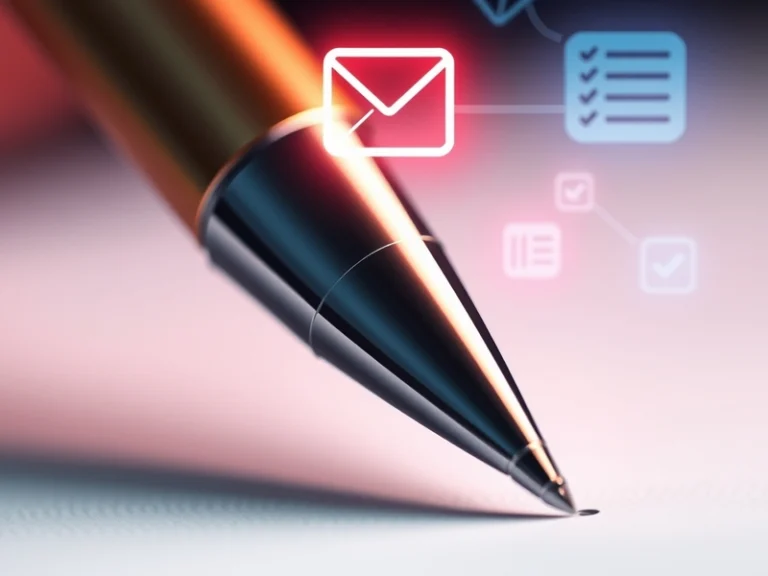
The field of AI-powered handwriting tools is rapidly advancing, with a new generation of smart pens emerging that promise to seamlessly convert handwritten notes directly into actionable digital tasks and emails.
This evolution marks a significant leap beyond simple handwriting-to-text conversion. While earlier smart pens focused primarily on digitizing written content for archival or basic search, these newer AI-driven devices are designed to understand the *intent* behind the scribbled words, transforming analog input into structured, executable digital actions within existing productivity ecosystems.
The AI Under the Ink
At the core of these advanced handwriting tools lies a sophisticated stack of artificial intelligence technologies. The process typically begins the moment a user puts pen to paper:
- Advanced Optical Character Recognition (OCR): This is the foundational layer, responsible for accurately translating diverse handwriting styles into digital text. Modern OCR systems leverage deep learning models trained on vast datasets of handwritten samples, enabling them to handle variations in script, pressure, and size with remarkable precision.
- Natural Language Processing (NLP) and Understanding (NLU): Once text is digitized, NLP engines analyze the content for meaning and context. This is where the system begins to differentiate between a simple note, a reminder, or a command. NLU models are trained to identify keywords, temporal expressions, and grammatical structures that signal intent.
- Intent Recognition and Entity Extraction: Building on NLP, specialized models identify specific entities (e.g., names, dates, locations, product names) and classify the user’s intention. For example, “Email John about the Q3 report by Friday” would be parsed to identify “John” as a recipient, “Q3 report” as email content, and “Friday” as a deadline. Similarly, “Buy milk and bread” could be recognized as a shopping list item.
- Integration Layer: This crucial component connects the interpreted intent to external digital services. Through APIs, the AI pen’s accompanying software can automatically draft an email in a user’s chosen client (e.g., Outlook, Gmail), create a task in a project management tool (e.g., Todoist, Asana), or add an event to a calendar.
A New Workflow: From Page to Platform
The user experience with these AI pens aims to be intuitive, replicating the natural feel of writing while augmenting it with digital intelligence. Typically, the pen itself contains sensors that track its movement and pressure, digitizing strokes in real-time or storing them for later synchronization. Some systems require specialized paper with embedded microdots for precise tracking, while others utilize cameras or other sensors within the pen to capture writing on any surface.
The magic happens when the handwritten input is processed. A quick gesture, a specific symbol, or simply the context of the writing can trigger the AI to convert and dispatch the information. For instance, writing “Task: Call Sarah about meeting prep” and circling it might instantly create a new task entry in a linked digital planner. Drafting an email might involve writing the recipient’s name, a subject line, and the body text, with the AI assembling it into a draft email ready for review and sending.
Bridging the Analog-Digital Divide
The primary appeal of these AI-powered pens lies in their ability to bridge the gap between traditional analog note-taking and modern digital workflows. Many individuals still prefer the tactile experience of writing by hand for brainstorming, creative thinking, or simply capturing fleeting thoughts. These tools allow users to retain that preference without sacrificing the organizational and collaborative benefits of digital platforms.
Key advantages include:
- Enhanced Productivity: Eliminates the need for manual transcription, saving time and reducing friction in converting ideas into actions.
- Seamless Integration: Connects directly with commonly used productivity applications, ensuring that handwritten notes contribute directly to ongoing digital projects and communications.
- Natural Interface: Preserves the cognitive and creative benefits associated with handwriting, such as improved memory retention and idea generation.
- Accessibility: Offers an alternative input method for users who find typing less efficient or comfortable for certain tasks.
Challenges and the Path Forward
Despite the significant advancements, developing and refining these AI pens presents several technical challenges. The accuracy of handwriting recognition across an infinite variety of personal styles remains an ongoing area of research. Contextual understanding, especially in ambiguous notes or complex sentence structures, requires robust and continuously learning NLP models. Furthermore, ensuring seamless and secure integration with a multitude of third-party digital services demands careful architectural design and adherence to privacy standards.
The market for smart writing tools has seen various iterations over the years, from early digitizing pads to specialized stylus-and-tablet combinations. This new wave of AI pens, with their focus on actionable intent recognition, represents a maturation of the technology, pushing beyond mere digitization towards intelligent automation. As AI models become more sophisticated and hardware more compact and efficient, these tools are poised to become an indispensable part of many professionals’ and creatives’ daily routines, transforming the humble act of writing into a powerful digital command center.