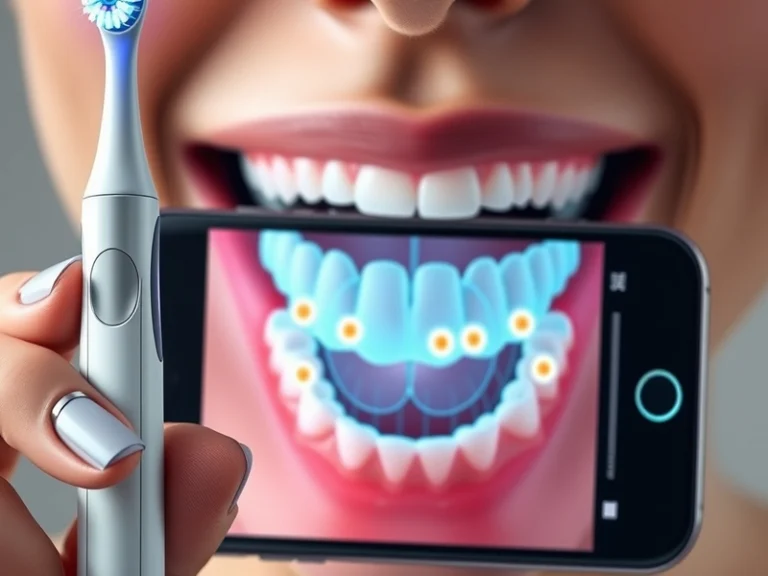
Dyson is reportedly exploring advanced dental hygiene, with discussions circulating about an AI-enhanced toothbrush that integrates a miniature camera to revolutionize oral care by precisely targeting hard-to-reach gaps.
This potential entry into the smart health sector aligns with Dyson’s history of applying sophisticated engineering and design to everyday appliances. Unlike many existing smart toothbrushes that rely primarily on accelerometers and gyroscopes to infer brushing coverage, a camera-based system, as envisioned, would leverage real-time visual data, processed by on-board artificial intelligence, to provide a more accurate and granular assessment of brushing effectiveness.
The Mechanics of AI-Enhanced Vision for Oral Hygiene
The core innovation lies in the pairing of a compact, high-resolution camera with advanced computer vision algorithms. During a brushing session, the camera would capture video footage of the teeth and gums. This visual stream would then be analyzed by an AI model, trained on vast datasets of dental imagery, to identify several key factors:
- Coverage Gaps: The AI could map the entire oral cavity, highlighting areas that have been insufficiently brushed or completely missed. This goes beyond simple quadrant-based feedback to pinpoint specific tooth surfaces or interdental spaces.
- Plaque Accumulation: With sufficient resolution and potentially specific lighting, the AI might detect early signs of plaque buildup, guiding the user to focus more intensely on these areas.
- Brushing Technique: By observing the angle and pressure of the brush head against the teeth and gums, the AI could offer real-time feedback on technique, helping users avoid abrasive brushing that could damage gums or enamel.
- Gum Health Indicators: While not a diagnostic tool, such a system might flag areas of gum redness or inflammation, prompting users to consult a dental professional.
The feedback would likely be delivered through a connected smartphone application, displaying a visual representation of the user’s mouth with color-coded zones indicating areas needing more attention. This real-time, visual guidance could transform a routine chore into a data-driven, personalized health regimen.
Beyond Traditional Smart Brushing
Existing smart toothbrushes, such as those from Oral-B and Philips Sonicare, have already introduced a degree of intelligence to oral care. Many offer pressure sensors to prevent over-brushing, timers to ensure adequate brushing duration, and connectivity to apps that display brushing patterns based on motion sensors. However, these systems often provide an inferred map of the mouth, which can sometimes be inaccurate or lack the precision needed to identify truly neglected spots.
A camera-equipped AI toothbrush could offer a significant leap forward by providing empirical, visual verification. This shift from inferential data to direct observation could lead to:
- Unprecedented Precision: Identifying microscopic debris or biofilm in crevices that motion sensors might miss.
- Personalized Coaching: Tailoring brushing advice not just to general patterns, but to the unique topography and needs of an individual’s mouth.
- Long-term Tracking: Building a comprehensive history of oral hygiene performance, potentially shareable with dentists to inform professional cleanings and check-ups.
Considerations and Challenges
While the potential benefits are substantial, the integration of AI cameras into toothbrushes presents several considerations:
- Privacy: Capturing visual data of one’s mouth raises questions about data storage, security, and how this sensitive information is used. Clear policies and robust encryption would be paramount.
- Cost: Incorporating advanced camera modules and AI processing capabilities would likely position such a device at the premium end of the market, potentially limiting accessibility.
- User Experience: The interface for displaying visual feedback must be intuitive and actionable. Users must be able to quickly understand and respond to the AI’s guidance without feeling overwhelmed.
- Durability and Hygiene: A camera integrated into a toothbrush head would need to withstand daily exposure to water, toothpaste, and saliva, while remaining easy to clean and maintain hygiene.
The prospect of Dyson entering the AI dental hygiene space with a camera-enabled toothbrush underscores a broader trend in consumer health technology: the increasing reliance on computer vision and artificial intelligence to bring diagnostic-level insights and personalized guidance into the home. If realized, such a device could indeed usher in a new era of proactive and highly efficient dental hygiene, potentially improving public oral health outcomes by making effective brushing more accessible and understandable for everyone.