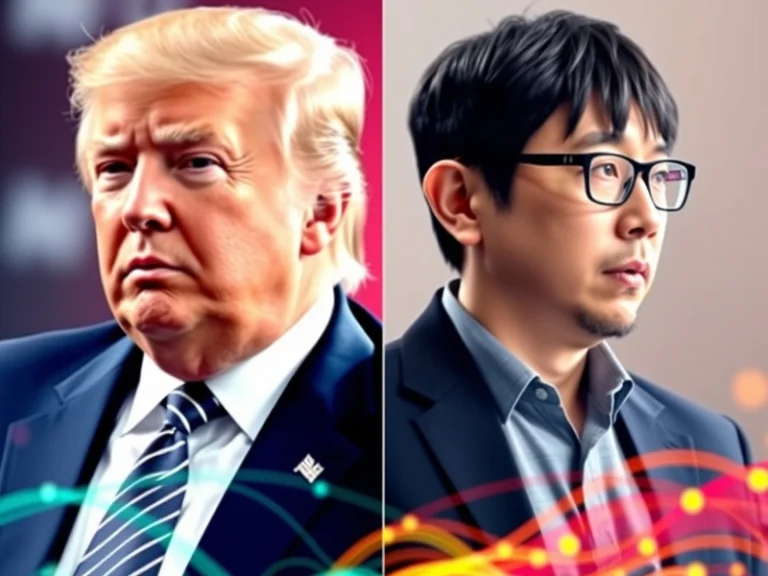
While public records do not detail a specific, direct debate between former President Donald Trump and NVIDIA CEO Jensen Huang on the intricacies of AI regulation, the hypothetical intersection of their distinct perspectives offers a compelling framework for understanding the ongoing, multifaceted global discussion surrounding AI governance. Their individual public stances and the philosophies they represent highlight the core tensions at play: balancing rapid innovation with societal safety, national economic interests with global ethical concerns, and industry self-governance with government oversight.
Donald Trump, as a former President and a prominent political figure, has consistently emphasized a policy approach that prioritizes American economic growth, technological leadership, and national security. During his administration, the focus regarding emerging technologies like AI generally leaned towards fostering innovation through minimal regulatory burdens. The underlying philosophy was often that excessive regulation could stifle American companies, hinder job creation, and cede technological advantage to international competitors, particularly China. For instance, the Executive Order on Maintaining American Leadership in Artificial Intelligence, issued in February 2019, underscored the importance of federal investment in AI research and development, removing barriers to innovation, and training the American workforce, rather than imposing stringent controls on the technology itself.
From this perspective, any discussion on AI regulation would likely center on several key tenets:
- Innovation First: A strong preference for allowing companies to innovate freely, believing that market forces and private sector ingenuity are the most effective drivers of progress.
- Economic Competitiveness: Viewing AI as a critical component of national economic strength and a tool for maintaining global leadership. Regulatory measures would be scrutinized for their potential impact on U.S. competitiveness.
- National Security: Emphasizing the strategic importance of AI for defense and intelligence, and ensuring that American technological advancements outpace those of geopolitical rivals.
- Limited Government Intervention: A general skepticism towards broad, preemptive regulations that could slow down development or create bureaucratic hurdles for nascent industries.
Industry Perspective: Jensen Huang’s Vision for AI
Conversely, Jensen Huang, as the CEO of NVIDIA, stands at the helm of a company that is foundational to the current AI revolution. NVIDIA’s graphics processing units (GPUs) are the bedrock of most advanced AI training and inference. Huang’s public statements often reflect a deep understanding of AI’s transformative power, its ethical implications, and the responsibilities of the companies developing it. He has consistently advocated for a balanced approach, recognizing both the immense potential and the inherent risks of artificial intelligence.
Huang has, at various times, acknowledged the need for some form of regulation, particularly concerning the safety and societal impact of advanced AI systems. However, his perspective, like many industry leaders, is often nuanced:
- Responsible Innovation: A commitment to developing AI ethically and safely, often through industry-led initiatives and best practices, rather than solely through government mandates.
- Targeted Regulation: A preference for specific, well-understood regulations that address concrete risks (e.g., data privacy, bias in specific applications) rather than broad, sweeping rules that could impede general research and development.
- Global Collaboration: Recognition that AI is a global phenomenon and that effective regulation may require international cooperation, though often with a focus on ensuring American companies remain competitive.
- Addressing Misinformation and Safety: Acknowledging the potential for AI to be misused or to create unforeseen societal challenges, and expressing a willingness for industry to play a role in mitigating these risks.
Converging and Diverging Paths in AI Governance
Should a substantive discussion between these two figures occur, several areas would likely see both alignment and friction. Both Trump and Huang would likely agree on the paramount importance of American leadership in AI and the need to foster an environment conducive to technological advancement. Neither would likely advocate for policies that would outright cripple the industry or surrender strategic advantage.
However, their approaches to achieving these goals would likely diverge:
- Scope of Regulation: Trump’s perspective would likely favor minimal, if any, direct regulation on AI development itself, focusing instead on market dynamics. Huang, while advocating for innovation, has shown openness to targeted regulations concerning safety and ethical guardrails, understanding that public trust is crucial for long-term adoption.
- Role of Government: While Trump’s stance suggests a limited governmental role beyond funding basic research and setting strategic priorities, Huang might envision a partnership where government helps define ethical boundaries and ensures public accountability, while industry focuses on technical implementation.
- International Strategy: Both would likely be concerned about China’s AI ambitions. Trump’s approach might prioritize protectionist measures and direct competition, whereas Huang might emphasize maintaining technological superiority through relentless innovation and strategic supply chain control, recognizing the global nature of talent and research.
The broader context of AI regulation continues to evolve rapidly. From the European Union’s comprehensive AI Act, which aims to categorize and regulate AI systems based on their risk levels, to President Biden’s Executive Order on the Safe, Secure, and Trustworthy Development and Use of Artificial Intelligence, issued in October 2023, the global conversation is moving towards more structured governance. These initiatives reflect a growing consensus that while AI offers immense benefits, its potential for misuse, bias, and unforeseen consequences necessitates careful consideration. The interplay between political figures prioritizing national interests and industry leaders navigating technological frontiers will continue to shape the contours of AI’s future regulatory landscape.