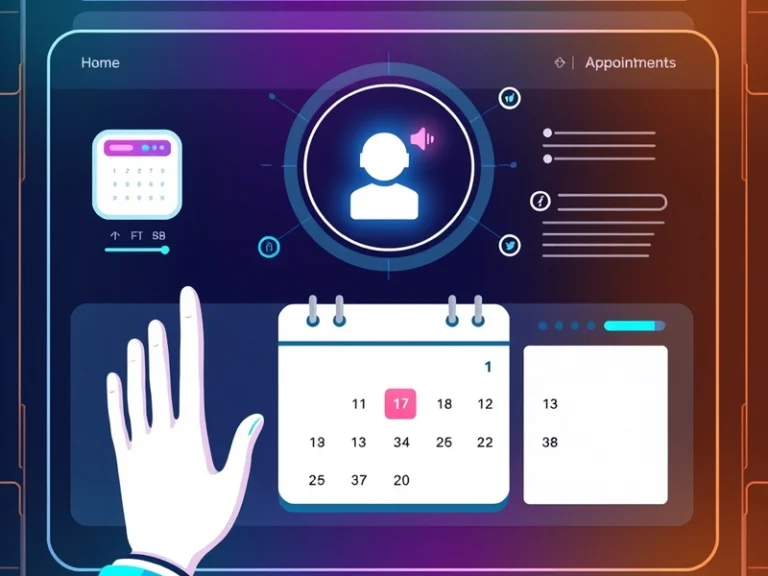
AI-powered personal assistants are increasingly demonstrating the ability to autonomously manage complex everyday tasks, from scheduling appointments to handling cancellations, a development that points towards the realization of systems like the envisioned “Persona AI.” This evolution promises to significantly simplify daily life by offloading the minutiae of calendar management and communication to intelligent agents.
The core promise of an advanced AI assistant in this domain is its capacity to act as a proactive digital delegate. Rather than simply responding to direct commands, these systems aim to anticipate needs, learn user preferences, and execute multi-step tasks that involve interaction with external services and individuals. For instance, a user might express a desire to “get a dental check-up next month,” and the AI would then take over the entire process.
Automating Appointment Management
The journey from a user’s request to a confirmed appointment involves several intricate steps that modern AI is beginning to tackle:
- Natural Language Understanding (NLU): The AI must accurately interpret vague or conversational requests, discerning intent, preferred times, locations, and any specific requirements. It needs to understand context and implied meanings, not just keywords.
- Calendar Integration and Availability Checking: Seamless integration with digital calendars such as Google Calendar, Microsoft Outlook Calendar, or Apple Calendar is fundamental. The AI cross-references the user’s existing schedule to identify open slots, considering travel time or preparation needed between events.
- External Communication: This is where the automation becomes truly powerful. The AI can initiate contact with service providers via various channels—email, SMS, or even voice calls—to inquire about availability, book appointments, and confirm details. Google Duplex, for example, showcased a conversational AI capable of making restaurant reservations or hair appointments over the phone, mimicking human speech patterns and understanding nuanced responses.
- Preference Learning: Over time, the AI learns user preferences for specific providers, times of day, or even types of appointments (e.g., always booking a morning slot for medical visits). This reduces the need for explicit instructions and personalizes the service.
Streamlining Cancellations and Rescheduling
Managing unforeseen conflicts and cancellations is often more complex and time-consuming than initial booking, making it a prime candidate for AI automation:
- Proactive Conflict Detection: An advanced AI assistant continuously monitors the user’s schedule for potential conflicts, such as a newly added meeting clashing with an existing appointment. It can also track external factors like traffic delays or flight changes that might impact punctuality.
- Automated Communication: Upon detecting a conflict or receiving a user’s cancellation request, the AI can automatically contact the service provider to cancel or reschedule. This involves composing professional messages, navigating automated phone systems, or interacting with online booking portals.
- Finding Alternatives: If an appointment needs to be rescheduled, the AI can immediately search for alternative slots, considering both the user’s availability and the provider’s. It can then present these options to the user for approval or even proceed with rescheduling based on learned preferences for urgency or priority.
- Handling External Changes: When a service provider cancels or reschedules an appointment, the AI can receive and process these notifications, update the user’s calendar, and inform the user, often suggesting new times or alternative providers without user intervention.
Technological Underpinnings
The development of such sophisticated AI assistants relies on a convergence of several advanced technologies:
- Large Language Models (LLMs): These models power the NLU capabilities, allowing the AI to understand complex, natural language requests and generate human-like responses for communication.
- Reinforcement Learning: Enables the AI to learn from interactions and feedback, improving its decision-making and preference understanding over time.
- API Economy: Extensive use of Application Programming Interfaces (APIs) allows the AI to securely connect and interact with various third-party services, including calendar applications, email clients, SMS gateways, and potentially proprietary booking systems.
- Conversational AI and Dialogue Management: Beyond understanding single utterances, the AI needs to maintain context over multi-turn conversations, ask clarifying questions, and manage the flow of interaction effectively, whether with the user or an external party.
Current Landscape and Future Outlook
While a fully autonomous “Persona AI” that masters all these aspects seamlessly is still evolving, existing technologies offer glimpses into this future. Google Assistant’s Duplex demonstrated significant strides in voice-based appointment booking. Other assistants like Apple’s Siri and Amazon’s Alexa offer varying degrees of calendar management and reminder setting. Specialized tools often handle specific aspects, such as meeting scheduling with multiple participants.
The challenges remain substantial, including ensuring privacy and data security, accurately handling ambiguous requests, and maintaining user trust. The AI must be robust against “hallucinations” or misinterpretations that could lead to incorrect bookings or cancellations. As AI models continue to advance in reliability and contextual understanding, the vision of an AI assistant that truly simplifies the administrative burden of daily life moves closer to widespread reality, freeing up human time and cognitive load for more complex or creative endeavors.