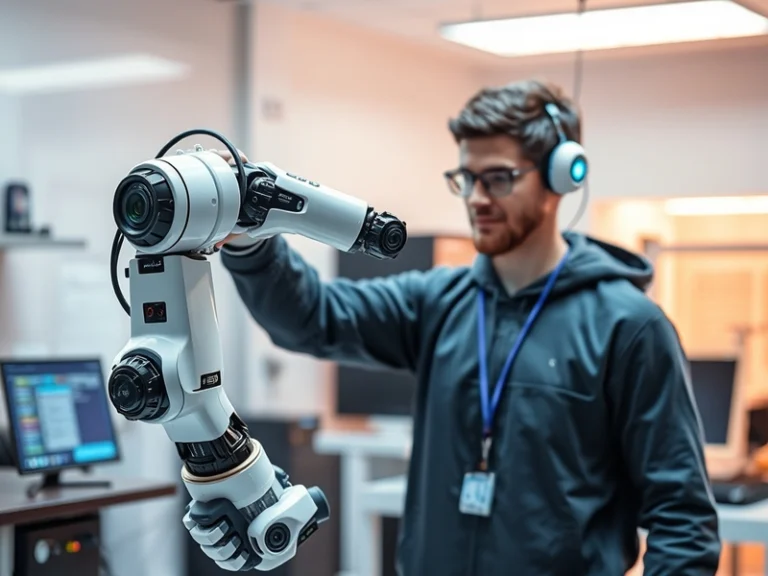
The increasing integration of robotic systems into research and development environments has brought forth crucial discussions around safety, particularly concerning incidents where these machines have inadvertently caused harm to the very developers who create them. While sensationalized narratives sometimes emerge, the core issue often revolves around the inherent complexities of human-robot interaction in shared workspaces, highlighting the critical need for robust safety protocols and comprehensive risk assessment.
Historically, industrial robotics has seen its share of accidents, predominantly in manufacturing settings where humans have entered restricted operational zones or where machinery has malfunctioned. As robots become more sophisticated, incorporating advanced AI and operating with greater autonomy, the nature of these risks evolves. Developers, often working in close proximity to prototypes or during late-stage testing, face unique challenges. These environments frequently lack the rigid safety cages common in heavy industrial deployments, relying instead on software-based safety systems or collaborative robot (cobot) principles that assume safe interaction.
Understanding the Incidents: Beyond Malice
When discussions arise about robots harming developers, it’s rarely about malicious intent. Instead, incidents typically stem from a confluence of factors:
- Unexpected Software Behavior: AI-driven robots can exhibit emergent behaviors that were not explicitly programmed or anticipated during development. A bug in a path planning algorithm, an unhandled exception in sensor data processing, or an unforeseen interaction between subsystems can lead to a robot moving in an unintended direction or with unpredicted force.
- Sensor Failures and Limitations: While modern robots are equipped with sophisticated sensors (e.g., lidar, cameras, force sensors), these systems are not infallible. Dust, glare, network latency, or calibration issues can lead to temporary blindness or misinterpretation of the environment, causing the robot to fail to detect a human presence or an obstruction.
- Human Error in Setup or Operation: Developers, in their drive to test limits or debug complex systems, may temporarily disable safety features, misconfigure operational parameters, or bypass established protocols. Overconfidence or familiarity with a robot can sometimes lead to complacency regarding potential hazards.
- Mechanical Failures: Despite rigorous engineering, mechanical components can fail. A joint motor can seize, a brake can slip, or a structural element can give way, leading to uncontrolled movements or collapses.
- Collaborative Robot (Cobot) Misinterpretation: Cobots are designed for direct human interaction, often employing force-limiting or speed-limiting features. However, these systems still have kinetic energy. If a cobot’s safety parameters are incorrectly set for a given task or if a human is positioned in an unexpected way, even a “safe” contact can result in injury.
Lessons Learned and Mitigation Strategies
Each incident, regardless of its specific cause, reinforces the importance of a multi-layered approach to robotic safety. The lessons learned are shaping new standards and best practices in the field:
- Prioritizing Fail-Safe Design: Robots should be designed to revert to a safe, inert state in the event of power loss, communication failure, or critical software errors. Emergency stop buttons must be prominently placed, easily accessible, and hardwired to bypass software controls.
- Rigorous Testing and Validation: Comprehensive testing, including simulation, hardware-in-the-loop testing, and gradual real-world deployment, is essential. This includes stress testing safety systems and intentionally trying to trigger failure modes in controlled environments.
- Enhanced Sensor Redundancy and Fusion: Relying on multiple sensor types and fusing their data can provide a more robust and reliable perception of the environment, reducing the likelihood of a single sensor failure leading to an incident.
- Clear Operational Procedures and Training: All personnel interacting with robots, especially during development, must receive thorough training on the system’s capabilities, limitations, and emergency procedures. Clearly defined safety zones, lockout/tagout procedures, and mandatory personal protective equipment (PPE) should be enforced.
- Human-Factors Engineering: Designing interfaces and operational workflows that minimize human error is crucial. This includes intuitive controls, clear feedback mechanisms from the robot, and ergonomic considerations for shared workspaces.
- Continuous Risk Assessment: As robots evolve and their applications change, so do their associated risks. Regular, ongoing risk assessments should be conducted, involving not only engineers but also safety experts and potential end-users.
The drive to innovate in robotics will inevitably involve pushing boundaries, but this must always be balanced with an unwavering commitment to safety. As robots move from caged industrial settings to more open, collaborative environments, understanding and proactively addressing potential hazards becomes paramount, ensuring that the progress of AI and robotics benefits humanity without undue risk to its creators.