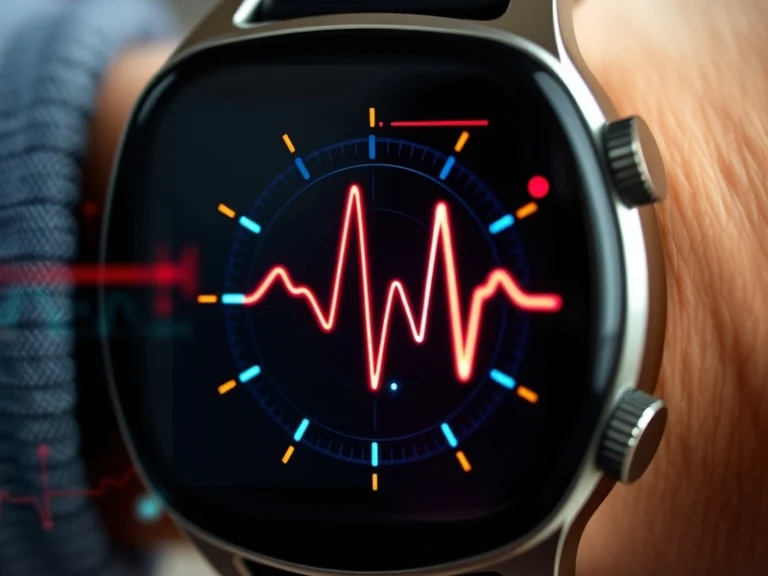
Researchers are leveraging artificial intelligence to estimate the age of arteries through pulse readings obtained from consumer wearable devices, signaling a potential advancement in accessible cardiovascular health monitoring.
The concept of “arterial age” refers to the biological age of a person’s arteries, which can differ significantly from their chronological age. Arteries that are stiffer or show signs of damage are considered biologically older, and this increased arterial stiffness is a well-established independent predictor of cardiovascular events like heart attacks and strokes. Traditionally, assessing arterial stiffness or health involves specialized clinical equipment and procedures, such as pulse wave velocity (PWV) measurements or tonometry, which are not readily available for routine or continuous home monitoring.
The innovation lies in using the ubiquitous data streams from smartwatches and other wearables. These devices commonly incorporate photoplethysmography (PPG) sensors, which emit light into the skin and measure changes in light absorption to detect blood volume variations. These variations correspond to the pulse wave as blood flows through the arteries. While PPG is widely used for basic heart rate tracking and, in some advanced wearables, for blood oxygen saturation (SpO2), researchers are now exploring its deeper potential.
The Role of AI in Arterial Age Estimation
Estimating arterial age from a simple pulse reading is not straightforward. The raw PPG signal is a complex waveform influenced by numerous physiological factors beyond just heart rate. This is where artificial intelligence, particularly machine learning, becomes critical. AI models are trained on vast datasets that include both PPG waveforms and corresponding clinically validated measurements of arterial health (like PWV) from a diverse range of individuals.
Through this training, the AI learns to identify subtle patterns, features, and correlations within the PPG signal that are indicative of arterial stiffness and overall arterial health. These patterns might include:
- Pulse Wave Morphology: The shape and contour of the pulse wave, including its rise time, peak, and dicrotic notch (a small dip reflecting aortic valve closure), can reveal information about arterial elasticity.
- Pulse Wave Velocity Estimation: While direct PWV measurement typically requires sensors at two different points on the body, AI can potentially infer aspects of pulse wave propagation characteristics from a single-point PPG signal, especially when combined with demographic data.
- Variability and Irregularities: AI can analyze the consistency and variability of pulse patterns over time, which might also offer clues about arterial health.
By detecting these intricate patterns, the AI model can then provide an estimation of arterial age, offering a non-invasive and convenient proxy for a person’s cardiovascular risk profile.
Potential Benefits and Implications
Should this technology mature and gain clinical validation, its implications for public health could be significant:
- Early Detection: Individuals could receive early warnings about accelerated arterial aging, potentially years before the onset of overt symptoms or a major cardiovascular event. This opens doors for timely lifestyle interventions or medical consultations.
- Personalized Health Monitoring: Continuous monitoring could allow users to track the impact of lifestyle changes (diet, exercise, stress management) on their arterial health in near real-time, fostering greater engagement in preventative care.
- Accessibility: Leveraging devices that many people already own, such as the Apple Watch, Samsung Galaxy Watch, or Fitbit devices, dramatically lowers the barrier to accessing advanced health insights, moving beyond traditional clinic-based assessments.
- Population Health: Aggregated, anonymized data (with appropriate consent) could provide valuable insights into population-level cardiovascular health trends and the effectiveness of public health initiatives.
Challenges and Considerations
Despite its promising potential, the path to widespread clinical adoption of AI-powered arterial age estimation from wearables faces several hurdles:
- Accuracy and Validation: The primary challenge is ensuring the accuracy and reliability of these AI models compared to established clinical gold standards. Rigorous, large-scale clinical trials are essential to validate the technology across diverse populations, accounting for factors like skin tone, body mass index, and pre-existing conditions.
- Regulatory Approval: For such a feature to be marketed as a medical device or for medical purposes, it would require approval from regulatory bodies like the U.S. Food and Drug Administration (FDA) or the European Medicines Agency (EMA). This process is stringent and demands substantial evidence of safety and efficacy.
- Data Diversity and Bias: AI models are only as good as the data they are trained on. Ensuring that training datasets are diverse enough to represent global populations, including various ethnicities, ages, and health conditions, is crucial to prevent algorithmic bias and ensure equitable performance.
- Clinical Interpretation: An estimated “arterial age” is a complex metric. Providing this information to consumers requires careful consideration of how it will be presented, interpreted, and acted upon, to avoid unnecessary anxiety or misinterpretation without the guidance of a healthcare professional.
- Privacy and Security: Health data from wearables is highly sensitive. Robust measures for data privacy, security, and user consent are paramount, especially as more intimate health metrics become derivable from these devices.
While still primarily in the research phase, the ability to leverage AI with existing wearable technology to provide insights into arterial age represents a significant step towards more proactive and personalized cardiovascular health management. The ongoing research aims to bridge the gap between sophisticated physiological measurements and accessible consumer technology, potentially empowering individuals with earlier information about their heart health.