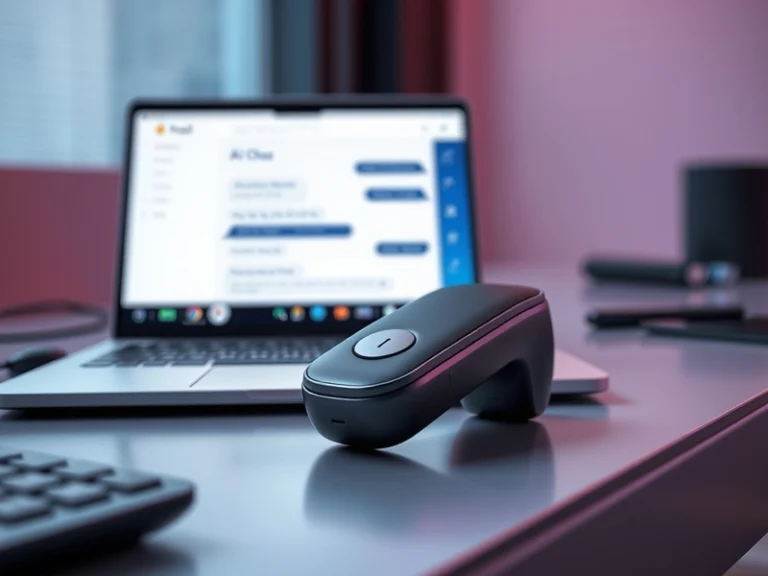
A new device named Vibe Key is emerging with the stated goal of simplifying user interaction with artificial intelligence tools, aiming to reduce friction and enhance the user experience.
The proliferation of sophisticated AI models, from large language models like OpenAI’s ChatGPT and Google’s Gemini to specialized image generators and code assistants, has undeniably transformed how many individuals and organizations work. However, interacting with these powerful tools often still involves navigating web interfaces, typing specific prompts, managing multiple applications, or invoking voice commands through existing smart devices. This fragmented landscape can introduce cognitive load, interrupting workflows and limiting the spontaneous integration of AI into daily tasks. Vibe Key positions itself as a potential hardware solution to this challenge, seeking to provide a more direct and intuitive conduit to AI capabilities.
The Current Landscape of AI Interaction
Today’s primary modes of AI interaction generally fall into a few categories:
- Text-based Interfaces: Web portals and chat applications remain the most common way to engage with generative AI, requiring users to formulate precise text prompts.
- Voice Assistants: Devices like Amazon Echo, Google Home, and Apple’s Siri offer hands-free interaction, but are often constrained by wake words and predefined command sets, sometimes struggling with complex, multi-turn conversations or contextual understanding.
- Integrated Software Features: AI capabilities are increasingly embedded directly into applications, such as Microsoft Copilot in Office 365 or Adobe Firefly in creative suites. While powerful, these are specific to their host applications.
- APIs and Developer Tools: For more advanced users and developers, direct API access allows for custom integrations, but this requires technical expertise.
While each of these methods serves a purpose, none fully addresses the desire for a truly seamless, always-available, and context-aware AI interaction that feels less like operating a computer and more like collaborating with an intelligent assistant. This is the gap that a device like Vibe Key aims to fill.
Potential Avenues for Streamlined Interaction
Given its stated purpose, a device like Vibe Key could explore several design philosophies and features to simplify AI access:
- Dedicated Physical Interface: Rather than a software icon or a generic smart button, Vibe Key might offer a dedicated, tactile interface. This could manifest as a single-purpose button, a dial, or a multi-modal input device that, with a press or gesture, immediately activates a user’s preferred AI model or initiates a specific AI function.
- Contextual Awareness: To move beyond generic prompts, such a device could be designed to understand its user’s current context. This might involve integrating with other devices (e.g., sending the content of a user’s screen, listening to ambient audio, or accessing calendar data) to provide the AI with richer input, enabling more relevant and proactive assistance.
- Simplified Input and Output: Beyond text, Vibe Key might support various input types, such as voice commands, gestures, or even biometric data, and provide feedback through haptics, subtle audio cues, or integrated displays. Imagine pressing a button to instantly summarize the document currently on your screen, or receiving a gentle vibration when an AI task is completed.
- Workflow Automation: The device could act as a trigger for complex AI-driven workflows. For instance, a single action might initiate a chain of events: transcribe a meeting, summarize key action items, and draft an email to attendees, all powered by integrated AI models.
- Personalization and Learning: Over time, Vibe Key could potentially learn user habits, preferences, and frequently used AI commands, adapting its functionality to become a more personalized AI companion rather than just a generic interface.
The core benefit of such an approach lies in reducing the cognitive load associated with initiating AI interactions. By abstracting away the complexities of specific model selection, API calls, or lengthy prompt engineering, Vibe Key could make AI assistance feel more like an extension of thought rather than a separate task.
Part of a Broader Trend
The emergence of Vibe Key aligns with a broader industry trend towards more natural, ambient, and ubiquitous computing. Companies across the tech spectrum are exploring how to embed AI more deeply and seamlessly into daily life. Humane’s Ai Pin, for example, represents an ambitious attempt at a screenless, AI-first wearable. Rabbit Inc.’s R1 device also seeks to act as a universal controller for digital services, leveraging a large action model (LAM) to interact with applications on a user’s behalf. While these devices differ in form factor and underlying technology, they share a common goal: to simplify the human-AI interface and make AI capabilities more accessible and less intrusive.
The success of any such device will hinge on several critical factors:
- Interoperability: Will it seamlessly integrate with a wide array of existing AI models and services, or will it be tied to a specific ecosystem?
- Privacy and Security: Handling sensitive user data and contexts demands robust privacy safeguards and transparent data handling policies.
- User Experience: The device must strike a delicate balance between simplicity and utility, providing meaningful value without becoming another piece of gadget clutter.
- Cost and Accessibility: For widespread adoption, the device needs to be affordable and easy to set up and use for a diverse user base.
By focusing on a dedicated hardware approach, Vibe Key aims to carve out a niche in a rapidly evolving landscape. If successful, it could represent a significant step towards making AI interaction as intuitive and effortless as flipping a light switch, further embedding artificial intelligence into the fabric of everyday human activity.