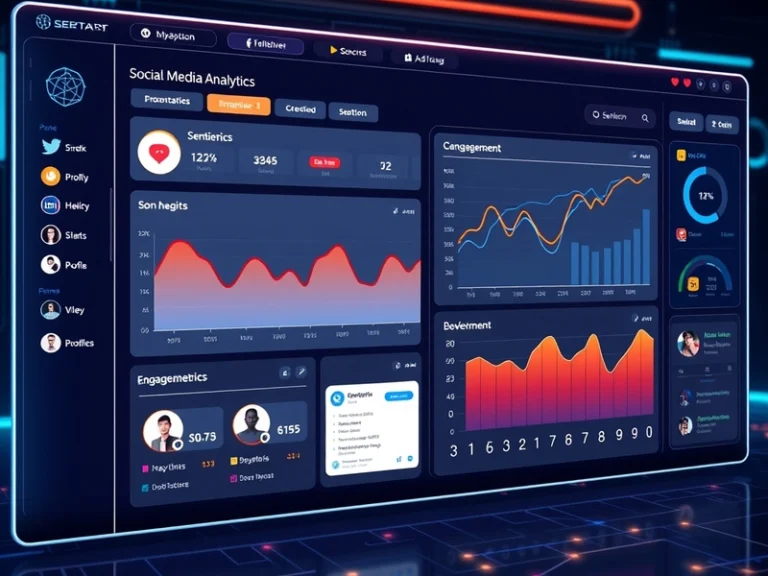
The landscape of social media management is undergoing a significant transformation driven by the increasing integration of artificial intelligence tools, fundamentally reshaping how brands engage with audiences and analyze sentiment.
AI’s impact extends beyond automating routine tasks, empowering social media professionals with deeper analytical capabilities and more precise engagement strategies. The shift is from reactive management to proactive, insight-driven cultivation of online presence, leveraging machine learning and natural language processing (NLP) to understand complex human interactions at scale.
Advanced Sentiment Analysis with AI
One of the most profound applications of AI in social media management is in sentiment analysis. Traditional methods often relied on keyword spotting, which could misinterpret context, irony, or sarcasm. Modern AI-powered sentiment analysis tools, however, leverage sophisticated NLP models and deep learning algorithms to parse language with greater nuance.
These advanced systems can:
- Identify Emotional Tone: Beyond just positive, negative, or neutral, AI can detect specific emotions like joy, anger, surprise, or sadness, providing a richer understanding of public perception.
- Understand Context and Nuance: AI models are trained on vast datasets, enabling them to comprehend the subtle ways language is used, including slang, idioms, and double negatives, which often trip up simpler rule-based systems.
- Categorize Topics and Subtopics: Sentiment can be broken down by specific product features, customer service interactions, or marketing campaigns, allowing brands to pinpoint exact areas of strength or concern.
- Track Sentiment Over Time: Brands can monitor shifts in public opinion in real-time, identifying emerging issues or successful campaign impacts, crucial for crisis management or product launch feedback.
By accurately gauging public sentiment, companies can make informed decisions, whether it’s adjusting a marketing message, addressing product flaws, or engaging directly with dissatisfied customers before issues escalate. This proactive approach helps protect brand reputation and fosters stronger customer relationships.
Enhancing Brand Engagement Through AI
Beyond analysis, AI tools are also directly improving how brands interact with their audiences and optimize their presence. The goal is to create more meaningful, timely, and personalized engagements that resonate with diverse user segments.
Content Optimization and Strategy
AI algorithms analyze vast amounts of data, including past post performance, audience demographics, and trending topics, to inform content strategy. This includes suggesting optimal posting times when specific audience segments are most active, identifying high-performing content formats (e.g., video vs. image), and recommending relevant hashtags to increase visibility. Some tools can even assist in generating initial content drafts or suggesting variations based on predicted engagement rates, streamlining the content creation process and ensuring greater relevance.
Personalized Customer Interactions
AI-powered chatbots and virtual assistants have become integral to social media customer service. These tools can handle a high volume of inquiries simultaneously, providing instant responses to frequently asked questions, guiding users through troubleshooting steps, or directing them to the correct human agent for more complex issues. This immediate responsiveness significantly improves customer satisfaction and frees up human teams to focus on more intricate or sensitive interactions. The personalization extends to tailoring responses based on user history or expressed preferences, creating a more bespoke customer experience.
Audience Insights and Targeting
AI helps brands move beyond broad demographic targeting by identifying highly specific audience segments based on online behavior, interests, and engagement patterns. Machine learning models can predict which users are most likely to convert, engage with specific content, or become brand advocates. This allows for hyper-targeted campaigns that deliver the right message to the right person at the right time, maximizing campaign effectiveness and return on investment. Furthermore, AI can identify potential influencers whose audience demographics and interests align perfectly with a brand’s target market, facilitating more effective partnership strategies.
Real-time Trend Detection
Social media moves fast, and staying ahead of trends is crucial for relevance. AI tools continuously monitor conversations across platforms, identifying emerging topics, viral memes, and shifting public interests in real-time. This capability allows brands to quickly capitalize on trending discussions, create timely content, and participate in relevant cultural moments, thereby increasing their visibility and demonstrating their responsiveness. This is particularly valuable for newsjacking or agile marketing strategies.
The Evolving Role of the Social Media Professional
While AI automates and optimizes many aspects of social media management, it does not diminish the need for human expertise. Instead, it redefines the role of the social media professional. With AI handling data analysis and repetitive tasks, human strategists can focus on higher-level activities: interpreting nuanced AI insights, developing creative campaigns, fostering genuine community, and navigating the complexities of brand voice and ethical communication. The collaboration between human ingenuity and AI efficiency is proving to be a powerful combination, driving more impactful and data-informed social media strategies.