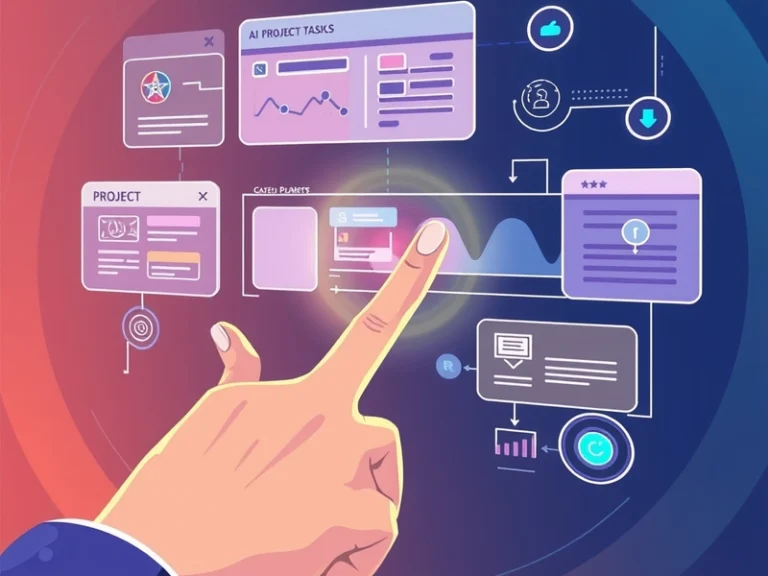
The integration of artificial intelligence tools into daily workflows is rapidly transforming how professionals approach project management and content creation, streamlining tasks and enhancing productivity across industries. These innovations are moving beyond niche applications, becoming integral components for teams seeking to optimize efficiency and output in their everyday operations.
AI in Project Management: Orchestrating Efficiency
AI-powered solutions are fundamentally changing the landscape of project management by automating routine tasks, providing predictive insights, and improving communication. Modern project management platforms are increasingly embedding AI capabilities to help teams manage complex projects with greater agility and foresight.
Key AI applications in project management include:
- Automated Task Management: AI can analyze project timelines, dependencies, and resource availability to automatically assign tasks, adjust schedules, and even flag potential bottlenecks before they occur. Tools like Monday.com and Asana leverage AI for intelligent automation rules and smart suggestions based on historical data.
- Predictive Analytics: Machine learning algorithms can analyze past project data to forecast future outcomes, such as project completion dates, budget overruns, or resource shortages. This allows project managers to proactively mitigate risks and make data-driven decisions.
- Meeting Summarization and Action Item Extraction: AI-driven tools, often integrated into video conferencing platforms like Zoom AI Companion or Microsoft Teams Premium features, can transcribe meetings, summarize key discussions, and automatically identify and assign action items, saving significant time in post-meeting follow-up.
- Resource Optimization: AI can intelligently allocate human and material resources by analyzing skill sets, availability, and project demands, ensuring that the right people are working on the right tasks at the optimal time.
- Intelligent Document Analysis: AI can rapidly process and extract critical information from project documents, contracts, and reports, making it easier to track progress, identify compliance issues, and ensure all stakeholders have access to relevant data.
By offloading administrative burdens and providing deeper insights, AI allows project managers to focus on strategic oversight, team leadership, and problem-solving, rather than getting bogged down in manual tracking and reactive adjustments.
AI in Content Creation: Unleashing Creativity and Scale
For content creators, AI tools are proving to be powerful allies, accelerating every stage of the creative process from ideation to final publication. These tools are not just about automation; they are about augmenting human creativity and enabling content production at unprecedented scales.
AI’s role in content creation workflows spans several critical areas:
- Generative Text: Large language models (LLMs) like OpenAI’s ChatGPT and Google’s Gemini are widely used for drafting articles, blog posts, social media updates, email campaigns, and even creative writing. Specialized platforms like Jasper and Copy.ai build upon these foundational models, offering templates and workflows tailored for marketing and content teams, enabling rapid content generation and iteration.
- Image and Video Generation/Editing: Tools such as Midjourney, DALL-E, and Stable Diffusion allow creators to generate unique images from text prompts, opening new avenues for visual content without extensive graphic design skills or stock photo libraries. For video and audio, AI-powered editors like Descript can automatically transcribe audio, remove filler words, and even create synthetic voices, drastically reducing editing time.
- Content Optimization: AI helps in optimizing content for search engines (SEO) by suggesting keywords, analyzing competitor content, and identifying gaps in existing material. Tools like Grammarly use AI to refine writing style, check grammar, and ensure clarity, improving content quality before publication.
- Translation and Localization: AI-powered translation services enable content to reach global audiences quickly and efficiently, breaking down language barriers for marketing and communication efforts.
- Ideation and Brainstorming: AI can assist in generating new content ideas, outlines, and angles by analyzing trends, popular topics, and audience engagement data, providing a creative springboard for content teams.
These tools empower individual creators and large content teams to produce high-quality, diverse content more frequently and efficiently, allowing them to experiment with new formats and reach broader audiences.
Considerations and the Human Element
While AI tools offer significant advantages, their effective integration requires careful consideration. Data privacy, the ethical implications of AI-generated content, and the potential for bias in algorithms remain important areas of discussion and development. Furthermore, human oversight is crucial; AI-generated content often requires refinement, fact-checking, and the unique touch of human creativity to resonate authentically with audiences. Prompt engineering – the art of crafting effective instructions for AI models – is also becoming a valuable skill for maximizing the utility of these tools.
The current wave of AI tools is not merely automating tasks; it is redefining the capabilities of teams and individuals in project management and content creation. By embracing these technologies thoughtfully, organizations can unlock new levels of productivity, creativity, and strategic advantage in their daily operations.