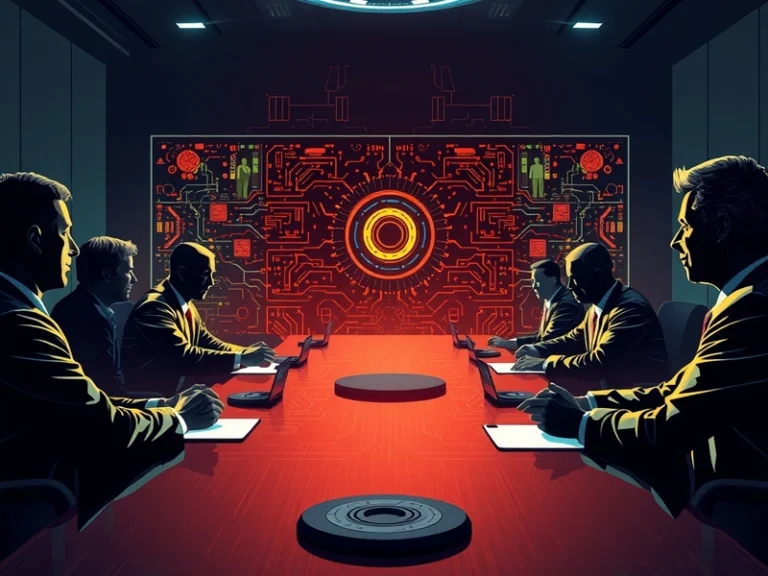
The abrupt firing of OpenAI CEO Sam Altman on November 17, 2023, and his subsequent reinstatement days later, unfolded with a rapidity and intensity that captivated the technology world and demonstrated the high stakes involved in the governance of leading AI organizations. While no major studio production has yet captured the full scope of this extraordinary corporate saga, the real-world events surrounding Altman’s ouster and return possessed all the hallmarks of a compelling screenplay: sudden reversals, high-stakes negotiations, a united employee front, and the decisive intervention of a tech giant.
The Unfolding Drama: A Weekend of Whistle-Stop Changes
The narrative began with a terse blog post from OpenAI’s non-profit board, announcing Altman’s departure, citing a lack of candor in his communications. This immediate and unexpected news sent shockwaves through the AI community. Greg Brockman, OpenAI’s president and co-founder, quickly followed suit, resigning in protest, along with several key researchers.
What followed was a weekend of unprecedented corporate turmoil. OpenAI’s interim CEO, Mira Murati, initially stepped in, attempting to stabilize the company. However, the situation escalated dramatically with an open letter signed by nearly all of OpenAI’s 700+ employees, including Ilya Sutskever, the board member who had initially voted to oust Altman. The letter demanded Altman’s reinstatement and the resignation of the board, threatening to move to Microsoft if their demands were not met.
Microsoft, a major investor in OpenAI, played a pivotal role in the resolution. CEO Satya Nadella publicly announced an offer to hire Altman and Brockman, along with their entire team, to lead a new advanced AI research unit within Microsoft, effectively providing a safety net for the departing talent. This move underscored Microsoft’s deep strategic interest in OpenAI’s research and personnel, placing immense pressure on the remaining OpenAI board.
By November 21, 2023, the crisis reached its climax. After days of intense negotiations, a new agreement was reached. Altman was reinstated as CEO, and a new initial board was formed, comprising Bret Taylor (Chair), Larry Summers, and Adam D’Angelo. This resolution effectively dissolved the previous board and addressed the employee demands, bringing a dramatic close to a four-day corporate drama that reshaped OpenAI’s leadership and governance structure.
A Cast of Characters and Conflicting Visions
The events brought into sharp focus the diverse motivations and philosophies at play within OpenAI. At the center was Sam Altman, the charismatic figurehead advocating for rapid AI development and commercialization. His vision often appeared to clash with the more cautious, safety-first mandate of the original non-profit board, which included figures like Ilya Sutskever, a co-founder and chief scientist driven by concerns around the safe development of artificial general intelligence (AGI).
Other key players included:
- Greg Brockman: OpenAI’s co-founder and president, whose immediate resignation in solidarity with Altman highlighted deep internal divisions and loyalty.
- Mira Murati: Chief Technology Officer, who stepped into the interim CEO role during the crisis, navigating an incredibly complex and rapidly evolving situation.
- Helen Toner and Tasha McCauley: Board members whose perspectives on AI safety and governance were central to the initial decision to remove Altman.
- Satya Nadella: Microsoft CEO, whose decisive actions provided a critical off-ramp for OpenAI’s talent and ultimately catalyzed the resolution.
The conflict was not merely about personal power but represented a collision of ideologies: the urgency of commercializing cutting-edge AI versus the imperative of ensuring its safety and ethical development, all under the unique, somewhat convoluted, governance model of OpenAI.
The Stakes: Governance, Safety, and Commercial Imperatives
The OpenAI saga transcended typical corporate boardroom drama due to the nature of the technology at its core. As a leading developer of advanced AI models like GPT-3.5 and GPT-4, OpenAI’s stability and direction have profound implications for the future of AI. The crisis exposed fundamental tensions in its hybrid structure, where a non-profit board was tasked with overseeing a capped-profit entity, theoretically prioritizing safety and the benefit of humanity over pure commercial gain.
The events sparked widespread debate on:
- AI Governance Models: The effectiveness and transparency of boards overseeing powerful AI organizations, particularly those with a dual mission of profit and safety.
- The Pace of AI Development: The inherent tension between accelerating AI capabilities and ensuring robust safety guardrails.
- Investor Influence: The role of major investors like Microsoft in shaping the direction and leadership of AI companies, even those with non-profit roots.
- Talent Retention: The power of key personnel and researchers in dictating corporate outcomes in a highly competitive and specialized field.
Why This Story Resonates: Themes for the Screen and Beyond
The rapid, high-stakes shifts, the clash of powerful personalities, and the existential implications of the technology involved make the OpenAI leadership crisis a compelling narrative. It offers themes of ambition, betrayal, loyalty, corporate intrigue, and the struggle for control over a technology that could redefine human civilization. The compressed timeline of the events, unfolding over a single weekend, lends itself naturally to a dramatic structure, with each day bringing new reversals and revelations.
Ultimately, the saga of Sam Altman’s firing and return is more than just a footnote in tech history; it is a vivid illustration of the complex human and organizational challenges inherent in building and governing the future of artificial intelligence. It serves as a potent reminder that even at the forefront of technological innovation, human dynamics, power struggles, and fundamental philosophical differences remain central to the unfolding story.