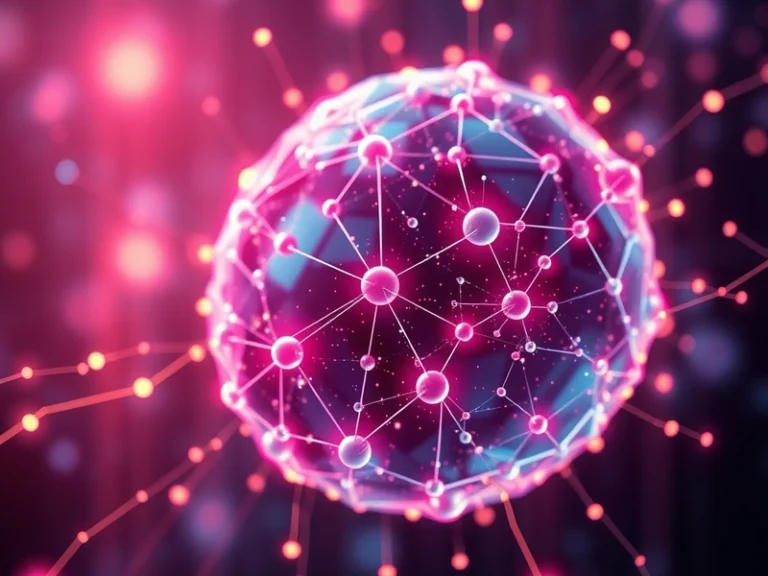
Artificial intelligence is increasingly being leveraged to create virtual cellular models, offering a powerful new approach to optimizing experimental outcomes in biological research.
Traditional biological experimentation, often conducted in “wet labs,” faces inherent limitations: it is resource-intensive, time-consuming, and can be ethically complex, particularly when involving animal models or human tissues. The sheer complexity of cellular systems, with their myriad interacting molecules, pathways, and environmental influences, makes it challenging to isolate variables and predict outcomes accurately. This is where AI-driven computational models, often referred to as “virtual cells” or “digital twins” of biological systems, are beginning to make a significant impact.
The Promise of Virtual Cells
The core idea behind a virtual cell is to construct a computational representation that can simulate the dynamic behavior of a biological cell or a system of cells under various conditions. Such models can integrate vast amounts of heterogeneous data to predict how cells might respond to genetic perturbations, drug treatments, environmental changes, or disease states. This capability has several profound implications for research:
- Accelerated Hypothesis Testing: Researchers can rapidly test thousands of hypotheses in silico before committing to costly and time-consuming wet-lab experiments.
- Optimized Experimental Design: AI can suggest optimal experimental parameters, reducing the number of necessary physical experiments and improving their success rate.
- Reduced Resource Consumption: Minimizing the need for reagents, lab equipment, and potentially animal models.
- Deeper Mechanistic Understanding: By observing the simulated interactions within a virtual cell, scientists can gain insights into underlying biological mechanisms that are difficult to discern in complex wet-lab settings.
- Personalized Medicine: In the future, patient-specific virtual cell models could help predict individual responses to therapies, guiding personalized treatment plans.
How AI Powers Cellular Simulation
Building and leveraging virtual cells requires sophisticated AI and machine learning techniques to process, integrate, and interpret biological data. Key methodologies include:
Data Integration and Feature Extraction
Modern biological research generates enormous datasets, including genomics (DNA sequencing), transcriptomics (RNA expression), proteomics (protein levels), metabolomics (metabolite profiles), and high-resolution imaging. AI, particularly deep learning models, excels at integrating these multi-modal datasets, identifying relevant features, and uncovering hidden patterns that describe cellular states and transitions.
Predictive Modeling and Dynamic Simulation
Once data is integrated, machine learning algorithms are trained to learn the complex, non-linear relationships between molecular components and cellular behaviors. Techniques like neural networks, recurrent neural networks, and graph neural networks are particularly adept at modeling time-series data and interaction networks. These models can then be used to simulate dynamic processes, such as:
- Gene Regulatory Networks: Predicting how changes in gene expression propagate through a cell.
- Signaling Pathways: Simulating how cells respond to external stimuli by activating internal molecular cascades.
- Drug-Cell Interactions: Modeling how a therapeutic compound might bind to targets, affect cellular pathways, and alter cell fate (e.g., proliferation, differentiation, apoptosis).
- Cellular Morphology and Movement: Predicting changes in cell shape, migration patterns, and interactions with other cells or the extracellular matrix.
Reinforcement Learning for Optimization
Reinforcement learning (RL) is also finding applications in optimizing experimental protocols or therapeutic strategies within virtual environments. An RL agent can be trained to “experiment” within the virtual cell, learning through trial and error which interventions lead to desired cellular outcomes, such as maximizing drug efficacy or minimizing off-target effects.
Challenges and Future Directions
While the potential is immense, significant challenges remain in the development and widespread adoption of virtual cells. The accuracy of these models is critically dependent on the quality and completeness of the input data. Biological data can be noisy, incomplete, and subject to experimental variability. Furthermore, validating complex AI models against real-world biological systems is a rigorous process, requiring robust experimental verification. Interpretability of deep learning models, often described as “black boxes,” also poses a challenge for biologists seeking to understand the underlying mechanisms predicted by the AI.
Despite these hurdles, the field is rapidly advancing. Initiatives like the Human Cell Atlas are generating unprecedented volumes of single-cell data, providing the foundational information needed to build more accurate and comprehensive virtual models. As computational power increases and AI algorithms become more sophisticated, virtual cells are poised to transform biological research, accelerating drug discovery, deepening our understanding of disease, and ultimately paving the way for more effective and personalized medical interventions.