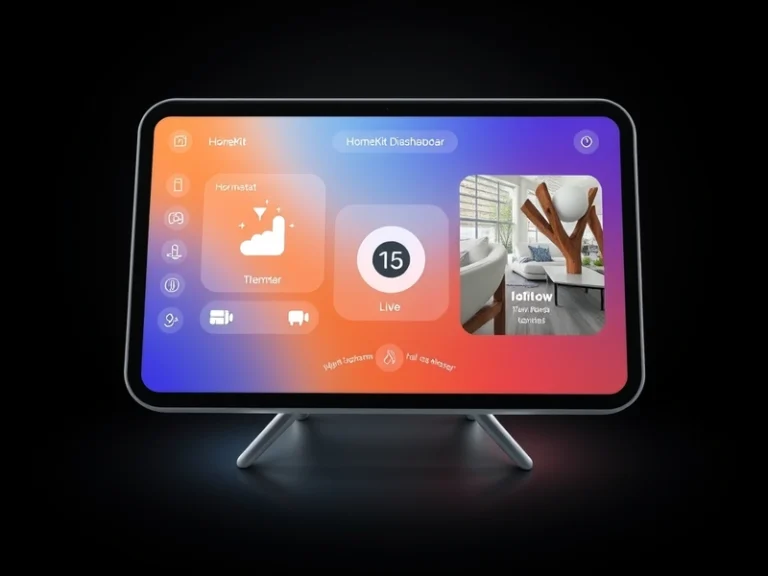
Persistent industry rumors and patent filings have long suggested Apple’s potential interest in a dedicated smart display device, a concept that could significantly transform how Siri interacts with and manages the smart home ecosystem. While Apple currently leverages its existing device lineup—from iPhones and iPads to Apple TV and HomePod mini—to facilitate HomeKit control, the idea of a purpose-built screen for Siri and smart home management presents an intriguing evolution for the platform, often discussed under conceptual monikers like the one this article explores.
Such a device would logically aim to bridge the gap between purely auditory Siri interactions on HomePod and the more visual, but less always-on, control offered by an iPhone or iPad. It would provide a persistent, glanceable interface for monitoring and controlling smart home accessories, moving beyond voice commands to offer immediate visual feedback and contextual information.
Enhancing Siri’s Smart Home Presence
A dedicated screen for Siri would fundamentally alter the user experience for HomeKit users in several key ways:
- Visual Confirmation and Status: While Siri on HomePod can verbally confirm actions, a screen would offer immediate visual confirmation. Turning off lights could show a room icon dimming, or unlocking a door could display a lock icon changing state. More importantly, it would provide at-a-glance status for critical devices like security cameras, thermostats, or even a live feed from a video doorbell.
- Intuitive Control Panels: Moving beyond simple voice commands, a screen could present dynamic control panels for groups of devices or specific rooms. Users could tap to adjust thermostat settings, swipe through camera feeds, or fine-tune lighting scenes with granular sliders and color pickers, all without needing to pull out a phone. This would be particularly useful for guests or family members who might not be familiar with specific Siri commands.
- Contextual Information Display: Siri’s utility could expand to display relevant information proactively. For example, if a motion sensor detects activity, the screen could automatically show a camera feed from that zone. During the day, it could display weather forecasts, calendar appointments, or even photos from an iCloud library, adapting its utility to the time and user context.
- Enhanced Communication: With a screen, Siri could facilitate visual communication. This might include FaceTime calls, allowing users to make and receive video calls directly from the smart display, or displaying rich notifications from connected devices, such as a package delivery alert with a photo.
Integration with Apple’s Ecosystem
Any dedicated smart display from Apple would undoubtedly be deeply integrated into the broader Apple ecosystem, leveraging existing technologies and services. This would likely include:
- HomeKit as Core: HomeKit would remain the foundational smart home framework, ensuring compatibility with a wide array of existing accessories and maintaining Apple’s strong emphasis on privacy and local processing. The device would function as a HomeKit hub, similar to an Apple TV or HomePod.
- Privacy and Security: Consistent with Apple’s established stance, user privacy and device security would be paramount. On-device processing for voice commands and facial recognition (if included for personalized experiences) would be expected, minimizing data sent to the cloud. Features like end-to-end encrypted video streams from HomeKit Secure Video would be a given.
- Continuity Features: Seamless handoff between devices would be a key differentiator. Starting a FaceTime call on the smart display could easily transfer to an iPhone or iPad, or playing music from Apple Music could transition from the display’s speakers to a HomePod or AirPods.
- Family Management: With multiple users in a household, personalized experiences would be crucial. The device could potentially recognize different family members, displaying personalized schedules, reminders, or even adjusting smart home settings based on who is interacting with it.
While Apple has yet to officially announce a product matching the “HomeView” concept, the persistent demand for a centralized, visual smart home interface remains strong. Competitors like Amazon with the Echo Show and Google with the Nest Hub have demonstrated the utility of such devices. For Apple, introducing a dedicated smart display would not only address this market segment but also solidify Siri’s role as a more versatile and visually capable assistant, truly ushering in a new era for smart home management within its meticulously crafted ecosystem.