An advanced artificial intelligence tool recently played a pivotal role in diagnosing a rare genetic disorder for a family, bringing an end to years of uncertainty and a prolonged diagnostic journey.
This breakthrough underscores the transformative potential of AI in addressing one of medicine’s most persistent challenges: the diagnostic odyssey associated with rare diseases. Individually, rare diseases affect a small percentage of the population, but collectively, they impact millions globally. Many are genetic in origin, often presenting with a constellation of non-specific symptoms that can mimic more common conditions. This frequently leads to misdiagnoses or, more commonly, no diagnosis at all for years. Families often consult numerous specialists, undergo countless tests, and endure significant emotional and financial strain without a definitive answer. For conditions rooted in the genome, identifying the precise pathogenic variant among billions of base pairs requires immense computational power and expert knowledge, a task that frequently overwhelms traditional diagnostic pathways.
The AI tool in question, like others emerging in the field of genomic medicine, leverages sophisticated algorithms to process and interpret vast datasets, far beyond human capacity. Its utility in this particular case highlights several key capabilities that are revolutionizing genetic diagnostics:
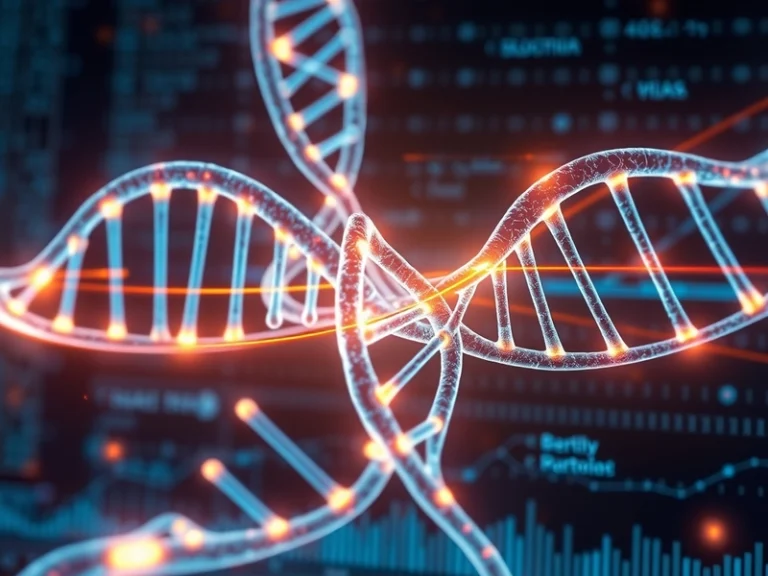
- Massive Data Analysis: The AI can rapidly analyze entire genomic sequences (e.g., whole-exome or whole-genome sequencing data) from patients and family members. It searches for subtle genetic variants that might be overlooked during manual review or less comprehensive computational screens.
- Pattern Recognition and Variant Prioritization: It employs machine learning models to identify patterns of inheritance, predict the pathogenicity of novel variants, and filter out common, benign polymorphisms. This significantly reduces the list of candidate genes and variants, allowing clinicians to focus on the most probable causes.
- Phenotype-Genotype Correlation: By integrating the patient’s detailed clinical symptoms (phenotypes) with their genetic data, the AI can cross-reference against extensive databases of known disease-gene associations and medical literature. This allows it to suggest potential genetic causes that align precisely with the observed clinical picture, even for highly atypical presentations.
- Leveraging Global Knowledge Bases: These systems are often trained on and connected to continually updated repositories of genomic data, scientific publications, and clinical trial results from around the world. This allows them to draw connections and identify extremely rare variants or disease associations that individual clinicians or even specialized labs might not be aware of.
For the family involved, this diagnosis marks a profound turning point. A definitive diagnosis provides not only emotional relief but also a crucial foundation for understanding the condition, accessing appropriate medical management, and potentially exploring targeted therapies or clinical trials. Without such clarity, effective treatment and supportive care are often delayed or impossible. Beyond individual cases, each new diagnosis facilitated by AI contributes valuable data to the broader scientific community, deepening the understanding of rare genetic disorders and potentially paving the way for future diagnostic and therapeutic advancements.
The AI systems used in this context typically fall under the umbrella of machine learning, often incorporating deep learning architectures. These models are trained on curated datasets of known pathogenic and benign genetic variants, patient phenotypes, and associated medical literature. The accuracy and utility of such tools are heavily dependent on the quality and diversity of their training data. Developers face ongoing challenges in ensuring models are robust to genetic heterogeneity, account for varying penetrance and expressivity, and can interpret complex polygenic interactions. Furthermore, the integration of these sophisticated tools into existing clinical workflows requires careful consideration of data security, privacy regulations like HIPAA and GDPR, and the need for seamless interoperability with electronic health records. The role of human experts—geneticists, bioinformaticians, and clinicians—remains paramount. AI serves as a powerful diagnostic aid, but the final interpretation and clinical decision-making rest with medical professionals who can contextualize the AI’s findings within the full patient picture.
This specific instance of an AI tool uncovering a rare genetic disorder is a testament to the technology’s evolving maturity and its capacity to revolutionize personalized medicine. As AI models become more sophisticated and genomic data more accessible, their role in shortening the diagnostic odyssey for millions affected by rare diseases is set to expand significantly, ushering in an era of more precise, timely, and ultimately, more hopeful diagnoses.