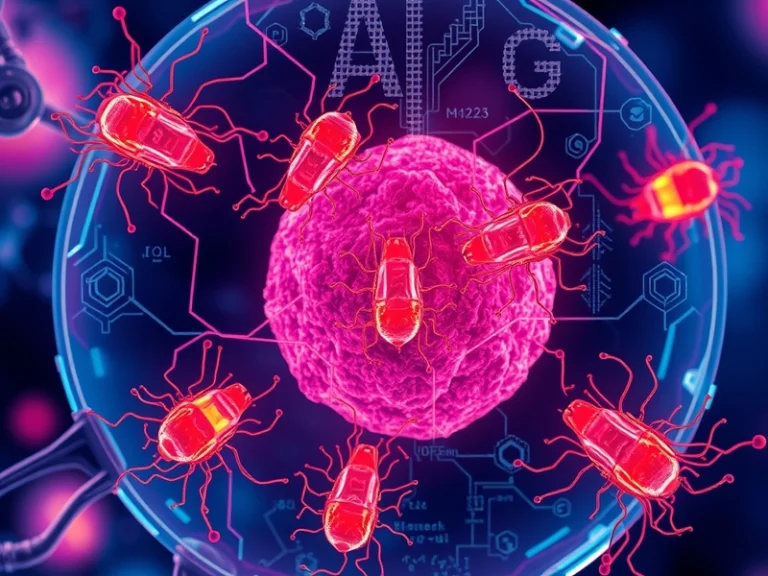
In a significant step forward for personalized medicine and the fight against antimicrobial resistance, AI-engineered bacteriophages have been administered to a patient for the first time. This milestone marks a new frontier in the application of artificial intelligence to therapeutic development, offering a novel approach to combating difficult-to-treat bacterial infections.
The rise of antibiotic-resistant bacteria, often termed “superbugs,” poses a severe global health threat. Traditional antibiotics are becoming increasingly ineffective, leading to prolonged illnesses, higher mortality rates, and increased healthcare costs. In this context, phage therapy—the use of viruses that specifically target and kill bacteria—has re-emerged as a promising alternative. Bacteriophages, or phages, are naturally occurring viruses that infect and replicate within bacteria, ultimately lysing them without harming human cells.
The Challenge of Traditional Phage Therapy
While phage therapy has been explored for over a century, its widespread adoption has faced several hurdles. Identifying the right phage for a specific bacterial infection can be a laborious and time-consuming process. Phages exhibit high specificity, meaning a particular phage might only target a narrow range of bacterial strains. This requires extensive screening of natural phage libraries to find an effective match for a patient’s particular infection, often against multidrug-resistant pathogens that are themselves evolving rapidly.
Key challenges include:
- Discovery & Isolation: Sourcing and isolating phages from environmental samples is often a hit-or-miss endeavor.
- Characterization: Thoroughly understanding a phage’s host range, lytic capabilities, and safety profile (ensuring it doesn’t carry undesirable genes) is complex.
- Specificity: Matching the correct lytic phage to the exact bacterial strain causing an infection can be difficult, especially for polymicrobial infections.
- Manufacturing & Regulation: Developing standardized, safe, and scalable production methods for therapeutic phages is still an evolving field.
AI’s Transformative Role in Phage Engineering
This is where artificial intelligence offers a paradigm shift. AI, particularly machine learning, can dramatically accelerate and enhance the entire phage discovery and engineering pipeline. Instead of relying solely on natural isolation and empirical testing, AI algorithms can analyze vast biological datasets to predict optimal phage candidates or even design novel phage components with desired characteristics.
AI-driven approaches can contribute in several ways:
- Genomic Analysis: Machine learning models can quickly sift through bacterial and phage genomic data to identify potential host-phage interactions, predict lytic activity, and screen for genes that might confer virulence or antibiotic resistance (which would make a phage unsuitable for therapy).
- Predictive Design: AI can predict the efficacy of modified phage genomes or capsid proteins against specific bacterial targets, potentially enabling the engineering of phages with broader host ranges or enhanced lytic capabilities. This moves beyond mere selection to active design.
- Rapid Identification: For a given bacterial pathogen isolated from a patient, AI can rapidly identify the most suitable phages from existing databases or guide the search for novel ones, significantly reducing the time from diagnosis to treatment.
- Personalized Phage Cocktails: AI can help design tailored cocktails of multiple phages to combat complex or evolving infections, accounting for potential bacterial resistance mechanisms to individual phages.
The First Clinical Application
The administration of AI-engineered phages to a patient represents the culmination of years of research into computational biology and synthetic virology. While specific details regarding the patient, the bacterial infection, or the exact AI platform used are not publicly disclosed in a universally recognized manner at this nascent stage, the significance of this event lies in demonstrating the clinical viability of a fundamentally new therapeutic modality. It showcases the potential for AI to move beyond diagnostic and drug discovery support to directly influencing the design of biological therapies administered to humans.
This approach promises to address the limitations of traditional phage therapy by providing more precise, effective, and rapidly deployable treatments against infections that are otherwise untreatable. The ability to computationally design or precisely select phages tailored to a patient’s unique pathogen profile opens doors for highly personalized antimicrobial strategies.
Looking Ahead
This initial clinical use, while groundbreaking, is likely the first step in a long journey of rigorous clinical trials and regulatory review. Future efforts will focus on validating the safety and efficacy of AI-engineered phages across diverse patient populations and bacterial infections. Scaling production, standardizing quality control, and navigating regulatory pathways for such adaptive, biologically complex therapies will be critical next challenges. However, the successful administration of AI-designed phages marks a powerful demonstration of artificial intelligence’s potential to revolutionize medicine, offering a beacon of hope in the ongoing battle against antibiotic resistance.