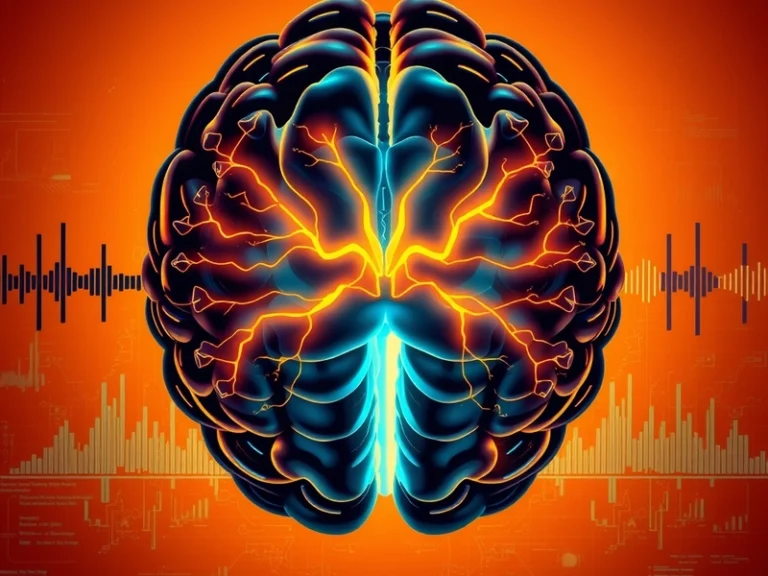
The integration of artificial intelligence with neuroscience is opening new avenues for understanding the complex landscape of the human mind, with researchers exploring how AI can analyze brain activity to identify memories associated with sounds during sleep, offering a nascent glimpse into dream analysis. This emerging field leverages advanced machine learning techniques to interpret neural signals, moving beyond simple brain state classification to potentially decode specific cognitive content.
The Neuroscientific Underpinnings: Memory and Sleep
At the core of this research lies the established understanding of sleep’s critical role in memory consolidation. During non-REM sleep, particularly slow-wave sleep, memories acquired during wakefulness are reactivated and replayed, strengthening their neural connections. This process is crucial for transferring information from temporary storage to more permanent long-term memory.
Neuroscientists have long studied a phenomenon known as Targeted Memory Reactivation (TMR). TMR involves presenting sensory cues, such as specific sounds or odors, during sleep that were previously associated with learning experiences in the waking state. Studies have shown that re-exposing individuals to these cues during sleep can selectively enhance the consolidation of the associated memories, indicating that the brain is indeed reactivating specific memory traces in response to external stimuli. The challenge, then, is to move from *influencing* memory reactivation to *detecting* it and understanding its content, especially when it might be spontaneously occurring within a dream.
AI’s Role in Decoding Neural Signatures
This is where AI, particularly machine learning and deep learning, comes into play. Human brain activity, whether measured by functional magnetic resonance imaging (fMRI) for its spatial resolution or electroencephalography (EEG) for its temporal precision, generates vast and complex datasets. AI models excel at identifying subtle, non-obvious patterns within such high-dimensional data that might be imperceptible to human analysis.
The general approach involves:
- Encoding Model Training: Researchers first train AI models on brain activity data collected while individuals are awake and performing tasks that involve associating specific sounds with memories or concepts. For example, participants might learn to associate distinct sounds with particular images or experiences. The AI learns to map specific patterns of neural activation to these sound-memory pairs.
- Decoding During Sleep: Once trained, these AI models are then applied to brain activity data recorded during sleep. The goal is to detect whether similar neural patterns, indicative of the reactivation of those specific sound-associated memories, are spontaneously occurring.
- Pattern Recognition: Deep neural networks are particularly adept at recognizing intricate patterns in time-series data (like EEG) or spatial activation maps (like fMRI). They can learn to differentiate the neural signatures of various cognitive states, including those potentially linked to memory reactivation or even specific dream content.
While decoding visual imagery from brain activity has seen notable progress in recent years – with AI models reconstructing images or even video clips from fMRI data – decoding the subjective, multimodal, and often abstract content of dreams, especially those triggered by or associated with sounds, presents a significantly greater challenge.
Challenges and Limitations
The path to decoding dreams via sound-memory associations is fraught with scientific and technical hurdles:
- The Inverse Problem: Moving from observed brain activity to inferring specific thoughts or memories is an “inverse problem” in neuroscience. The same neural pattern might correspond to different subjective experiences, and different patterns might lead to similar experiences.
- Subjectivity of Dreams: Dreams are inherently subjective and often fragmented, making it difficult to establish reliable “ground truth” data for training AI models. Self-reports upon waking are often incomplete or distorted.
- Neural Variability: Brain activity patterns vary significantly between individuals and even within the same individual over time, requiring robust and generalizable AI models.
- Specificity of Sound-Memory Links: While TMR demonstrates that sounds can cue memory replay, isolating the neural signature of a *specific* memory associated with a sound from the general “noise” of dream activity or other cognitive processes remains highly complex. The brain is not a simple recording device.
Current research tends to focus on identifying broad categories of memory reactivation or detecting the *presence* of a cued memory replay rather than fully “reading” the dream narrative. The ability to discern if a sleeping individual is reactivating a memory of a specific event linked to a particular sound, as opposed to simply processing auditory stimuli or engaging in unrelated dream content, is a significant frontier.
Future Directions
Advancements in higher-resolution brain imaging techniques, more sophisticated AI architectures capable of handling complex, noisy biological data, and improved methodologies for correlating neural activity with subjective experience will be crucial. This research could eventually lead to a deeper understanding of memory consolidation, the mechanisms of dreaming, and potentially even new therapeutic approaches for memory disorders. However, the prospect of directly “reading” or fully analyzing the intricate tapestry of dreams remains a long-term scientific endeavor, requiring continued interdisciplinary collaboration between neuroscience, computer science, and psychology.