The proliferation of accessible artificial intelligence tools is fundamentally reshaping how individuals approach creative projects, empowering everyone from hobbyists to seasoned professionals to enhance their work in fields as diverse as music video production and interior design.
Once considered esoteric technologies confined to research labs, generative AI models have matured into user-friendly applications that integrate seamlessly into existing creative workflows. This shift democratizes sophisticated capabilities, enabling rapid prototyping, stylistic experimentation, and the efficient generation of assets that would traditionally require significant time, specialized skills, or extensive budgets. The core promise is not replacement, but enhancement: AI as a powerful co-pilot, expanding the creative horizon.
Visualizing Concepts: From Interior Design to Digital Art
Perhaps the most visible impact of AI on everyday creativity is in visual generation. Tools like Midjourney, DALL-E 3 (integrated into OpenAI’s ChatGPT Plus), and open-source models such as Stable Diffusion from Stability AI have become indispensable for generating high-quality images from simple text prompts. For interior designers, this means rapidly visualizing diverse aesthetic concepts or furniture arrangements within a space. An architect might use these tools to generate multiple facade options or material palettes for a client presentation, while a graphic designer can quickly iterate on logo concepts or mood boards.
Adobe has also entered this space with Adobe Firefly, a family of generative AI models integrated directly into its Creative Cloud applications like Photoshop and Illustrator. Features like Generative Fill and Generative Expand allow users to non-destructively add or extend content in images, change seasons, or introduce new elements with remarkable ease. This integration is particularly powerful for professional creatives, as it aligns AI capabilities with established industry-standard software, focusing on commercially viable and ethically sourced training data.
Dynamic Storytelling: AI in Video Production
The realm of video production, including the creation of compelling music videos, is experiencing a similar transformation. Platforms like RunwayML and Pika Labs are at the forefront, offering text-to-video and image-to-video capabilities. Users can generate short video clips from textual descriptions, transform existing footage with new styles, or even animate still images. This functionality significantly reduces the barrier to entry for motion graphics and visual effects, allowing independent artists to produce visually rich content without extensive animation or CGI expertise.
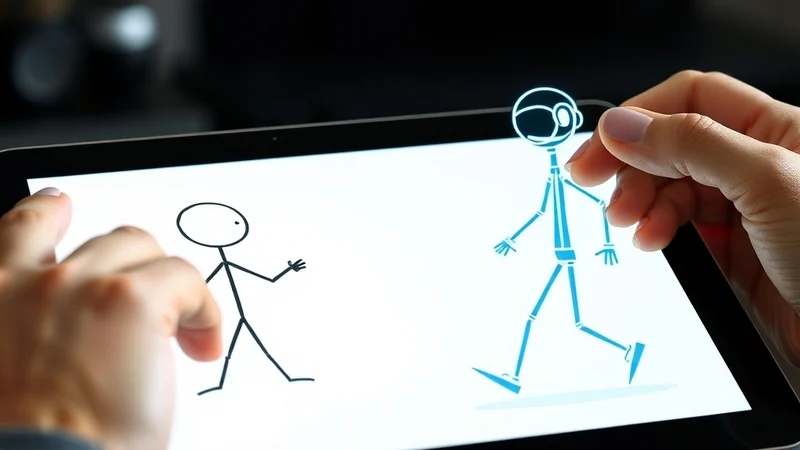
Consider a musician creating a music video: instead of relying on stock footage or complex shoots, they can use AI to generate abstract visual sequences that match the mood of their track, create dynamic background elements, or even animate rudimentary character concepts from simple image inputs. This accelerates the iterative process, allowing for more creative freedom and experimentation with visual narratives.
Crafting Sonic Landscapes: Music and Audio Generation
AI’s influence extends deeply into the auditory domain, offering new avenues for musicians, podcasters, and content creators. Companies like Meta, with its open-source AudioCraft suite (including MusicGen for music generation and AudioGen for sound effects), are pushing the boundaries of what’s possible with AI-generated audio. While not yet universally available for commercial-grade music production, these models demonstrate the potential for generating original melodies, rhythms, and soundscapes from text prompts or existing audio inputs.
Beyond full composition, AI tools are enhancing specific aspects of audio production:
- Mastering Assistants: AI-powered plugins, such as those found in Izotope Ozone, can analyze a track and suggest optimal mastering settings, providing a professional polish with minimal effort.
- Stem Separation: Tools leveraging AI can accurately separate vocals, drums, bass, and other instruments from a mixed track, useful for remixing, sampling, or isolating elements for practice.
- Sound Design: AI can generate unique sound effects for games, films, or podcasts, eliminating the need to search extensive sound libraries for specific, niche audio elements.
These applications allow creators to focus more on their artistic vision and less on the technical intricacies of audio engineering, or to quickly prototype ideas before committing to full production.
Beyond the Canvas: The Role of AI in Ideation and Iteration
While specific outputs like images or videos are striking, one of AI’s most profound contributions to everyday creativity is its ability to serve as a powerful ideation partner. Large Language Models (LLMs) like ChatGPT, Google Gemini, and Microsoft Copilot are invaluable for:
- Brainstorming: Generating lists of ideas for song lyrics, story plots, marketing slogans, or design concepts.
- Drafting: Creating initial drafts of scripts, blog posts, or social media captions that can then be refined by the human creator.
- Feedback and Refinement: Analyzing text for tone, clarity, or grammar, or even suggesting alternative phrasing.
This assistive capacity can help overcome creative blocks, provide fresh perspectives, and accelerate the initial stages of any project, freeing up human cognitive resources for higher-level strategic and artistic decisions.
The rapid evolution and increasing accessibility of AI tools signify a new era for creative endeavors. These applications are not merely novelties; they are becoming integral components of the creative toolkit, enabling unprecedented levels of experimentation, efficiency, and artistic expression for a broader audience than ever before. The emphasis remains on the human element—the vision, the direction, the final artistic touch—amplified and accelerated by intelligent algorithms.