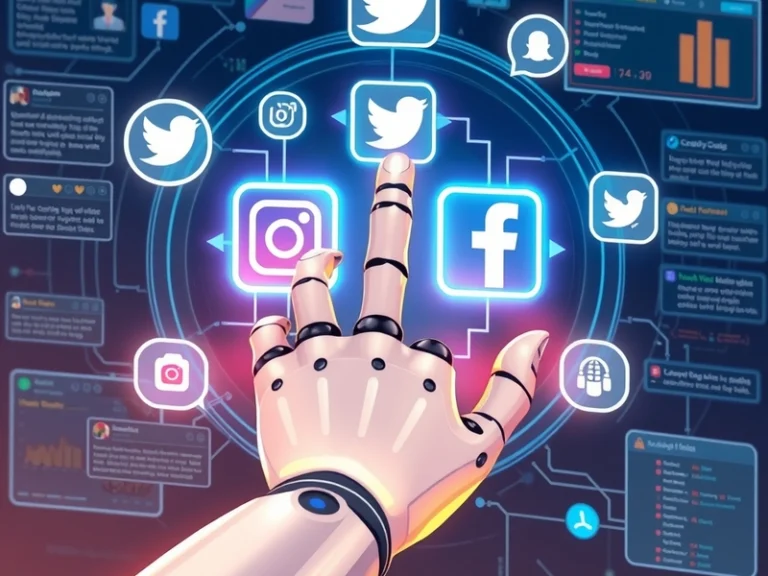
The integration of artificial intelligence into social media management platforms is fundamentally reshaping how businesses approach their digital content strategies, particularly in automating post creation and scheduling. This evolving landscape sees AI tools moving beyond mere analytics, actively participating in the generative and strategic aspects of online presence.
At its core, AI’s application in content management addresses two significant demands: the constant need for fresh content and the intricate task of optimizing its delivery. Modern AI models, notably large language models (LLMs) and generative adversarial networks (GANs), are now capable of producing diverse content formats with minimal human input.
Automating Content Generation
For content creation, AI provides capabilities that significantly accelerate the production pipeline. This includes:
- Text Generation: AI can draft compelling social media captions, headlines, ad copy, and even longer-form blog post snippets. By analyzing existing successful content and brand guidelines, these models generate text that aligns with a specific voice and tone, reducing the time spent on initial drafts.
- Image and Video Creation: Generative AI models, such as those powering tools like Midjourney, DALL-E, and Stable Diffusion, can produce unique visuals from text prompts, ranging from custom graphics and illustrations to short video clips. This capability allows marketers to quickly create engaging multimedia assets without extensive design resources or reliance solely on stock photo libraries.
- Content Repurposing: AI tools can transform existing long-form content, such as blog posts, whitepapers, or video transcripts, into concise, platform-optimized social media updates. This ensures maximum leverage from valuable assets across multiple channels with minimal additional effort.
Beyond creation, AI algorithms are proving invaluable in the strategic deployment of this content. Social media scheduling, once a manual and often intuitive process, is now heavily influenced by data-driven insights provided by AI.
Optimizing Distribution and Engagement
AI-powered scheduling and optimization features enhance content delivery by:
- Predictive Scheduling: Analyzing historical performance data, audience demographics, and real-time engagement trends, AI can pinpoint optimal times for posting content across various platforms. This maximizes visibility and interaction rates without manual experimentation.
- Audience Segmentation: AI can segment audiences based on behavior, interests, and past engagement, allowing for highly targeted content delivery. This ensures that specific messages reach the most receptive groups, enhancing personalization at scale.
- Performance Forecasting: Some AI systems can predict the potential reach and engagement of a post before it goes live, offering marketers an opportunity to refine content or adjust strategy proactively.
- A/B Testing Automation: AI can automatically generate and test multiple variations of a post (e.g., different headlines, images, calls to action) to determine which performs best, learning and adapting over time to improve future content.
This shift empowers marketing teams to move away from repetitive, time-consuming tasks and dedicate more resources to overarching strategy, creativity, and deeper audience engagement. Platforms like Hootsuite, Sprout Social, and Buffer have increasingly integrated these AI functionalities, offering tools that streamline workflows from ideation to analysis. Dedicated AI content platforms such as Jasper and Copy.ai also serve as powerful aids in the initial content generation phase, often integrating with broader social media management suites.
The benefits are tangible: increased efficiency, consistent brand messaging across channels, and the ability to scale content production without proportionally scaling human resources. This allows smaller teams to maintain a robust online presence and larger organizations to manage complex, multi-brand strategies with greater agility.
However, the rapid adoption of AI in social media management is not without its complexities and challenges. While AI excels at pattern recognition and content generation based on existing data, it currently lacks genuine creativity, nuanced understanding of cultural contexts, or the ability to convey complex emotional intelligence.
Navigating the Limitations and Ethical Considerations
Marketers leveraging AI must remain cognizant of several critical limitations:
- Maintaining Brand Voice and Authenticity: While AI can mimic a brand’s tone, it requires careful oversight to ensure generated content truly reflects the brand’s unique personality and avoids generic or inauthentic messaging.
- Risk of Hallucinations and Inaccuracies: Generative AI models can sometimes produce factually incorrect or nonsensical information, requiring rigorous human review to prevent the dissemination of misinformation.
- Bias in AI Models: AI systems are trained on vast datasets, which can inadvertently contain biases. If unchecked, AI-generated content might perpetuate stereotypes or alienate segments of an audience.
- Ethical Implications of Automation: Questions around transparency (is content clearly AI-generated?), data privacy, and the potential impact on human creativity and employment require ongoing consideration.
Ultimately, AI serves as a powerful co-pilot rather than a complete replacement for human marketers. The most effective strategies combine AI’s speed and analytical prowess with human creativity, critical thinking, and ethical judgment. Human oversight remains crucial for refining AI outputs, injecting genuine emotional resonance, and navigating the subtle complexities of audience interaction. The future of social media management lies in this synergistic relationship, where AI handles the heavy lifting of generation and optimization, freeing human experts to focus on strategic vision, authentic engagement, and building lasting brand relationships.