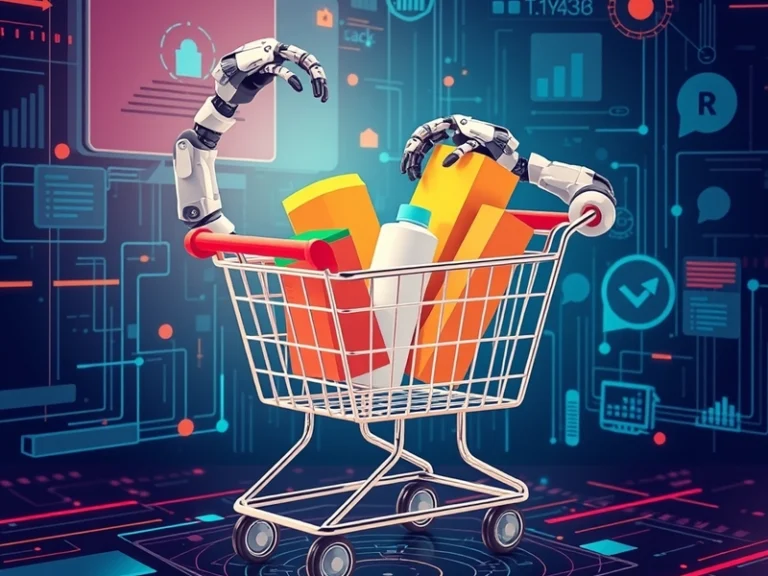
The landscape of online retail is poised for a significant transformation as AI agents begin to take on the role of autonomous purchasers, making decisions and executing transactions on behalf of users.
This evolving paradigm moves beyond the reactive, command-based interactions familiar with current voice assistants like Amazon Alexa or Google Assistant, where users explicitly request a specific item or reorder a past purchase. Instead, these emerging AI agents are designed to understand complex user preferences, proactively search for optimal products or services, compare options across various vendors, and ultimately execute purchases with minimal direct human oversight.
The Mechanics of Autonomous Purchase
At their core, these AI buyer agents leverage advanced machine learning techniques, particularly natural language processing (NLP) and large language models (LLMs), to interpret user intent and preferences expressed in natural language. Users might specify broad goals, such as “find me the best value noise-cancelling headphones under $200” or “plan a weekend getaway to a beach destination for two in October.” The agent then translates these requests into actionable search parameters.
The operational backbone of such agents relies heavily on sophisticated API integrations. They connect to e-commerce platforms, price comparison sites, review aggregators, travel booking services, and even financial institutions. This allows them to:
- Search and Discover: Scour vast product catalogs and service listings across the internet.
- Compare and Analyze: Evaluate options based on price, features, reviews, shipping costs, and availability.
- Negotiate (Potentially): In some future iterations, agents might even interact with vendor APIs to seek out dynamic discounts or bundle deals.
- Execute Transactions: Securely process payments using pre-authorized methods, often requiring a final human confirmation for high-value purchases or new categories.
Crucially, these agents are designed to learn from user feedback and past interactions, continuously refining their understanding of preferences and improving their decision-making over time. This personalization is a key differentiator from simple rule-based automation.
Benefits for the Consumer
The promise of AI agents as autonomous buyers lies in their potential to significantly enhance the user experience by:
- Saving Time: Delegating the often tedious and time-consuming tasks of product research, comparison, and purchase execution.
- Optimizing Choices: Leveraging AI’s ability to process vast amounts of data to identify the best products or services that align with user criteria, potentially finding deals or options a human might overlook.
- Enhancing Personalization: Adapting to individual tastes, budget constraints, ethical preferences (e.g., sustainable products), and brand loyalties over time.
- Managing Complex Tasks: From booking multi-leg travel itineraries to managing subscription services and recurring household purchases, agents can handle intricate logistics.
Navigating the Challenges
While the benefits are compelling, the widespread adoption of autonomous AI buyers faces significant hurdles, primarily centered around trust, control, and ethical considerations.
Trust and Control: Users must feel confident that an AI agent is acting in their best interest and not making erroneous or unauthorized purchases. This necessitates robust control mechanisms, such as setting spending limits, defining acceptable product categories, establishing approval workflows for specific transactions, and providing clear transparency into the agent’s decision-making process. The ability to easily revoke permissions or intervene in a purchase is paramount.
Security and Privacy: Entrusting an AI agent with payment information and access to personal preferences raises critical security and privacy concerns. Secure encryption, robust authentication protocols, and clear data governance policies will be essential to protect sensitive financial data and personal shopping habits from misuse or breaches.
Ethical Implications: The potential for algorithmic bias, where an agent’s recommendations might inadvertently favor certain brands or demographics, needs careful mitigation. Furthermore, the economic impact on human-driven services like personal shopping or travel agencies, and the broader implications for consumer behavior and market dynamics, warrant ongoing discussion.
Retailer Adaptation: E-commerce platforms and brands will need to adapt their strategies for a world where a significant portion of purchases might be initiated by AI rather than directly by humans. This could lead to optimization for AI agent interaction, new forms of dynamic pricing, and a shift in how product information and marketing are presented.
Early Indicators and Future Trajectories
While fully autonomous, general-purpose AI buyer agents are not yet a mainstream consumer product, the technological foundations are rapidly maturing. Current voice assistants offer rudimentary shopping capabilities, often limited to reordering items from a user’s past purchases or fulfilling simple, direct requests. Browser extensions like Honey or CamelCamelCamel assist users by finding coupons or tracking price history, but they do not make autonomous purchasing decisions.
The true leap towards autonomous agents is being enabled by the advancements in large language models (LLMs) and their ability to interface with external tools and APIs. Platforms like OpenAI’s function calling capabilities or Google’s various extensions for their AI models allow these systems to interact with a wide array of web services, including those for e-commerce, travel booking, and information retrieval. This “tool use” functionality is the key ingredient that transforms a conversational AI into an actionable agent capable of executing complex, multi-step tasks across different digital environments.
As these capabilities evolve, we can envision a future where AI agents seamlessly manage various aspects of a user’s digital life, from proactively finding the best deals on recurring purchases to orchestrating complex travel plans or even managing home inventory and reordering supplies. The shift from human-initiated clicks to AI-driven transactions represents a fundamental re-imagining of the e-commerce landscape, one that promises unprecedented convenience alongside new challenges in trust and control.