Uber leverages artificial intelligence across its platforms to significantly enhance the efficiency, reliability, and safety of both its ride-hailing and food delivery services.
At the core of Uber’s operational model, AI algorithms are constantly at work, optimizing the complex interplay between supply and demand. This optimization manifests in several key areas that directly impact the user and driver experience.
Dynamic Pricing and Matching
One of the most visible applications of AI is in Uber’s dynamic pricing system, often referred to as “surge pricing.” AI models analyze real-time data on rider demand, available drivers, traffic conditions, and historical patterns to adjust fare prices. This mechanism aims to balance the marketplace by incentivizing more drivers to come online in high-demand areas, thereby reducing wait times for riders. Similarly, the upfront fare feature, powered by AI, provides riders with a precise cost estimate before they even book a trip, considering factors like estimated travel time, traffic, and predicted demand at the time of the ride.
Beyond pricing, AI is crucial for efficient matching. When a user requests a ride or places a food order, AI algorithms quickly identify the most suitable driver or courier based on proximity, estimated arrival time, vehicle type, and current trip status. This sophisticated matching system minimizes idle time for drivers and wait times for customers, contributing to overall operational efficiency.
Route Optimization and Estimated Time of Arrival (ETA)
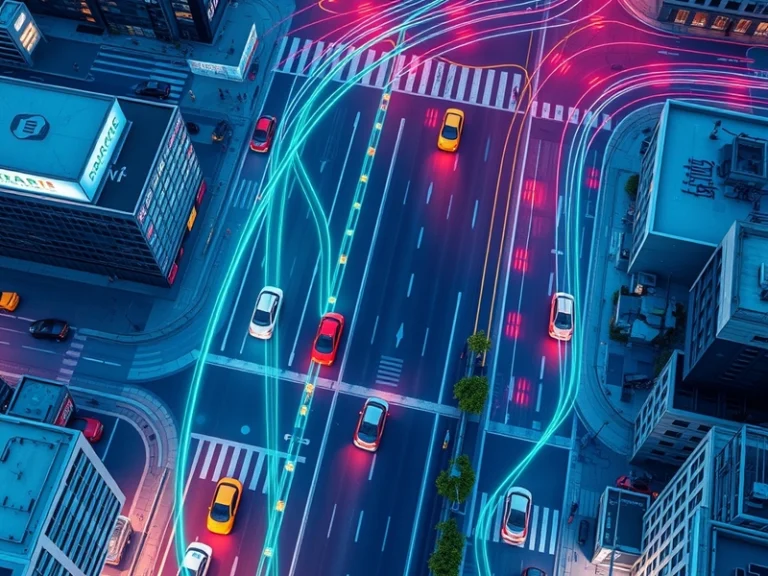
AI plays a pivotal role in route optimization. Uber’s navigation system, powered by machine learning, processes vast amounts of data including live traffic updates, road closures, historical travel times, and even weather conditions. This allows the system to recommend the most efficient routes, dynamically adjusting them in real-time to avoid congestion or other impediments. Accurate routing not only saves time and fuel for drivers but also ensures more reliable Estimated Times of Arrival (ETAs) for both riders and customers awaiting their food deliveries. Precise ETAs are critical for customer satisfaction and logistical planning, especially in the fast-paced environment of food delivery.
Demand Forecasting and Supply Positioning
To proactively manage its network, Uber utilizes AI for sophisticated demand forecasting. Machine learning models predict where and when demand for rides or deliveries will spike, hours or even days in advance. These predictions consider a multitude of factors, including:
- Historical Patterns: Recurring daily, weekly, and seasonal trends.
- Local Events: Concerts, sporting events, festivals, and conferences.
- External Factors: Weather forecasts, public holidays, and even major news events.
With this foresight, Uber can strategically advise drivers and couriers on optimal areas to position themselves, helping to ensure a sufficient supply of vehicles is available to meet anticipated demand. This proactive approach reduces the likelihood of supply shortages and improves service consistency.
Enhancing Uber Eats Deliveries
For Uber Eats, AI extends beyond basic matching and routing. It optimizes the entire delivery chain:
- Batching Orders: AI identifies opportunities for couriers to pick up and deliver multiple orders from nearby restaurants to customers along an efficient route, maximizing courier earnings and minimizing delivery times.
- Restaurant Efficiency: AI can help restaurants predict order volumes, manage kitchen flow, and optimize pickup times for couriers.
- Personalized Recommendations: Leveraging user history and preferences, AI suggests restaurants and dishes, enhancing the user experience and driving engagement.
Safety and Fraud Detection
AI also underpins many of Uber’s safety and security features. Machine learning models continuously analyze trip data to detect unusual patterns or anomalies that might indicate a safety concern, such as unexpected stops or significant deviations from a planned route. Furthermore, AI is crucial in identifying and preventing fraudulent activity, ranging from account takeovers to payment fraud, thereby protecting both users and drivers on the platform. This includes real-time identity verification and analysis of user behavior to flag suspicious interactions.
The “Drives” and “Flies” Perspective
While the title “AI Drives and Flies for Uber” might evoke images of autonomous vehicles and drone deliveries, it’s important to contextualize Uber’s involvement. Uber has historically invested in autonomous vehicle technology through its Advanced Technologies Group (ATG), which it later divested to Aurora Innovation in 2020. However, the AI described above primarily “drives” efficiency by optimizing the operations of human drivers, making their routes more efficient and their earnings more consistent.
Regarding “flies,” Uber explored drone delivery through its Uber Elevate initiative, which focused on urban aerial mobility. This division was also later divested, with Joby Aviation acquiring Elevate in 2020. While AI is fundamental to the operational logistics of any potential future drone delivery system, Uber’s current widespread delivery network relies on human couriers, with AI optimizing their ground-based movements. The “flies” aspect, therefore, primarily refers to AI’s role in orchestrating complex logistics that could theoretically extend to aerial operations, rather than current widespread drone delivery by Uber itself.
In essence, AI is not merely a supplementary tool for Uber; it is an intrinsic component that enables the scale, efficiency, and reliability of its global ride-hailing and food delivery ecosystems.