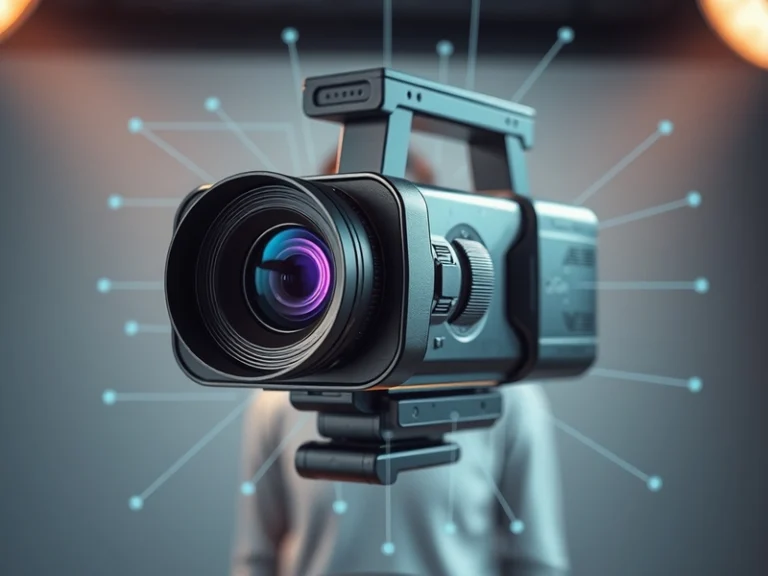
A new streaming camera is entering the market, leveraging artificial intelligence to autonomously track subjects, maintain focus, and enhance overall video quality for content creators and presenters.
This emerging category of smart cameras aims to address a common challenge for solo creators: producing professional-looking video without the need for a dedicated camera operator. By integrating advanced AI capabilities directly into the device, these cameras can automatically pan, tilt, and zoom to keep a speaker or subject perfectly framed, regardless of their movement within a designated area.
Intelligent Tracking and Framing
The core of this AI functionality lies in sophisticated computer vision algorithms. When a user activates the camera, its AI system can detect human figures, faces, or even specific objects in the frame. Once a primary subject is identified, the AI continuously monitors its position and movement. This real-time data then feeds into the camera’s motorized base or digital pan-tilt-zoom (ePTZ) capabilities, allowing it to smoothly adjust the shot to keep the subject centered and optimally composed. This means a presenter can walk across a stage, a chef can move around a kitchen, or a streamer can react dynamically, all while the camera maintains a consistent, professional shot.
Beyond simple tracking, the AI can also be programmed with cinematic principles, such as the rule of thirds, to ensure aesthetically pleasing compositions. Some systems may even offer multi-subject tracking, allowing the camera to intelligently switch focus or frame multiple people when appropriate, such as during an interview or panel discussion.
AI-Powered Video Enhancement
Another significant aspect of these AI cameras is their ability to enhance video quality in real time. Modern neural networks trained on vast datasets of images and video can perform several crucial tasks:
- Noise Reduction: AI can intelligently distinguish between actual image detail and digital noise, especially in low-light conditions, leading to cleaner, sharper video.
- Dynamic Range Optimization: It can analyze scenes with high contrast, bringing out details in both bright highlights and deep shadows, resulting in more balanced and visually appealing footage.
- Color Correction and White Balance: AI can automatically adjust color temperature and saturation to ensure skin tones look natural and colors are vibrant and accurate, even under varying lighting conditions.
- Detail Enhancement: Through intelligent upscaling and sharpening algorithms, AI can make subjects appear clearer and more defined, potentially compensating for less-than-ideal lenses or sensor sizes.
These enhancements are performed on-device, meaning the improved video stream is what is sent directly to streaming platforms or recording devices, reducing the need for extensive post-production editing.
Impact on Content Creation and Live Streaming
The introduction of such AI-driven cameras holds considerable promise for a wide range of users. For individual live streamers and YouTubers, it democratizes access to production quality that previously required a second person or a complex, expensive setup. Educators conducting online classes can move freely while lecturing, maintaining engagement with their audience. Businesses can create professional product demonstrations or internal communications without significant overhead.
This technology enables creators to focus entirely on their content delivery, rather than worrying about camera operation or shot composition. It lowers the barrier to entry for producing high-quality video, potentially fostering a new wave of diverse and dynamic online content.
Existing Landscape and Future Prospects
While this new camera represents an advancement, the concept of AI-assisted framing is not entirely new. Features like “Center Stage” on Apple’s iPad models or “Presenter Tracking” found in some professional conferencing cameras have offered similar capabilities using digital cropping and zoom. However, dedicated streaming cameras with integrated motorized gimbals and a comprehensive suite of AI video enhancement tools push the boundaries further, offering more fluid, natural movement and superior image processing.
As AI models become more efficient and powerful, we can expect these cameras to evolve further. Future iterations might include more sophisticated understanding of context, allowing the camera to anticipate movements, recognize specific cues, or even dynamically edit between multiple camera angles based on AI analysis of the scene. The integration of advanced computational photography techniques into dedicated streaming hardware marks a significant step towards fully autonomous, intelligent video production tools.