AI-driven video game mashups are increasingly captivating online audiences, transforming familiar gaming worlds into novel, often humorous, experiences that spread rapidly across social media platforms.
These viral creations leverage advanced artificial intelligence tools to blend disparate elements from various video games, generating content that ranges from aesthetically stunning reimaginings to absurd, comedic juxtapositions. The appeal lies in the unexpected: seeing characters from a gritty, realistic open-world title navigate the vibrant landscapes of a classic platformer, or hearing a beloved hero deliver lines in the voice of a villain from an entirely different franchise.
The proliferation of accessible generative AI tools has significantly lowered the barrier to entry for creators. What once required extensive graphic design, animation, and audio engineering skills can now be achieved, at least in rudimentary form, with a few prompts and clicks. This democratization of content creation has fueled an explosion of creativity, allowing fans to manifest their wildest crossover fantasies.
The AI Toolkit Behind the Mashups
The creation of these video game mashups relies on a suite of AI technologies, each contributing a distinct capability to the overall effect:
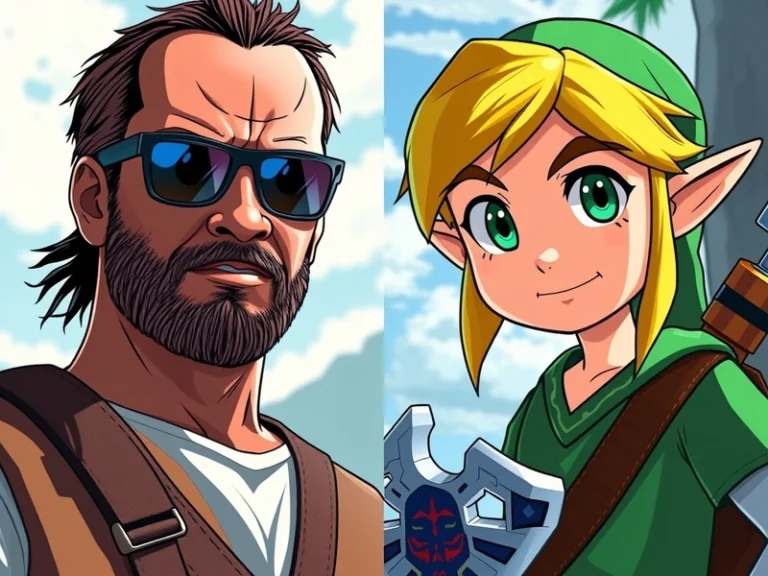
- Generative Image Models: Tools such as Midjourney, Stable Diffusion, and DALL-E are fundamental. Creators use these models to generate highly stylized images, often mimicking the aesthetic of one game while depicting characters or scenes from another. For instance, one might prompt for “Grand Theft Auto V character in the style of The Legend of Zelda: Wind Waker.” These models are adept at understanding and synthesizing complex visual styles.
- Video Generation and Editing Platforms: Platforms like RunwayML and Pika Labs facilitate the transformation of static images into dynamic video clips, or even generate short video sequences directly from text prompts. These are crucial for animating characters or environments, blending them into new contexts, and creating the illusion of movement within the mashup.
- Style Transfer Algorithms: A more specialized application, style transfer allows the artistic style of one image or video to be applied to the content of another. This can be used to impart the unique visual signature of a specific game (e.g., the hand-drawn look of *Cuphead* or the pixel art of an SNES title) onto characters or scenes from a different source.
- Voice Synthesis and Cloning: AI models capable of generating realistic speech from text, or even cloning existing voices, are frequently employed. This allows creators to have characters speak new dialogue in their recognizable voices, or to swap voices entirely for comedic or narrative effect.
- Deepfake Technology: While often associated with more controversial uses, deepfake techniques can be employed to seamlessly swap character faces, adding a layer of uncanny realism or comedic incongruity to mashups. This can place a familiar actor’s face onto a game character, or a character’s face onto another character.
The Creative Process
The typical creative workflow for an AI-driven video game mashup often begins with an imaginative concept: a “what if” scenario. Creators then gather visual and audio assets, or references, from the games they intend to combine. These references are fed into the various AI models. For example, a creator might use Midjourney to generate character portraits in a specific style, then use RunwayML to animate those portraits into a short scene. Voice lines might be generated via text-to-speech AI or cloned from existing game audio and then re-contextualized. Finally, traditional video editing software is used to stitch together the AI-generated clips, add music, sound effects, and polish the final product.
The iterative nature of AI generation allows for rapid experimentation. Creators can quickly generate multiple variations of an image or video, tweaking prompts and parameters until they achieve the desired effect. This agility is a key factor in the high volume and diversity of mashups appearing online.
Impact and Considerations
The rise of AI-driven game mashups highlights several evolving aspects of digital culture and technology. They represent a new frontier for fan art and creative expression, empowering individuals to produce sophisticated content with relatively accessible tools. This fosters vibrant online communities where fans share, remix, and celebrate their favorite franchises in novel ways.
However, this trend also brings into focus important discussions around intellectual property and fair use. Many mashups utilize copyrighted characters, art styles, and audio without explicit permission from the original rights holders. While often falling under transformative use or parody, the increasingly sophisticated nature of these creations and their potential for widespread distribution could lead to more scrutiny from game developers and publishers. Additionally, the use of deepfake technology, even for comedic purposes, raises ethical questions about consent and authenticity, particularly if real people’s likenesses are involved.
As AI tools continue to advance in capabilities and accessibility, the landscape of user-generated content, particularly within the realm of video games, is likely to become even more dynamic and creatively unbounded.