Intelligent cooking assistants, powered by artificial intelligence, are increasingly transforming meal preparation by autonomously managing and optimizing culinary processes in both home and commercial kitchens. This emerging category of AI-driven tools moves beyond simple timers and pre-programmed settings, integrating advanced computational capabilities to understand, adapt, and execute complex cooking tasks.
The core promise of these AI chefs lies in their ability to bring precision, consistency, and personalization to cooking. Rather than merely following a static recipe, these systems can monitor ingredients, assess cooking progress, and make real-time adjustments, aiming to deliver optimal results with minimal human intervention. This shift represents a significant leap from traditional kitchen automation, which often relies on rigid, pre-defined sequences, to a more dynamic and responsive approach enabled by machine intelligence.
The Technological Pillars of AI Cooking
The development of autonomous cooking assistants hinges on the convergence of several key AI and robotics disciplines:
- Computer Vision: Cameras integrated into smart appliances or robotic systems can identify ingredients, assess their state (e.g., ripeness, doneness), and monitor changes during cooking. For instance, an oven equipped with computer vision can recognize a specific dish, track its browning, and adjust temperature or time accordingly to prevent overcooking or undercooking.
- Machine Learning: At the heart of adaptive cooking, machine learning algorithms analyze vast datasets of recipes, cooking techniques, and sensory feedback. These models learn optimal parameters for various foods and preparations, enabling the system to predict outcomes, suggest modifications, and refine its cooking strategies over time. This includes optimizing temperature profiles, humidity levels, and cooking durations.
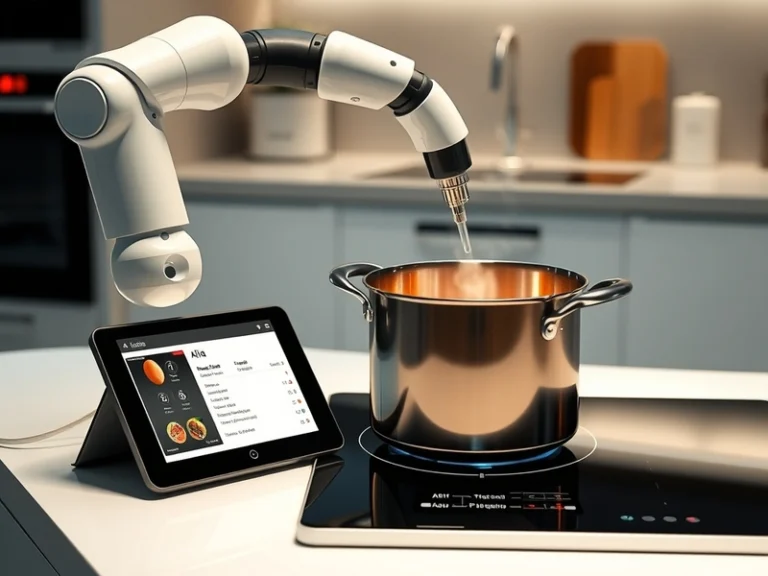
- Robotics and Automation: For more complex, truly autonomous systems, robotic arms and manipulators are essential. These robots can perform physical tasks such as chopping, stirring, flipping, and plating, mimicking human dexterity with a high degree of precision and repeatability.
- Natural Language Processing (NLP): NLP allows users to interact with cooking assistants through voice commands or text inputs. More advanced applications use NLP to parse and understand recipes from various sources, adapt them to dietary restrictions, or even generate entirely new recipes based on available ingredients and user preferences, as seen with modern large language models.
- Sensor Integration: Beyond visual input, advanced sensors for temperature, humidity, weight, and even chemical composition provide critical data streams that AI algorithms use to make informed decisions about the cooking process.
Real-World Applications and Examples
While fully autonomous robotic kitchens are still an emerging high-end segment, AI-powered cooking assistance is manifesting in several forms today:
Smart Ovens and Countertop Appliances
Many modern smart ovens and countertop devices incorporate AI to elevate their functionality. Products like the June Oven or Tovala oven systems, for example, often feature internal cameras and computer vision to identify the food placed inside. Once recognized, the appliance can automatically suggest or initiate an optimized cooking program, adjusting factors like temperature, time, and cooking modes (e.g., convection, air fry) to achieve desired results. Some even include integrated temperature probes that feed data back to AI algorithms to ensure food reaches specific internal temperatures for safety and doneness.
Robotic Kitchens
In the realm of advanced automation, companies like Moley Robotics have showcased fully robotic kitchen systems capable of preparing complex meals from scratch. These systems typically involve robotic arms that can manipulate ingredients, operate kitchen utensils, and even clean up, all based on programmed recipes and real-time sensory feedback. While currently a luxury item, such systems demonstrate the potential for complete end-to-end autonomous meal preparation.
AI-Driven Recipe Generation and Personalization
Beyond physical cooking, AI is revolutionizing the planning and ideation phase. Large language models, such as those powering ChatGPT, can generate customized recipes based on user inputs like available ingredients, dietary restrictions (e.g., vegan, gluten-free), desired cuisine, and skill level. This capability extends to suggesting substitutions, scaling recipes for different portion sizes, and even creating meal plans, significantly reducing the cognitive load associated with meal planning.
Benefits and Future Prospects
The rise of intelligent cooking assistants offers several compelling advantages:
- Consistency and Quality: AI systems can replicate recipes with unparalleled precision, ensuring consistent quality every time, which is particularly valuable in commercial settings.
- Efficiency and Time-Saving: By automating mundane or complex tasks, AI chefs free up human cooks, whether in a busy restaurant or a home kitchen, allowing them to focus on other activities or creative aspects of cooking.
- Accessibility: For individuals with physical limitations or those lacking advanced culinary skills, AI assistants can make healthy, home-cooked meals more accessible.
- Reduced Food Waste: By optimizing cooking processes and potentially integrating with smart inventory systems (like smart refrigerators), AI can help reduce food spoilage and waste.
As sensor technology improves, robotic manipulation becomes more dexterous, and AI algorithms grow more sophisticated, the capabilities of intelligent cooking assistants are expected to expand further. The trajectory points towards more intuitive interfaces, greater adaptability to novel ingredients and cooking methods, and a broader integration into the smart home ecosystem, promising a future where truly autonomous and personalized meal preparation becomes a more commonplace reality.