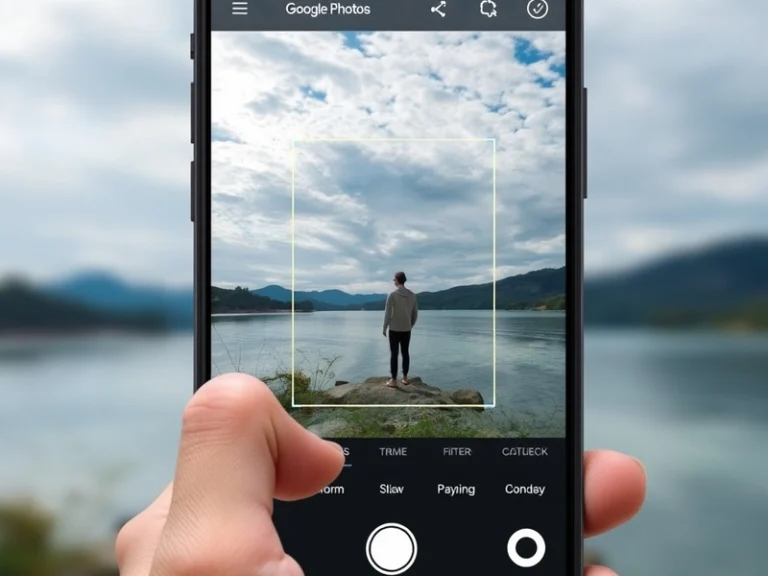
Google has significantly advanced its AI-driven image editing capabilities, integrating sophisticated tools directly into Google Photos and its Pixel smartphone line, effectively transforming how users can creatively enhance and manipulate their photographs with minimal effort.
While not branded as a standalone product called “Google Pics,” the suite of AI-powered features available within Google Photos and exclusive to Pixel devices represents a powerful, accessible next generation of image editing. These tools leverage advanced machine learning models to perform complex edits that traditionally required specialized software and expertise, democratizing access to professional-grade photo manipulation.
Evolving AI Capabilities in Google Photos
Google Photos has long been a hub for smart organization and basic edits, but the integration of advanced AI has shifted its role towards a generative editing powerhouse. Key features demonstrate this evolution:
- Magic Eraser: Introduced with the Pixel 6, Magic Eraser allows users to effortlessly remove unwanted objects or photobombers from their images. The AI intelligently analyzes the scene, identifies elements that can be removed, and then seamlessly fills the void with contextually appropriate pixels, often making it appear as if the unwanted element was never there.
- Photo Unblur: Another Pixel-exclusive feature, Photo Unblur utilizes machine learning to sharpen blurry faces and subjects in photos. It’s particularly effective for older, out-of-focus images or those taken in less-than-ideal conditions, bringing clarity to details that would otherwise be lost.
- Magic Editor: Representing a leap into generative AI editing, Magic Editor offers more expansive and creative control. Users can reposition subjects, change the sky, or even add entirely new elements to a scene. This tool goes beyond simple object removal or enhancement, allowing for more fundamental alterations to an image’s composition and atmosphere. It leverages generative adversarial networks (GANs) or diffusion models to create new image content that blends seamlessly with the original.
- Portrait Light and Relight: These features allow users to adjust the lighting on subjects in portrait photos after the fact. Portrait Light enables users to reposition and adjust the intensity of a virtual light source, while Relight can add dynamic lighting to standard photos, enhancing depth and dimension.
- Sky Suggestions and HDR+: Beyond direct manipulation, Google Photos employs AI for automatic enhancements. Sky suggestions can intelligently replace or enhance drab skies with more dramatic alternatives, while HDR+ processing uses computational photography to merge multiple exposures, creating images with extended dynamic range and vibrant colors.
The Underlying Technology: More Than Just Filters
These sophisticated editing tools are built upon advancements in several AI and machine learning domains:
- Computer Vision: At its core, the AI must first “understand” the image. Computer vision techniques enable the models to identify objects, people, backgrounds, and semantic regions (e.g., sky, water, skin). This segmentation is crucial for targeted edits like Magic Eraser or Portrait Light.
- Generative AI Models: For features like Magic Editor and Magic Eraser, generative models play a pivotal role. These models, often based on architectures like diffusion models or GANs, are trained on vast datasets of images to learn how to create realistic new pixels and textures. When an object is removed, the generative model “inpaints” the missing area, hallucinating plausible content. For Magic Editor, they can synthesize entirely new elements or backgrounds.
- Neural Networks: Deep neural networks are the workhorses behind the scene, processing image data, recognizing patterns, and executing complex transformations. Their ability to learn from massive datasets allows them to perform highly nuanced and context-aware edits.
Impact and Implications
The rise of AI-powered image editing tools has significant implications for both casual users and the broader creative landscape.
For everyday users, these features demystify complex photo editing, making it accessible to anyone with a smartphone. What once required hours in desktop software can now be achieved in seconds with a few taps, empowering users to create more visually compelling content for personal use or social sharing.
However, the increasing ease of manipulating images also raises questions about authenticity and digital provenance. As AI becomes more adept at generating realistic, but entirely fabricated, image content, distinguishing between genuine photographs and AI-altered ones becomes challenging. This necessitates ongoing discussions around transparency, ethical AI development, and potentially new standards for indicating AI-generated or heavily modified content.
Google’s continued investment in these AI capabilities underscores a broader industry trend towards intelligent automation in creative tasks. As these tools become more powerful and ubiquitous, they are set to reshape not only how we edit photos but also our expectations of what a “photograph” truly represents.