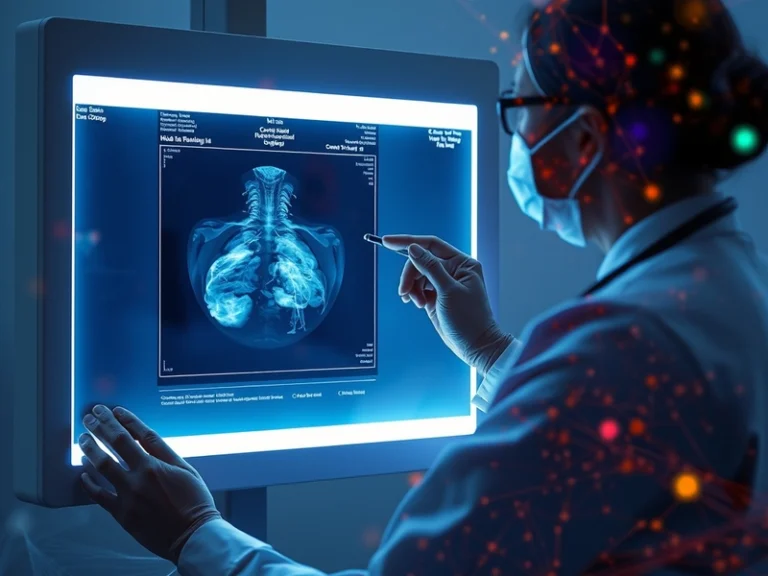
A new artificial intelligence tool has emerged that can analyze years of historical mammograms to improve the prediction of breast cancer risk for women, moving beyond traditional static assessments to leverage longitudinal imaging data.
Breast cancer screening programs primarily focus on early detection through regular mammography. While crucial, the standard interpretation of a single mammogram typically assesses the presence of abnormalities at that specific point in time. Risk prediction, on the other hand, traditionally relies on a combination of factors such as age, family history, genetic predispositions, and breast density. Integrating an individual’s imaging history into a dynamic risk model represents a significant step forward in personalized medicine.
The challenge with current risk models is their reliance on readily quantifiable, often static, data points. Mammograms, however, contain a wealth of subtle information that can change over time. These changes, often imperceptible to the human eye or difficult to systematically quantify across multiple scans, can hold predictive power for future cancer development. This is where advanced AI, particularly deep learning, offers a unique advantage.
Leveraging Longitudinal Data with AI
Unlike human radiologists who typically compare a current mammogram to the most recent prior one, an AI system can process and learn from an entire sequence of a woman’s historical mammograms. This longitudinal analysis allows the AI to:
- Identify Subtle Changes: Detect minute, evolving patterns in breast tissue density, texture, and other features across multiple years of imaging that might indicate an increased risk before a visible lesion forms.
- Track Progression: Understand how a woman’s breast tissue naturally changes over time and identify deviations from typical patterns that could signal higher risk.
- Integrate Complex Features: Combine hundreds or thousands of nuanced imaging features from multiple scans into a comprehensive risk score, far exceeding the capacity of manual assessment.
- Personalize Risk Profiles: Generate a more granular and individualized risk prediction for each woman, moving beyond population-level averages.
The underlying technology for such a tool typically involves deep learning models, often variations of convolutional neural networks (CNNs), trained on vast datasets of anonymized mammograms linked to long-term patient outcomes. These datasets include not only cases where cancer was eventually diagnosed but also control cases where women remained cancer-free over many years of follow-up. This extensive training enables the AI to learn which image features, or sequences of features, correlate with an elevated risk of developing breast cancer in the future.
Impact on Breast Cancer Screening and Prevention
The potential impact of an AI tool capable of analyzing historical mammograms for risk prediction is multifaceted:
For women, a more accurate and personalized risk assessment could lead to:
- Tailored Screening Schedules: Women identified as high-risk might be recommended for more frequent screenings, alternative imaging modalities like MRI, or preventative strategies. Conversely, those with very low risk might be able to space out screenings, reducing anxiety and exposure to radiation.
- Earlier Intervention: Identifying high-risk individuals earlier could allow for proactive monitoring or lifestyle interventions, potentially preventing or delaying cancer development, or catching it at an even earlier, more treatable stage.
- Reduced Over-diagnosis and Over-treatment: By stratifying risk more precisely, healthcare providers can better target interventions, potentially reducing unnecessary biopsies or treatments for low-risk individuals.
For healthcare systems, this technology offers the promise of more efficient resource allocation and improved patient outcomes. Radiologists and oncologists could leverage these AI-generated risk scores to inform their clinical decisions, complementing their expertise rather than replacing it.
Challenges and Future Directions
While promising, the deployment of such advanced AI tools in clinical practice comes with inherent challenges. The models must demonstrate robust performance across diverse populations and imaging equipment to ensure equitable and reliable risk predictions. Generalizability, the ability of the model to perform well on data it has not seen before, is paramount. Furthermore, regulatory approval processes, such as those by the U.S. Food and Drug Administration (FDA), are rigorous for medical devices and require extensive validation studies.
Integrating these tools into existing clinical workflows also requires careful planning and user-friendly interfaces. Clinicians need to understand the outputs of the AI system, even if the internal workings are complex. Research into explainable AI (XAI) in medical imaging is ongoing to provide more transparency into how these models arrive at their conclusions.
As the capabilities of medical AI continue to mature, the ability to extract predictive insights from longitudinal patient data, especially imaging, holds immense potential to transform preventive healthcare. This new AI tool marks a significant step towards a future where breast cancer risk assessment is not just about current detection, but about proactive, personalized foresight.