AI-Powered Hurricane Forecasting: A Day Ahead
In recent years, the advent of artificial intelligence (AI) has revolutionized various sectors, and meteorology is no exception. With the increasing frequency and intensity of hurricanes due to climate change, timely and accurate forecasts are essential for minimizing damage and saving lives. DeepMind’s innovative AI model is leading the charge in enhancing hurricane forecasting capabilities, providing critical warnings to communities at risk.
The Role of AI in Weather Forecasting
Traditional weather forecasting relies heavily on complex mathematical models that simulate atmospheric conditions. While these models have served meteorologists well for decades, they often struggle with the rapid and chaotic nature of severe weather events like hurricanes. AI, particularly through machine learning techniques, offers a new approach to weather prediction.
- Data Processing: AI algorithms can analyze vast amounts of data from satellites, weather stations, and ocean buoys faster than any human could.
- Pattern Recognition: Machine learning models excel in identifying patterns in historical weather data, which can help predict future events more accurately.
- Real-time Predictions: AI can provide real-time updates, allowing for adjustments to forecasts as conditions change.
DeepMind’s Innovative Model
DeepMind’s latest model leverages advanced machine learning techniques to enhance hurricane forecasting. By utilizing a combination of convolutional neural networks (CNNs) and recurrent neural networks (RNNs), the model can analyze satellite imagery and historical weather data.
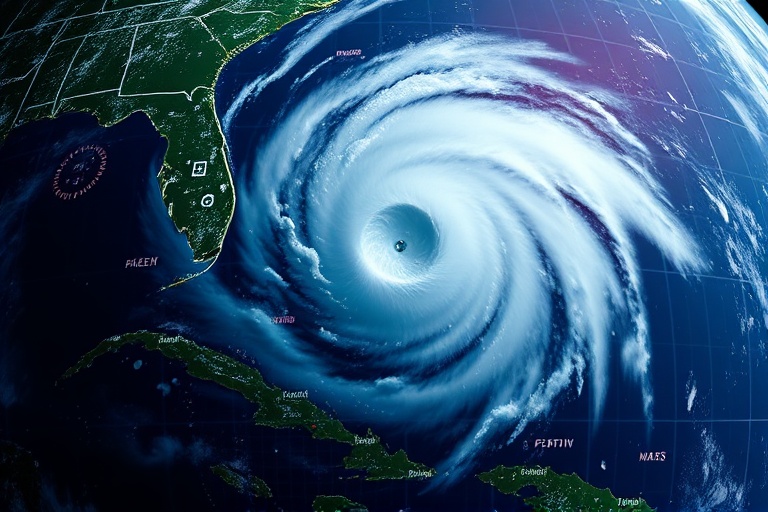
- Satellite Imagery: The model processes satellite images to identify storm formations and track their development over time.
- Predictive Accuracy: In tests, DeepMind’s model has demonstrated the ability to predict hurricane paths and intensities with remarkable precision, often outperforming traditional forecasting methods.
- Lead Time Improvement: One of the most significant advantages is the model’s capacity to provide warnings up to a day in advance, giving communities more time to prepare.
Enhancing Disaster Preparedness and Response
The implications of AI-powered hurricane forecasting are profound, especially in terms of disaster preparedness and response. A day’s notice might not seem like much, but it can be the difference between life and death in hurricane-prone areas.
- Evacuation Planning: With timely forecasts, local governments can implement evacuation plans more effectively, ensuring that residents are moved to safer areas ahead of the storm.
- Resource Allocation: Emergency services can allocate resources more efficiently, positioning teams and supplies where they are most needed before the hurricane strikes.
- Public Awareness: Enhanced forecasting allows for more effective public messaging, educating communities about safety measures and potential impacts.
Industry Implications
The integration of AI in hurricane forecasting also has significant implications for various industries, including:
- Insurance: Insurance companies can better assess risk and adjust premiums based on more accurate forecasts, leading to fairer pricing models.
- Energy: Energy providers can prepare for outages and adjust production based on expected weather conditions, ensuring stability in supply during critical times.
- Transportation: Airlines and shipping companies can optimize routes and schedules, minimizing disruptions and maximizing safety during severe weather events.
Future Possibilities
As AI technology continues to evolve, the future of hurricane forecasting looks promising. The following advancements could further enhance the effectiveness of these models:
- Incorporation of More Data Sources: As more sensors and data collection methods (like drones and IoT devices) become available, AI models can integrate this information for even more accurate predictions.
- Improved Machine Learning Algorithms: Ongoing research may lead to new algorithms that enhance the precision of predictions, especially in rapidly changing conditions.
- Global Collaboration: International partnerships can lead to shared data and insights, allowing for a more unified and effective response to hurricanes worldwide.
In conclusion, DeepMind’s AI-powered hurricane forecasting represents a significant leap forward in meteorological science. By providing timely warnings and enhancing disaster preparedness, this innovative technology not only fosters a more informed public but also strengthens the resilience of communities facing the ever-growing threat of hurricanes. As we look to the future, the potential for AI to improve our understanding and response to extreme weather events is limitless.